Culture & Religion
HINDUISM
It arrived in Indonesia via Indian merchants in the 5th century. It was gradually replaced by Buddhism, which was the main religion in Sumatra and Java until it was replaced by the arrival of Islam starting in the 14th century. However, due to “cultural barriers” of the last kingdom of the Majapahit from Java, Bali remained the only Indonesian island to remain Hindu.
The first Hindu artefact dates back to the 9th century and was found in Sanur, and is the record of ancient military victories engraved in stone and written in Sanskrit. From the beginning of the 18th century the Balinese tried to conquer nearby Lombok, with mixed success, until the Dutch took over in 1894. The island is currently Muslim, but its western side, the one facing Bali, still has several Hindu temples .the fundamental principle underlying Hinduism is that there are forces of good, known as dharma and forces of evil, adharma. Hindus seek balance and harmony between these two forces, thus freeing themselves from the endless cycle of reincarnation and achieving a state called moksa. Balinese Hinduism divides the cosmos into three levels. The highest level is the sky, or suarga, the abode of the gods. Next is the world of man, buwah. Below this is hell or bhur, where demons live and where people’s spirits are punished for misdeeds on earth. This tripartite division is reflected in the human body (head, body and feet) and in the shrines found outside Balinese buildings.
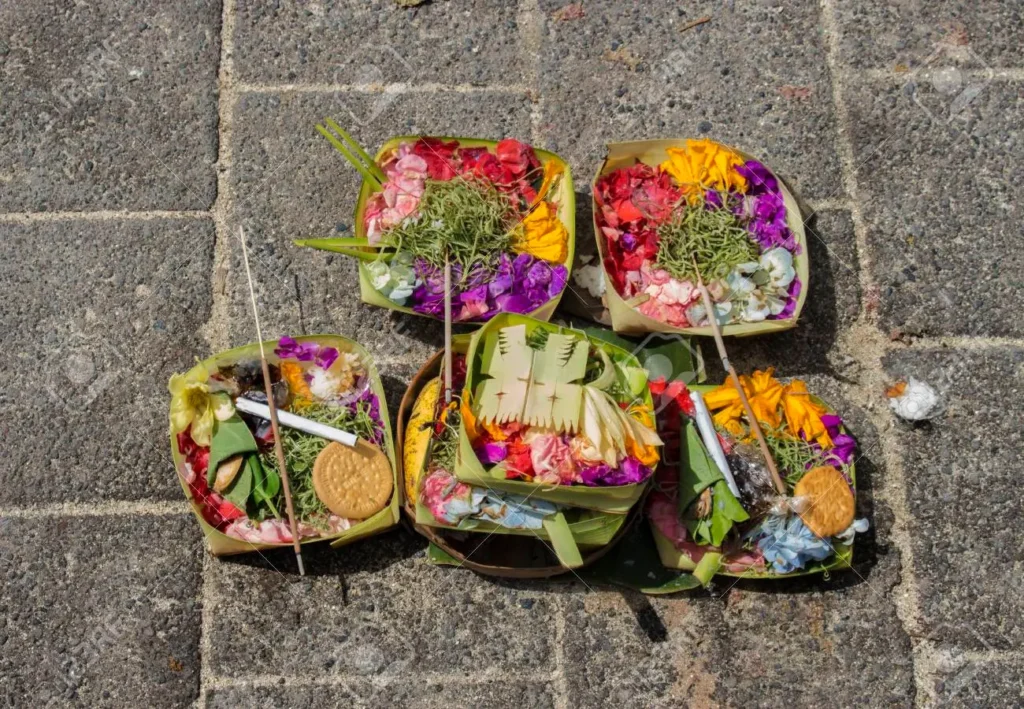
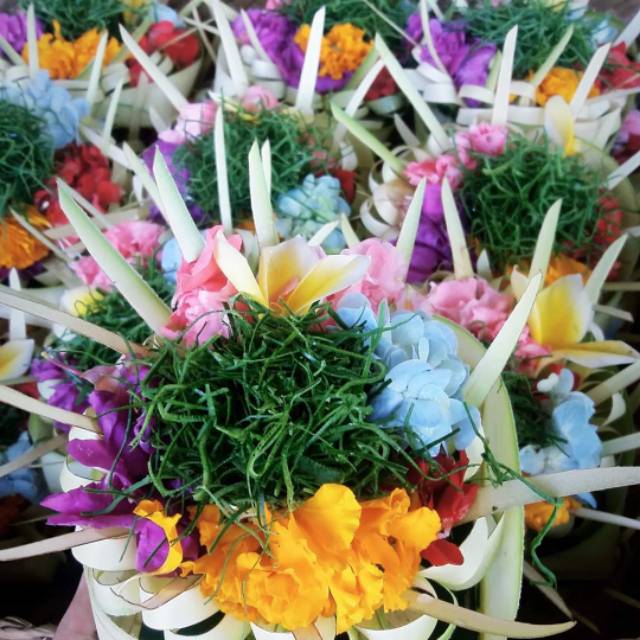
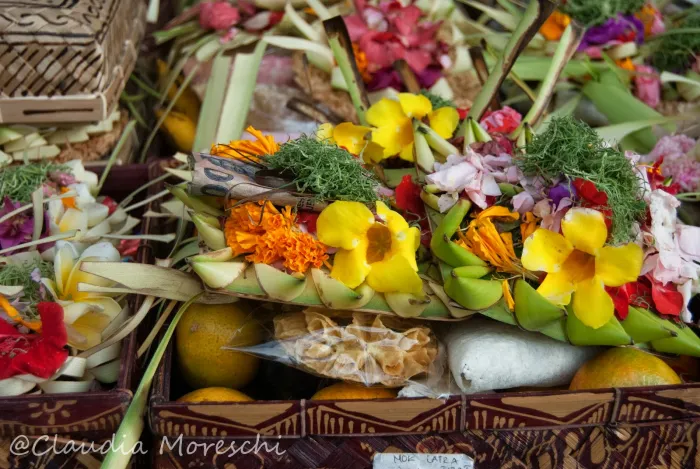
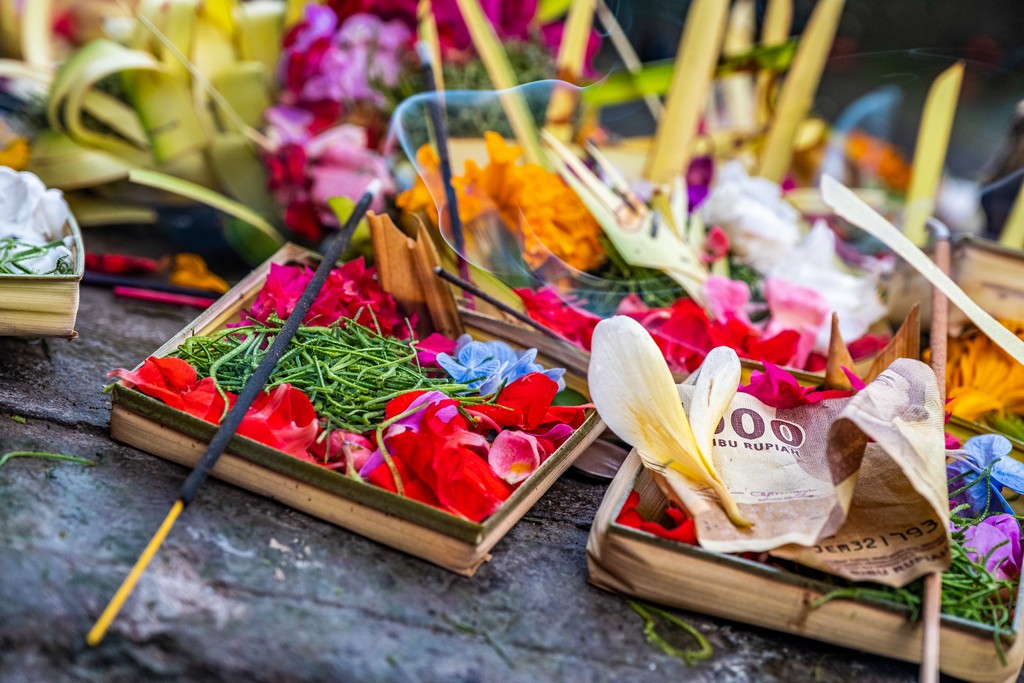
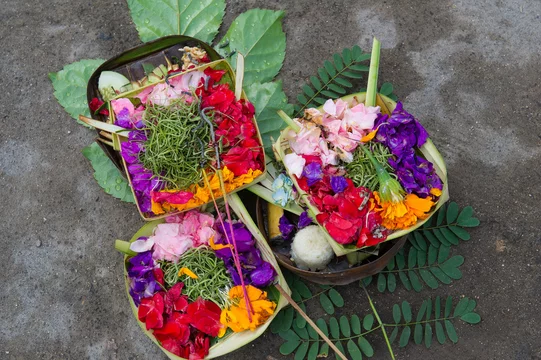
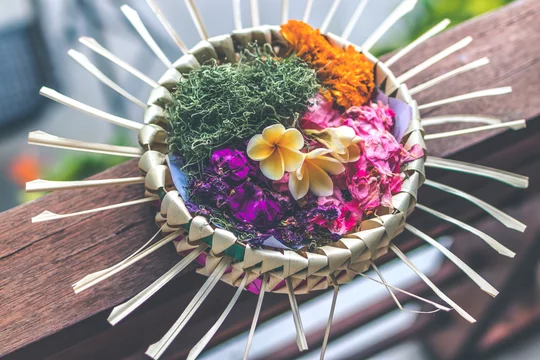
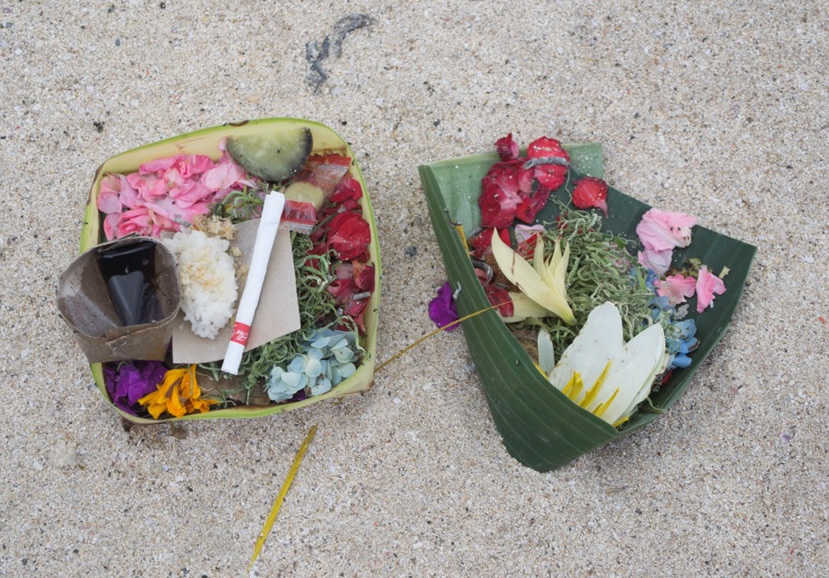
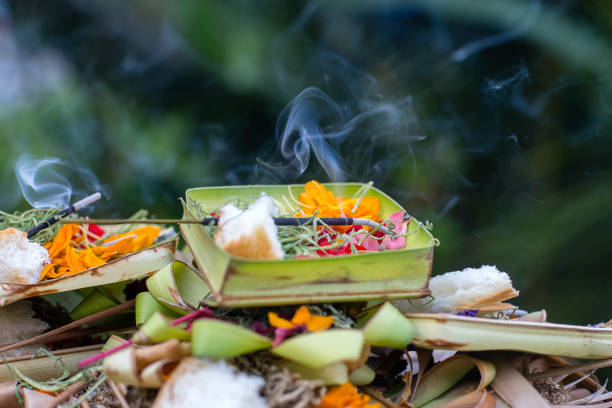
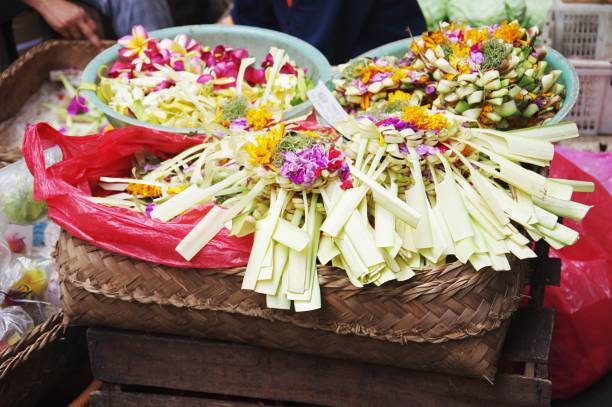
The daily offerings to the gods, the canang saris.
A key feature, and also much loved by tourists, are the offerings to the god Sang Hyang Widhi called canang sari. Baskets are handcrafted by the expert hands of women from palm or pandan leaves and filled with many kinds of fresh, fragrant flowers representing various deities. Material offerings, such as coins, food or cigarettes, can also be found in the basket. These offerings are prepared every day and can be found outside homes, temples or in many other places. An incense is then lit and prayers are made to both good and bad spirits.
Dewi Sri the goddess of rice and many other gods associated with mountains, lakes and the sea.
There are three levels of priests:
- The high priests (pedanda): members of the Warna Brahma
- Temple priests (pemangku): usually members of the Warna Sudra
- Mediums / Healers (Balian)
BIRTH AND LIFE
There are a total of 13 ceremonies regarding life, from conception to death (but not including), each of which has four elements: calming evil spirits, purification with holy water, which is spread by prayer. These ceremonies mark important events in a person’s life, including birth, puberty, teeth filing, and marriage.
A newborn baby is believed to represent the soul of an ancestor, and is regarded as a God for the first 42 days of its life; however the mother is considered impure, and is not allowed to participate in any religious activity during this period. A child must not touch impure soil until he is 105 days old, which is halfway to the celebration of his first birthday according to the 210-day Pawukon.
Once the child reaches puberty, the upper six front teeth, but especially the canines, are filed until they are level. Marriage is seen as obligatory for Balinese Hindus, both for the creation of a family and for the better position in the social structure of the village granted to the husband. Giving birth to children ensures the patrilineal line, as well as ensuring that there is someone to perform the appropriate rituals essential for reincarnation. It marks the attainment of adulthood.
DEATH AND REINCARNATION
The most important ceremonies take place after death, and determine the liberation of the soul for the purpose of reincarnation. Unlike the death rites of other religions, the physical body is not the center of attention, as it is seen as nothing more than a temporary container of the soul. In fact, the body must be burned before the soul can leave it completely.
The cremation ceremony to achieve this can be extremely expensive, because an elaborate ceremony is a way of showing respect for a soul destined to become a God with considerable powers beyond those left behind. Therefore bodies are sometimes buried temporarily until the family is able to accumulate sufficient funds for cremation, although the bodies of priests or high-class families are kept off the ground.