Touristic Itineraries
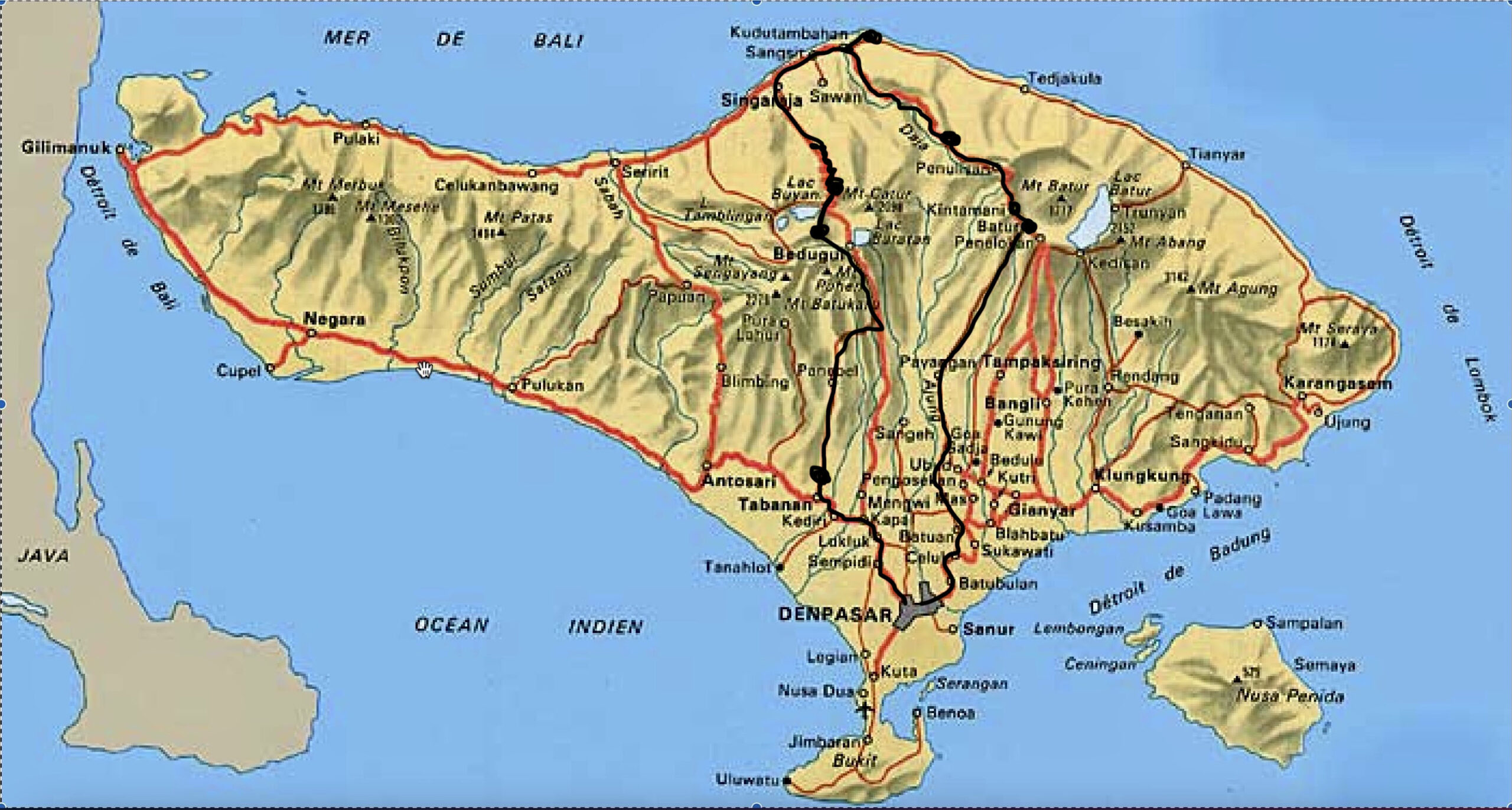
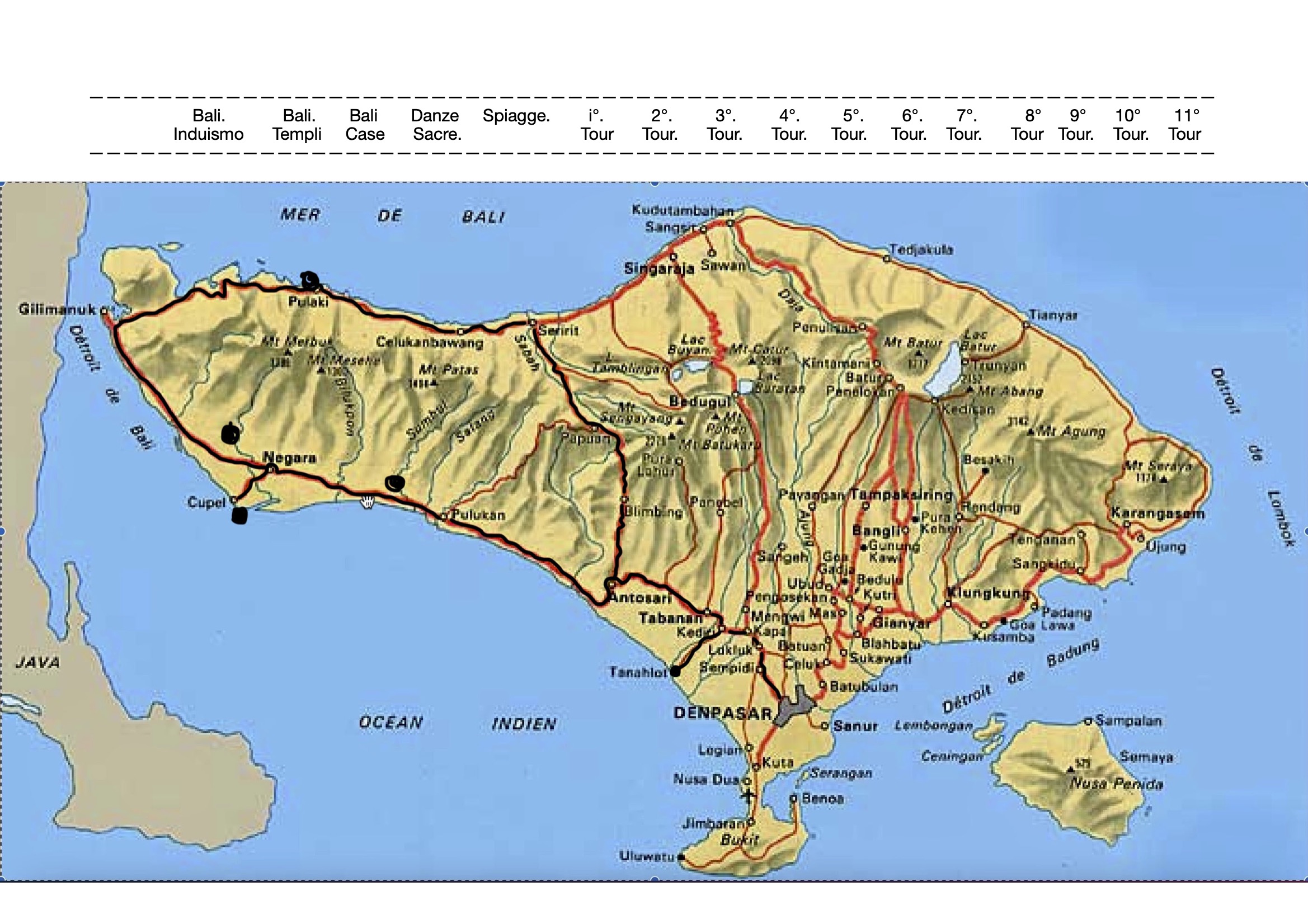
This tour will take you to the following places:
- RAMBUT SIWI
- PERANCAK
- PURA GEDE PERANCK
- PEMUTERAN
- PURA TANAH LOT
Pura Rambut Siwi
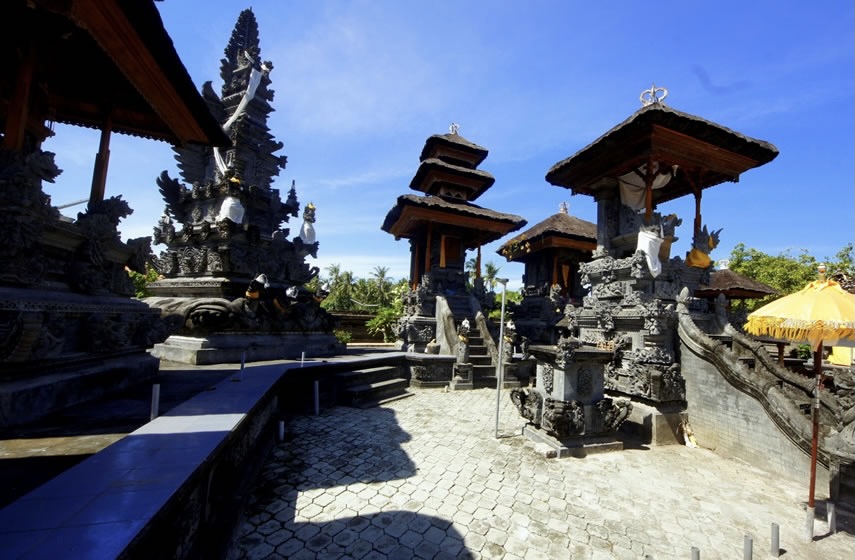
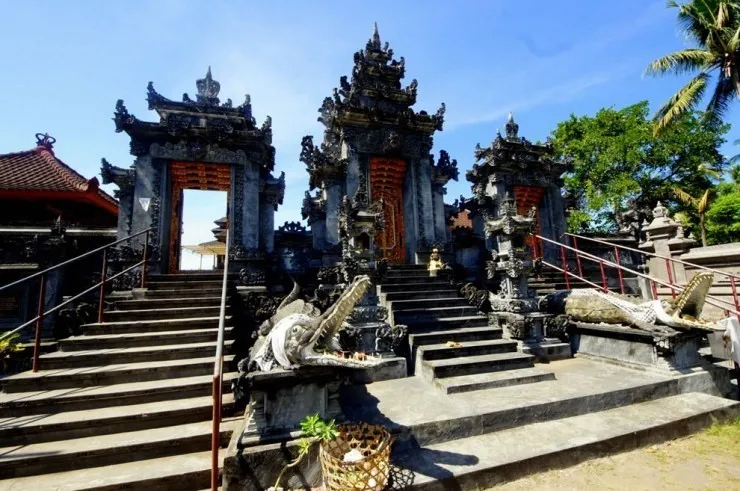
It is a Hindu temple located on the west coast of the Indonesian island of Bali. It is one of the Balinese sea temples.
Legend has it that Rambut Siwi was founded in the 16th century by the sage Dang Hyang Nirartha who was en route to the court of King Dalem Baturenggong.
During the journey he stopped at a village affected by numerous waves of plague. Nirartha eradicated the plague and cured the inhabitants who, gratefully, asked him to stay.
Nirartha declined the request, but gave them a lock of her own hair as an amulet. The inhabitants then built the Rambut Siwi temple to guard the precious lock.
The sage ended his days at the Uluwatu Temple, where he reached mokṣa The temple is located near the main road that connects Denpasar to Gilimanuk, surrounded by rice fields.
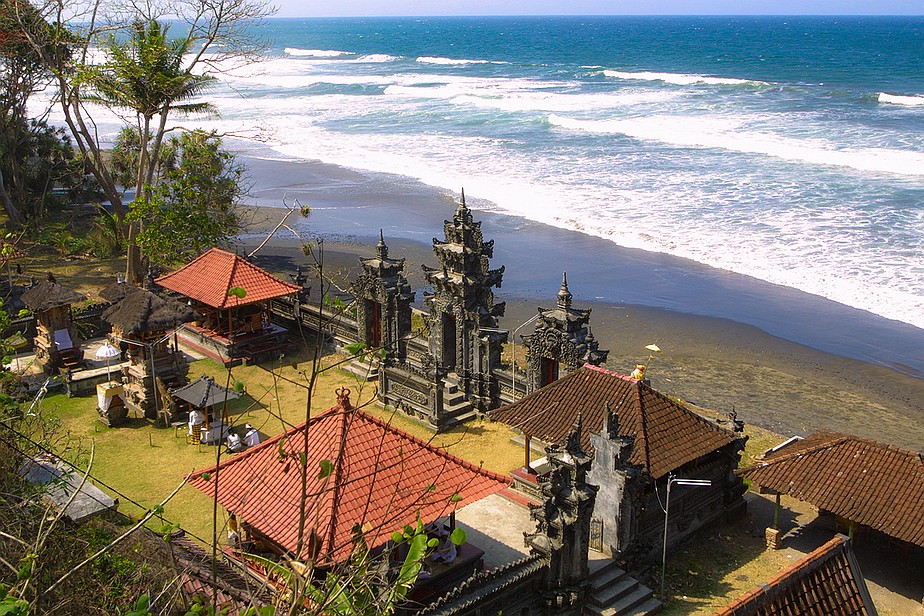
It sits atop a hill overlooking the ocean and offers a spectacular view. A wide stairway leads from the temple down to the beach below.
The temple represents a less important tourist destination than the more visited Tanah Lot and Uluwatu and therefore enjoys a peaceful atmosphere.To enter the temple it is necessary to pay a ticket and access to the sancta sanctorum is forbidden to tourists.
Perancak
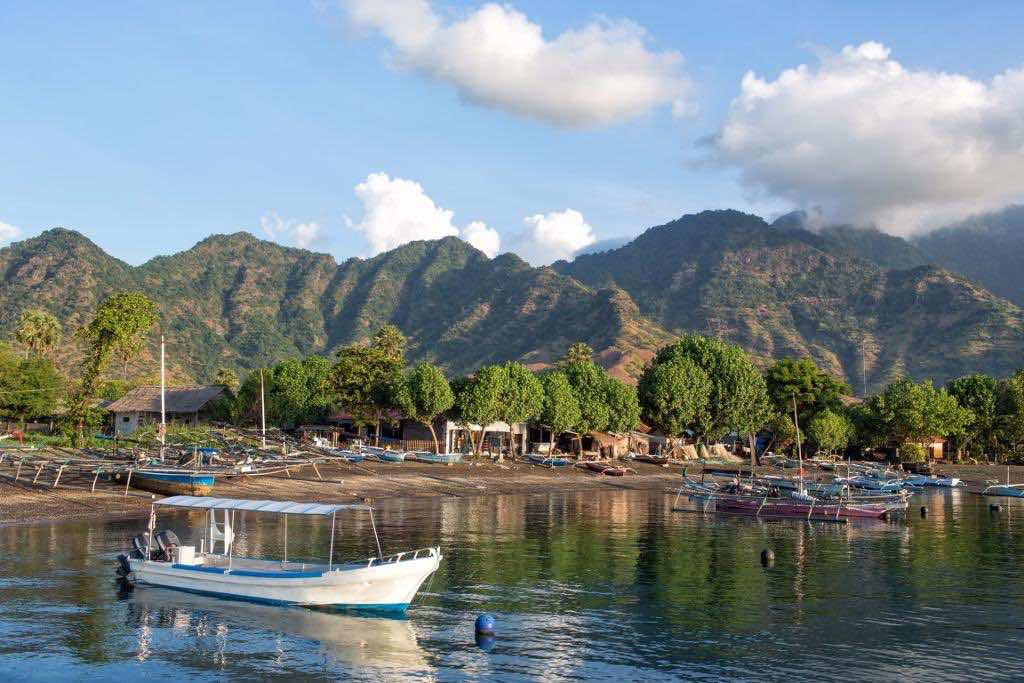
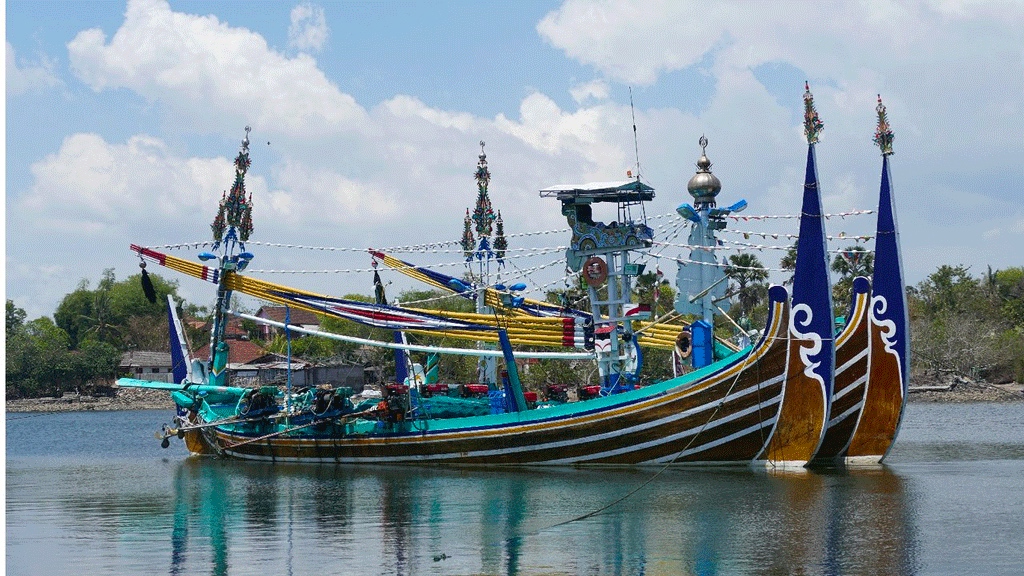
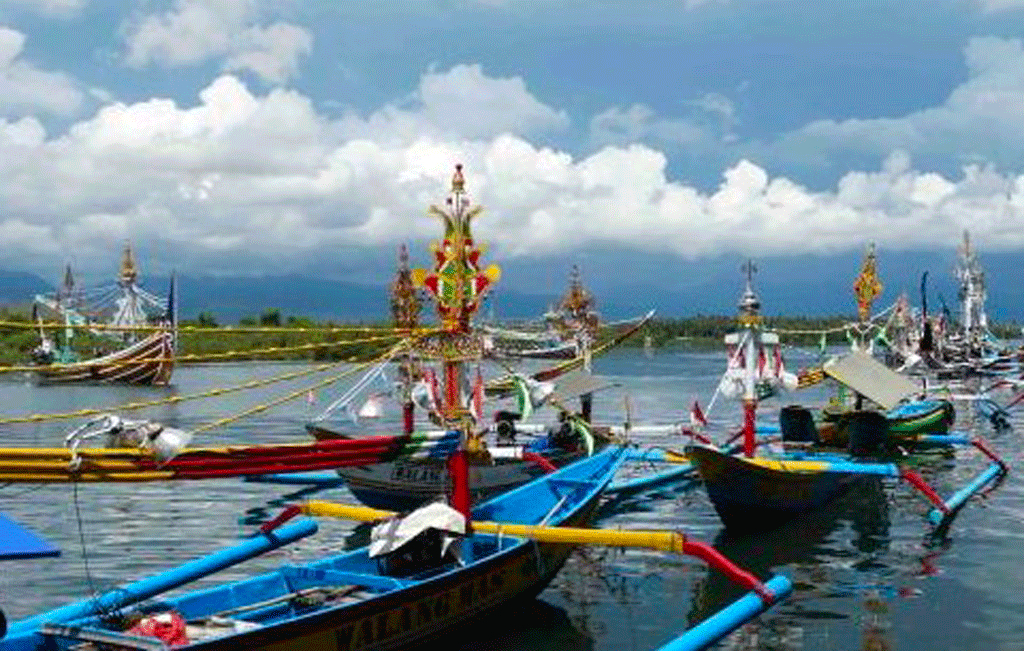
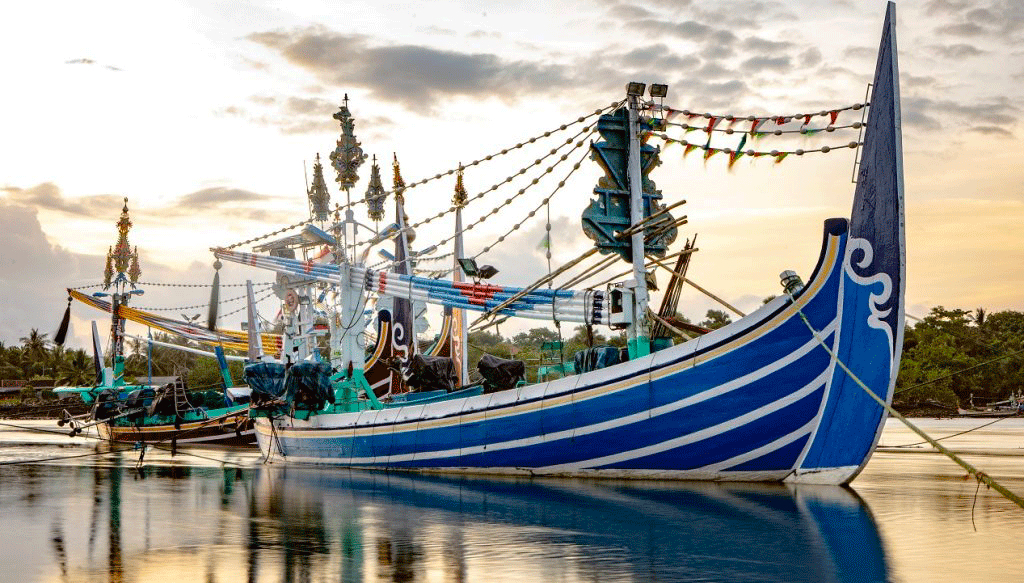
Picturesque fishing village
Pura Gede Perancak
Pura Gede Perancak is an important Hindu sea temple in Perancak, Bali, Indonesia. This temple commemorates the site of Dang Hyang Nirartha’s arrival in Bali in 1546.
Bull racing is organized here.
Pemuteran
It is a quiet village overlooking the north Balinese coast.
Pemuteran and the surrounding area are little visited by tourists, yet offer untouched nature and breathtaking views.
The Bali Barat National Park is just behind it, full of wildlife, unexplored mountains and lush nature.
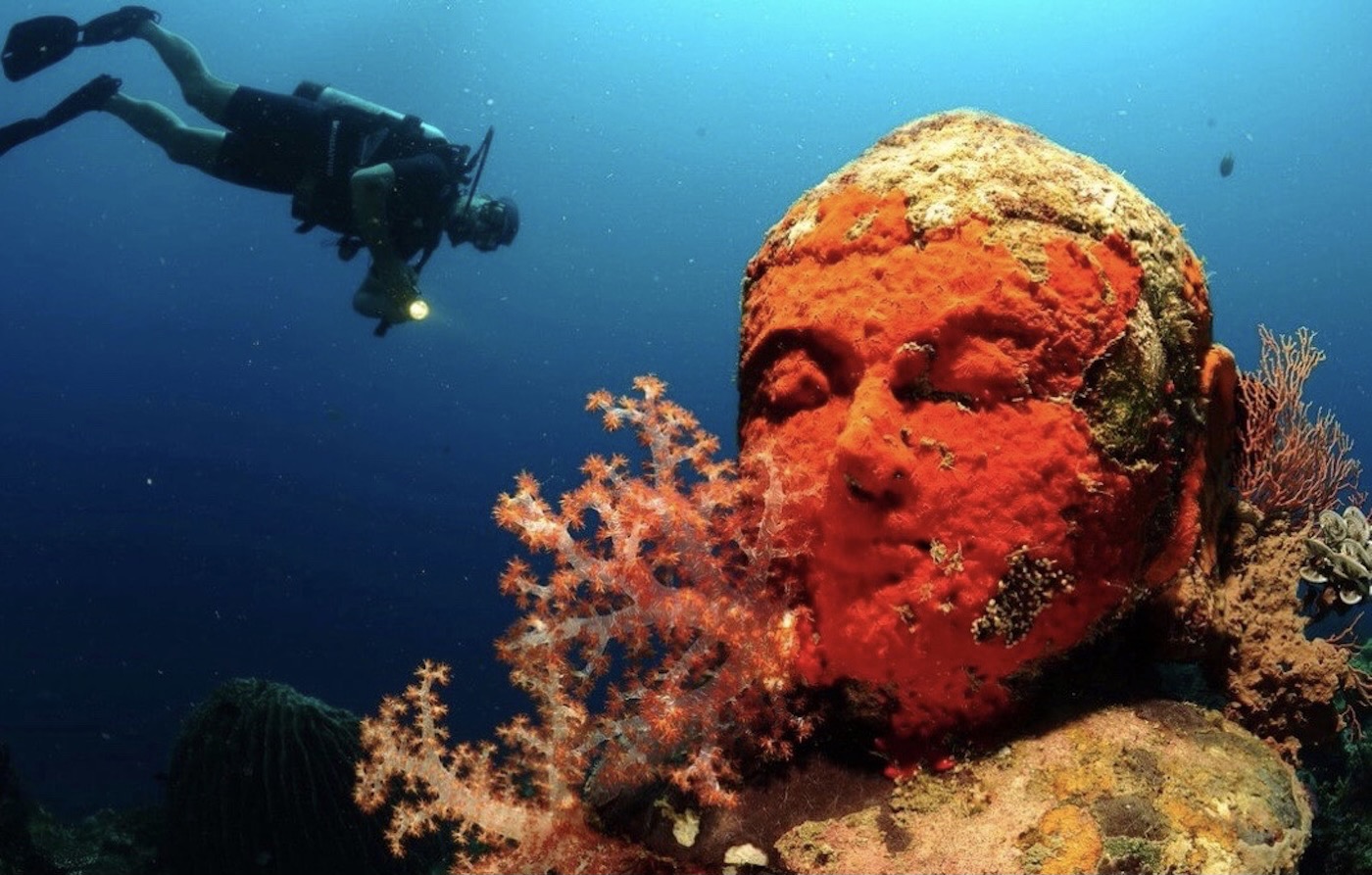
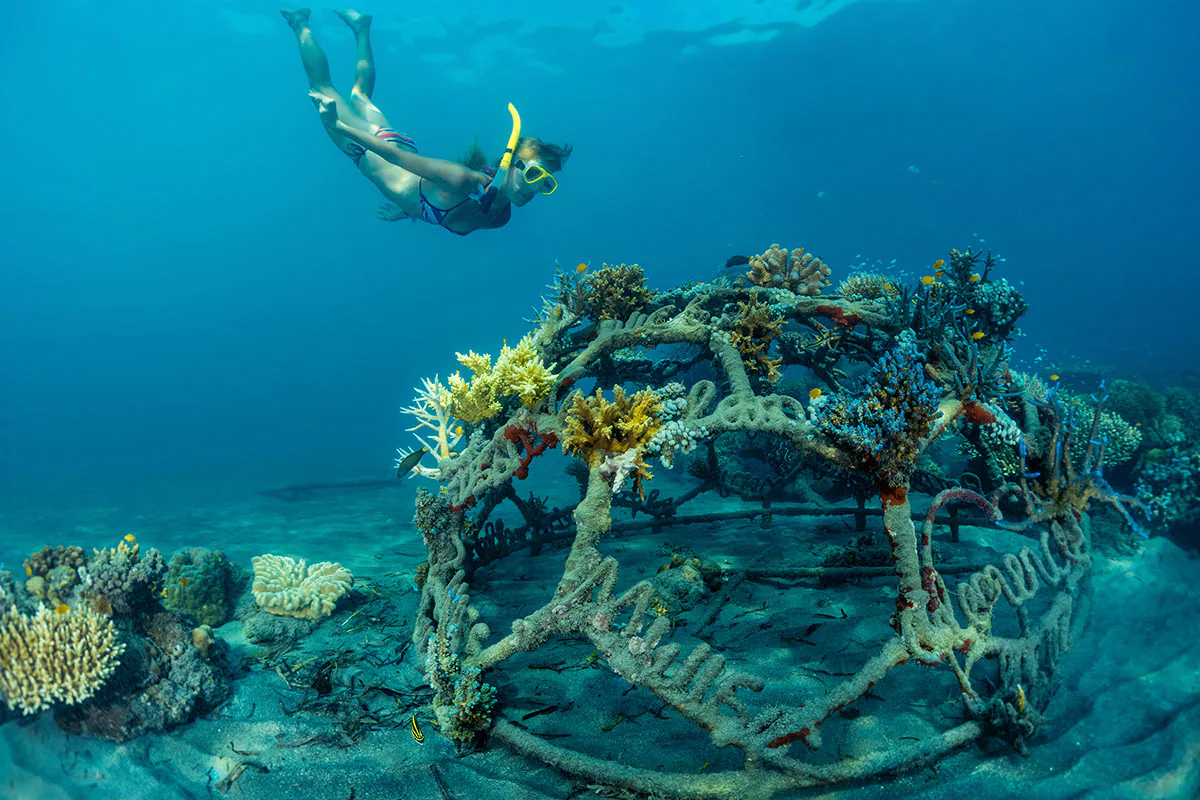
Menjangan Marine Protected Area is just opposite, a paradise for divers and snorkelers.
Pura Tanah Lot
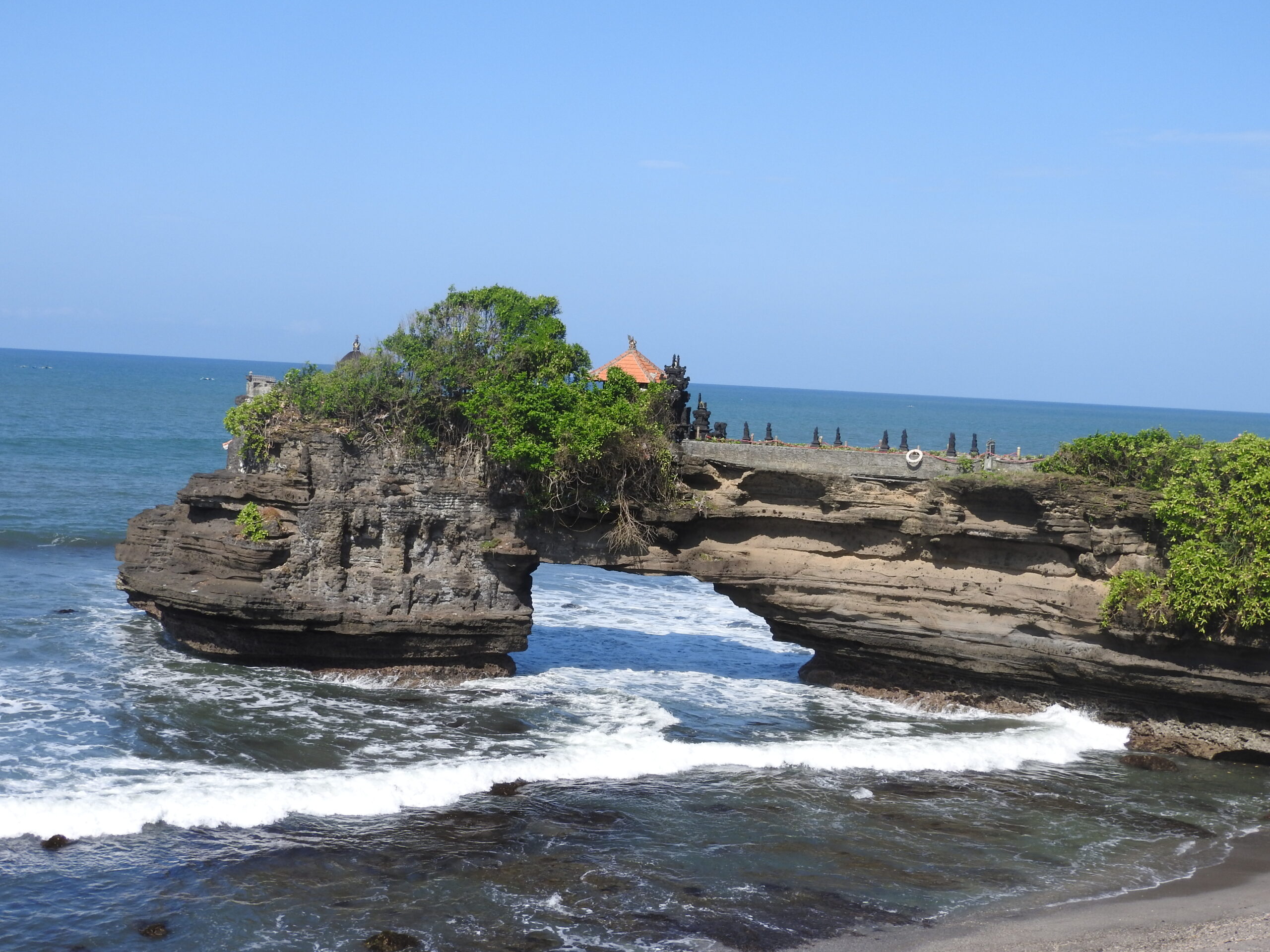
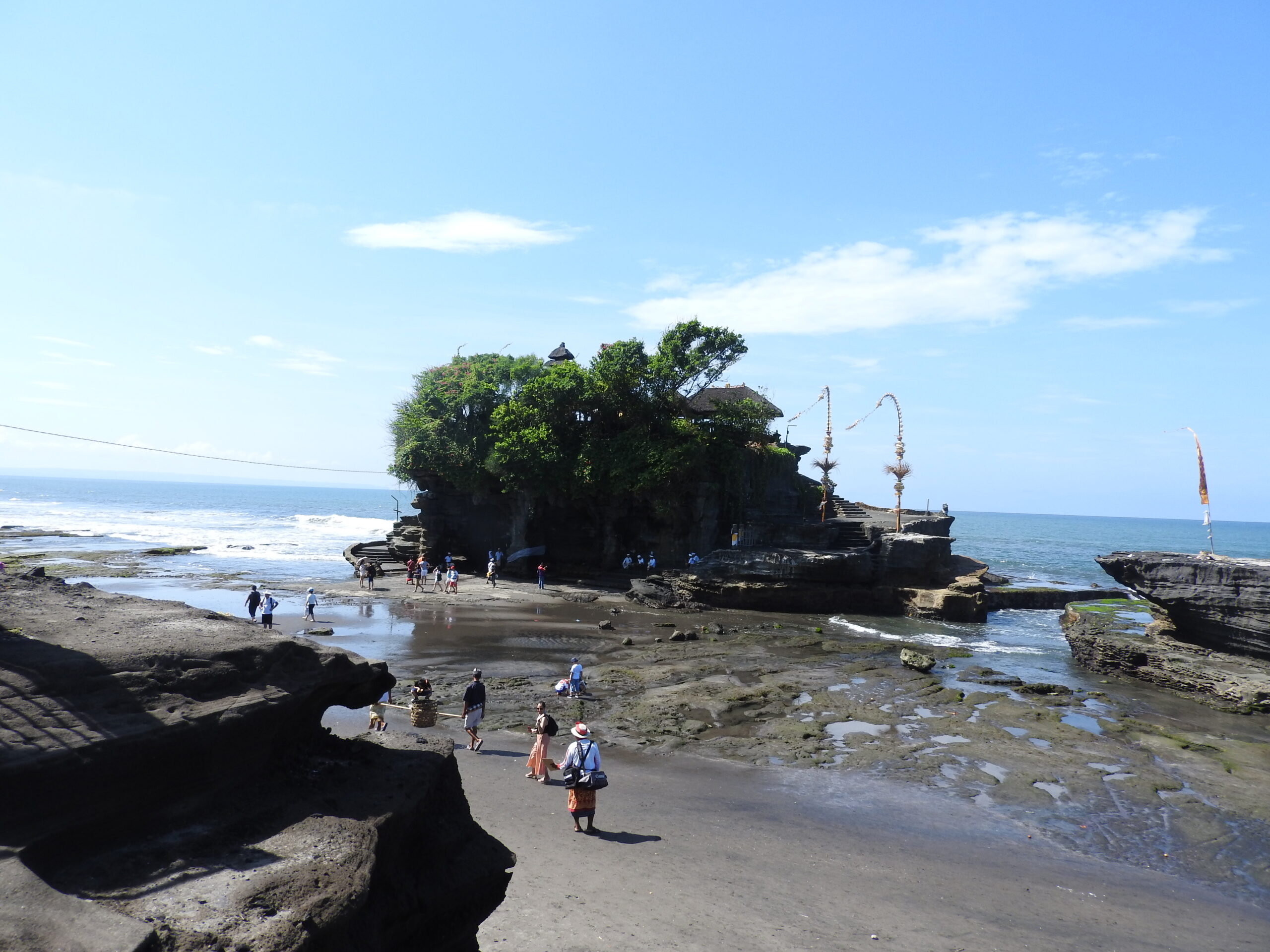
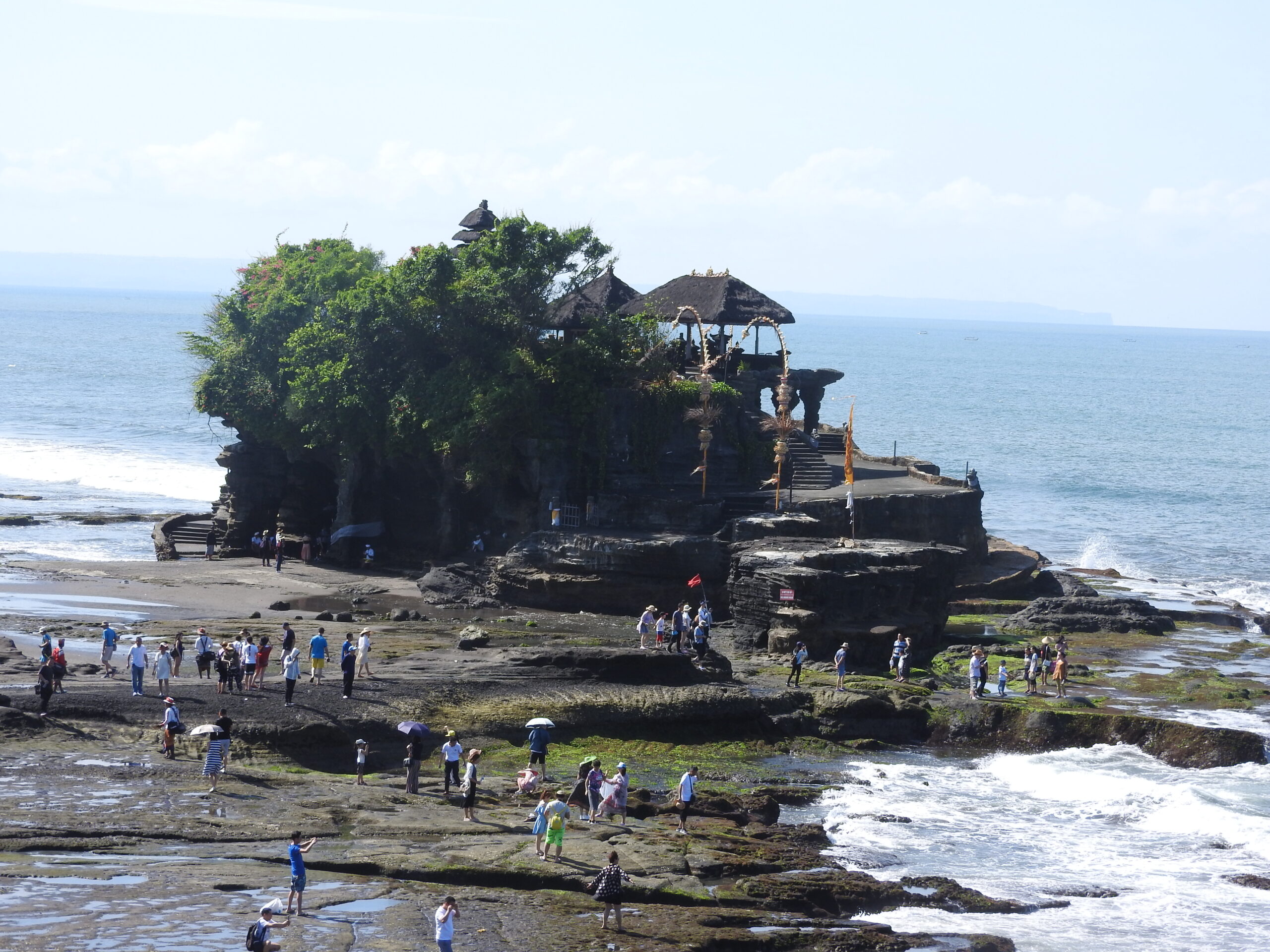
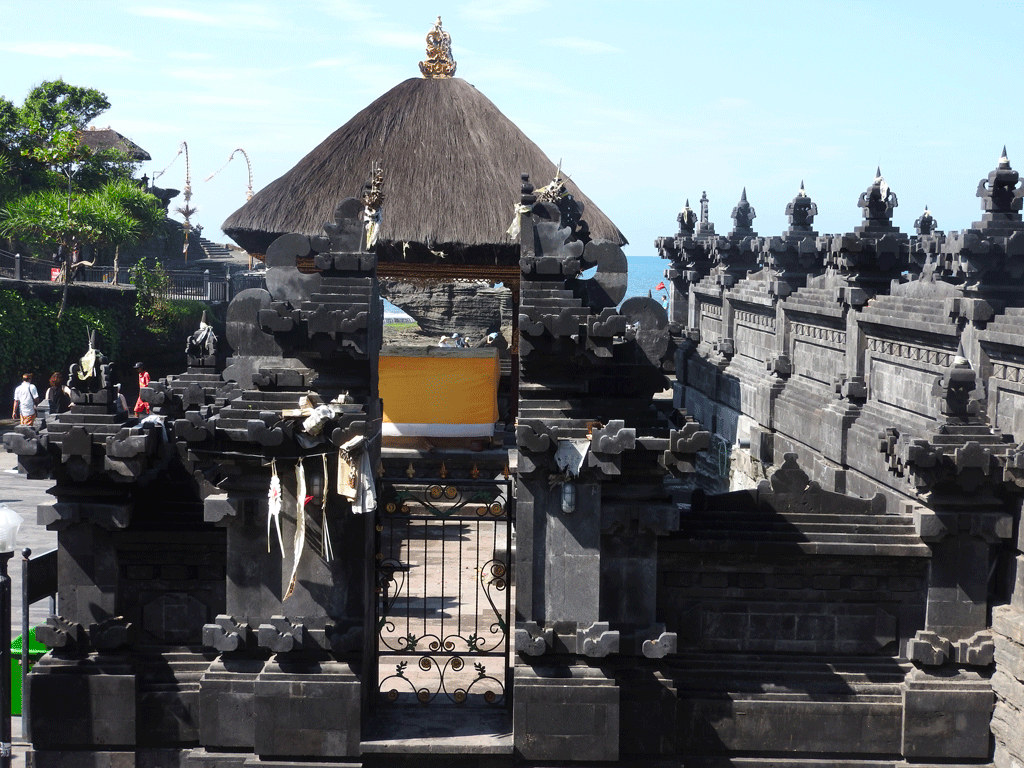
Arguably Bali’s most picturesque temple, Tanah Lot sits off the coastal village of Beraban on the west coast north of Kuta. The Hindu altar is perched on top of a rock-island and has its origins in the fishing traditions of the local population.
The structure dates back to the sixteenth century, and was renovated in the eighties. It is another top destination to enjoy the phenomenal Indonesian sunset over the ocean, definitely one of the things to see in Bali. Tanah Lot is said to have been founded in the 16th century by sage Dang Hyang Nirartha. The legends surrounding the founding of the temple have varied over time and now there are numerous versions. Some say that the wise man, during one of his travels, came across this magnificent place and decided to spend the night there. Some fishermen saw him and brought him gifts. The next morning he ordered the fishermen to build a temple on the rock formation, as that was a perfect place to worship the sea gods.
Others claim that Nirartha was praying at the nearby Rambut Siwi Temple when a ray of light from the south caught his eye. The sage went looking and discovered that the ray was emanating from a source of sacred water. He began preaching to the locals, causing the dislikes of the local priest who asked him to leave. In response Nirartha prayed and meditated so intensely that he pushed the rock formation he was praying on into the sea, thus creating Tanah Lot. He then transformed his scarf into poisonous snakes, which were supposed to protect the temple.
The main deity of the temple is Varuṇa or Bhatara Segara, in his manifestation of sea power. In ancient times Nirartha himself was also worshiped here. The temple has been a part of Balinese mythology for centuries. It is one of the seven Balinese sea temples (pura segara) , placed on the southwest coast of the island as far as the eye can see in order to form an imaginary chain. In a cave in front of the temple, the monks keep poisonous sea serpents imprisoned which are believed to protect the temple from evil spirits and intruders. Below the rock formation, flows the source of sacred water (air suci) used for purification rites in which anyone can participate by making a donation to the temple.
Access to the inside of the temple is permitted only to Hindus.
This tour will take you to the following places:
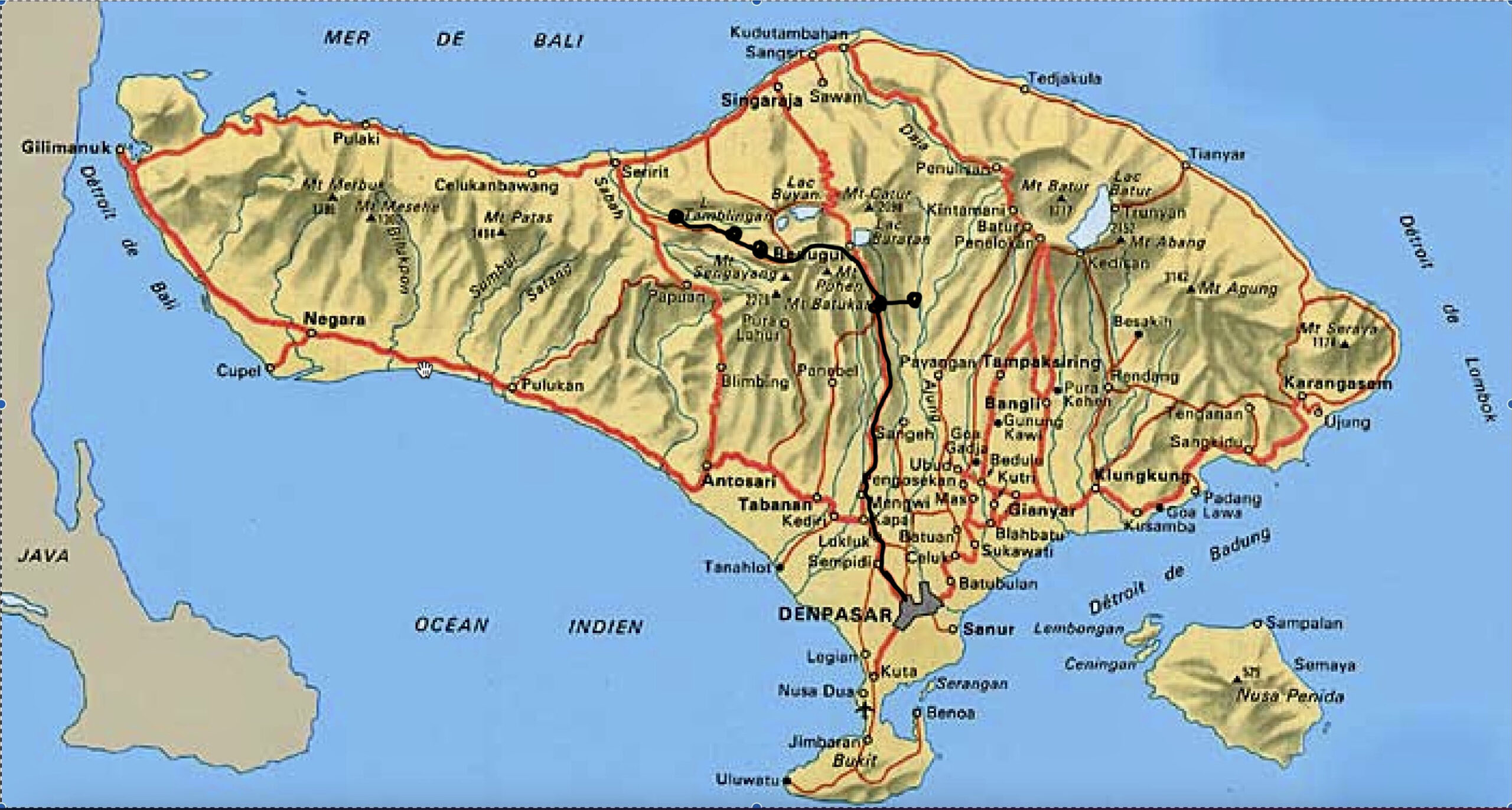
- RISAIE DI JATILUWIH
- PURA BETUKARU
- MUNDUK
- BAGNI SACRI
- TEMPIO BUDDHISTA
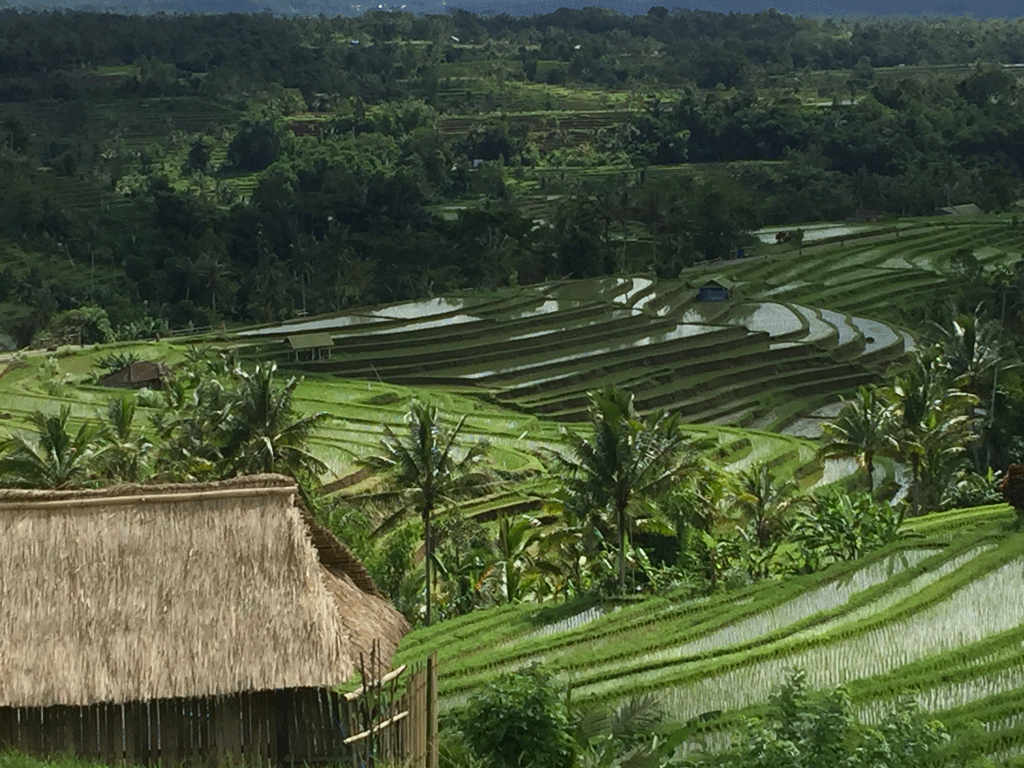
Jatiluwih Rice Field
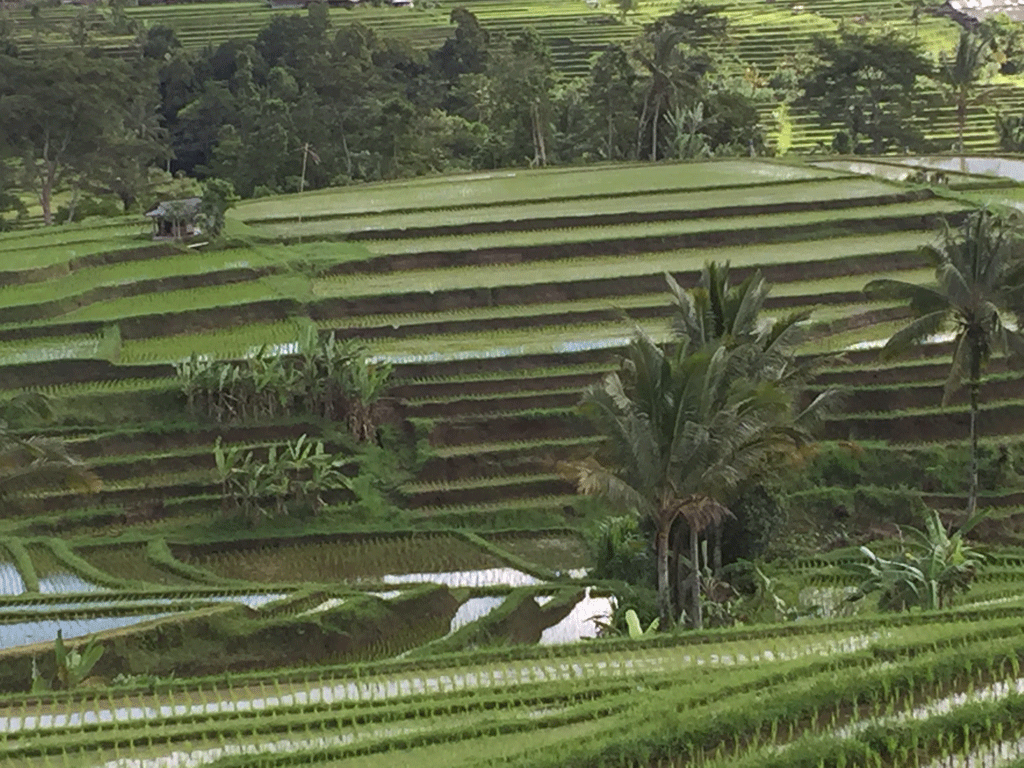
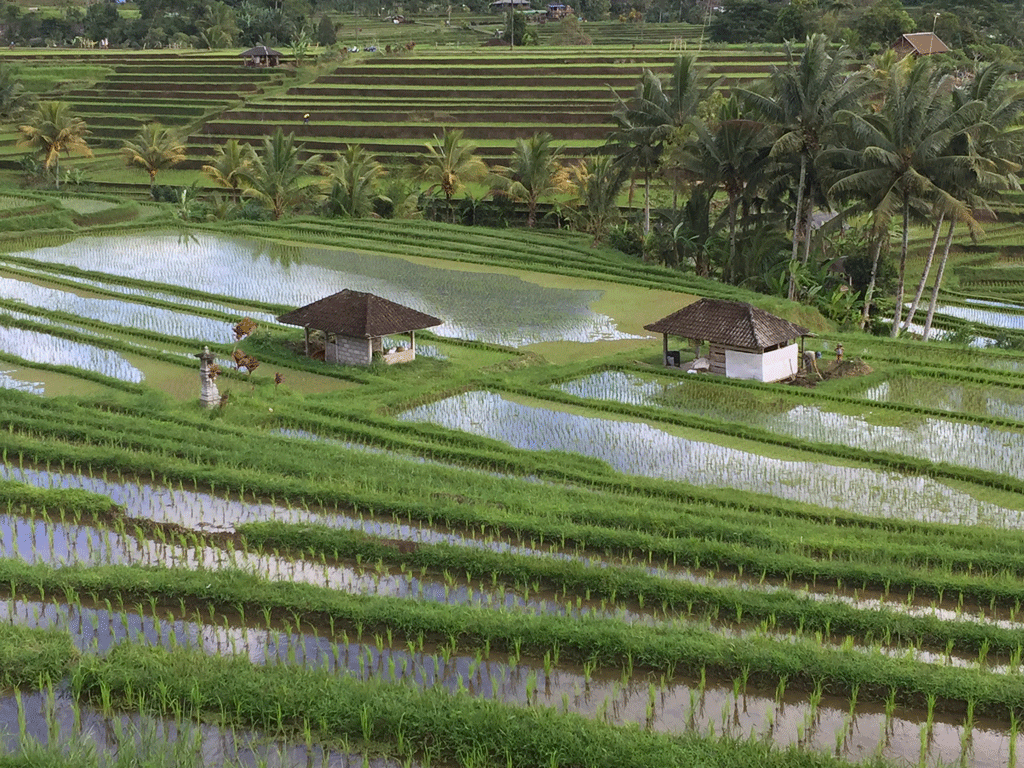
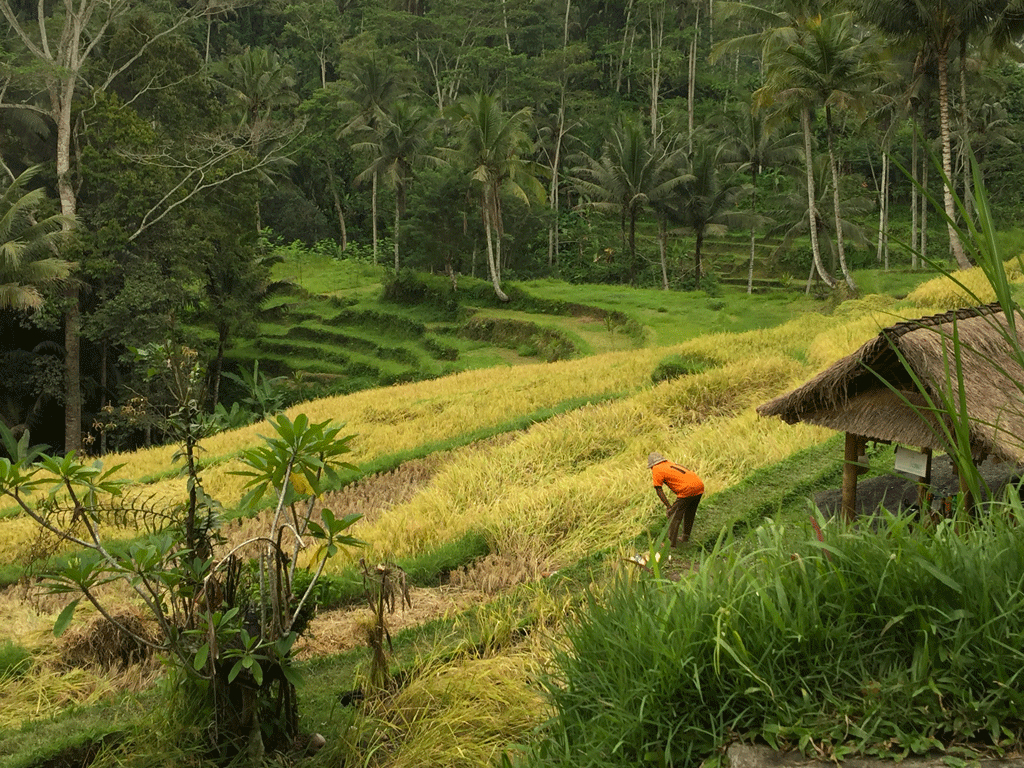
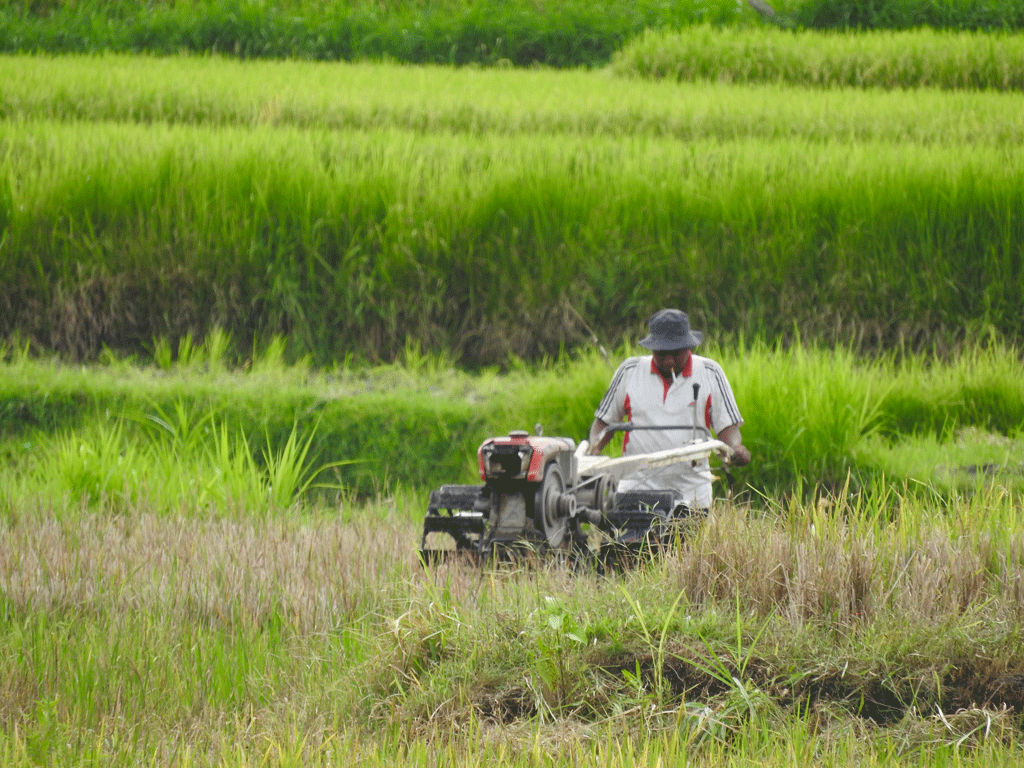
The beautiful rice terraces of Jatiluwih. Located at a height of 700 meters above sea level, they represent one of the most fascinating areas of the island. Despite being under the aegis of Unesco, these rice fields are less frequented; the charm of the terraced rice fields of Tegalalang lies in their position: they are steeper and are located in a valley surrounded by dense vegetation.
The rice fields of Jatiluwih instead arise in a much flatter position and for this reason it is much easier to walk and enjoy the scenery. Getting to the Jatiluwih rice fields takes about an hour and 40 minutes from Ubud; in fact, they are about 35 kilometers from the city. They are known as Green Land.
Pura Luhur Baturaku
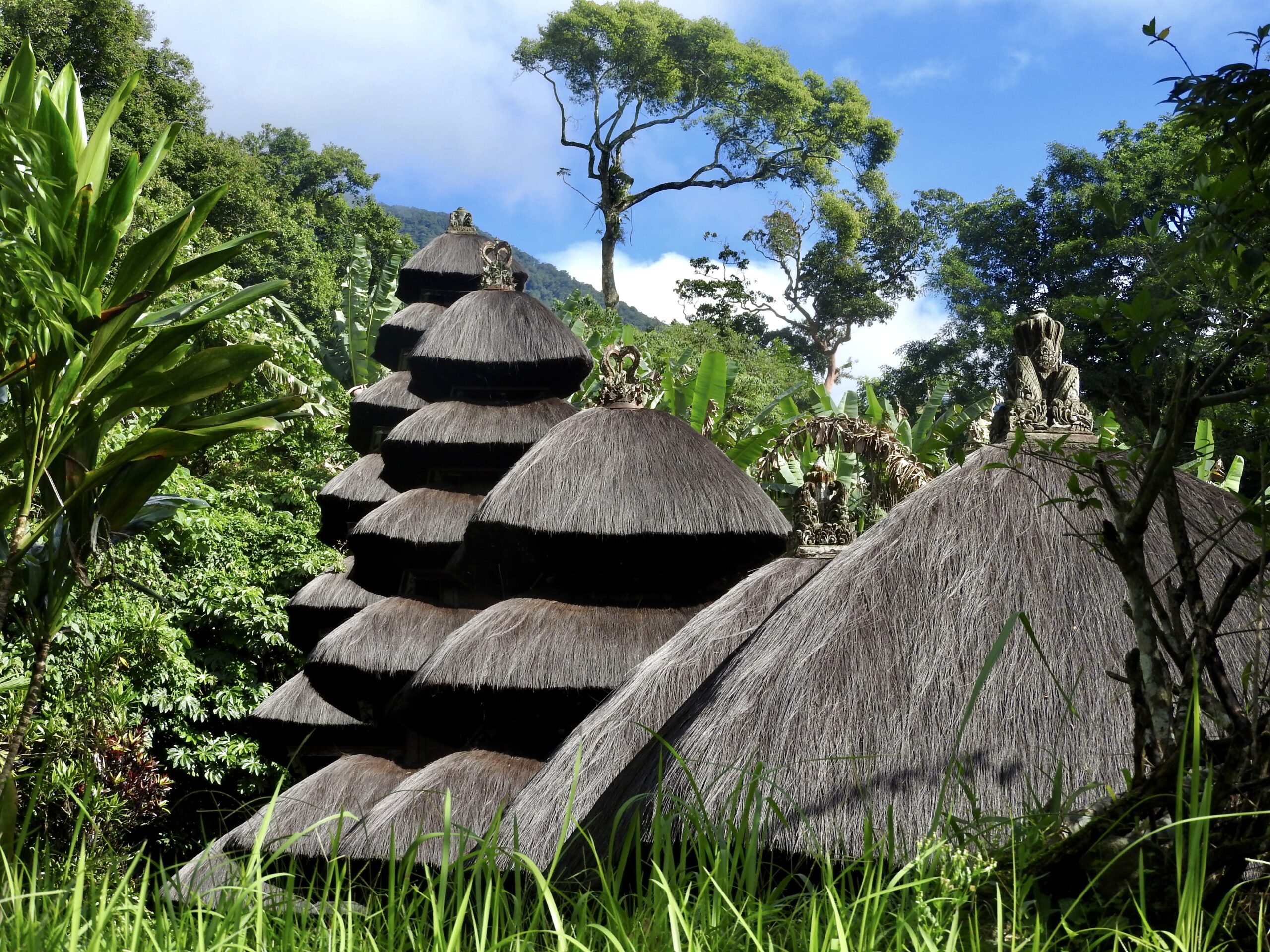
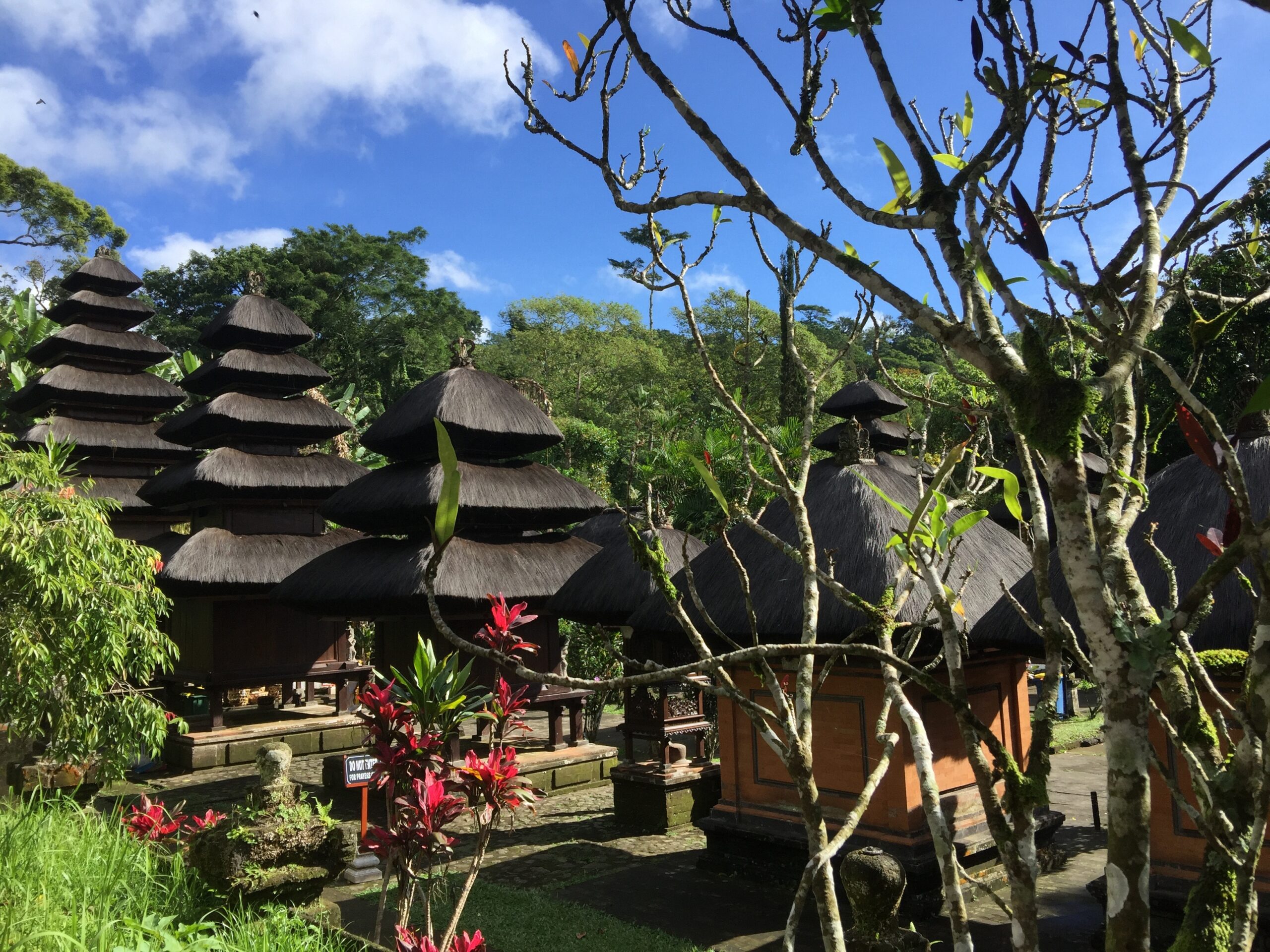
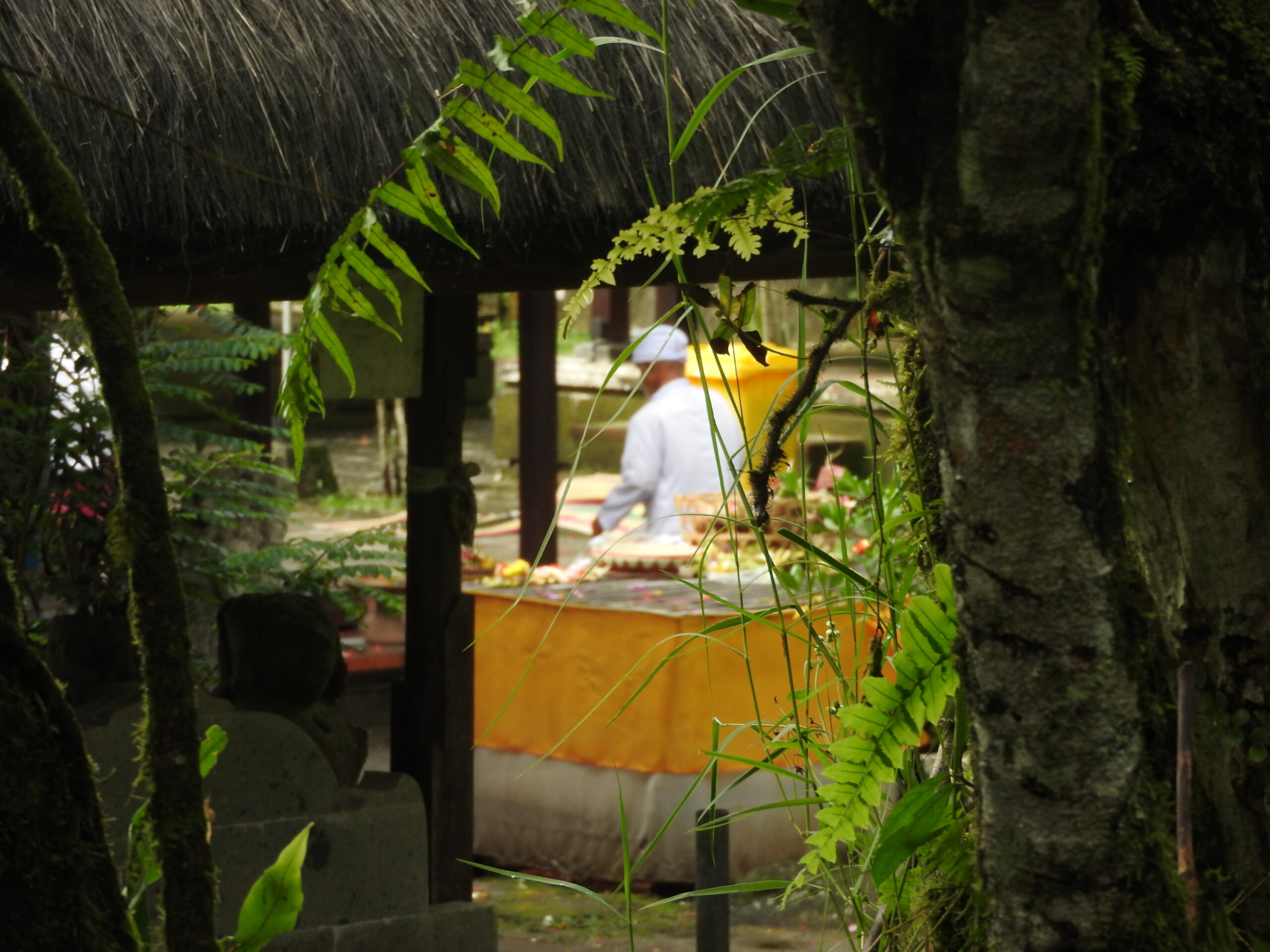
Called by the locals Pura Luhur Batukaru, it is one of the main temples in BaliIt is located at the foot of Mount Batukaru, which is 2,270 meters above sea level.
Located on the southern slope of Mount Batukaru, Bali’s second highest volcano, the temple is one of nine kayangan jagat meant to protect the Balinese from evil spirits.The temple is surrounded by cool natural forest, providing a pleasant stop for nature lovers.
Lost in the middle of nowhere, actually located in the nearby dense virgin forest, the verdant and humid atmosphere of the places gives it a mystical aura.
Munduk
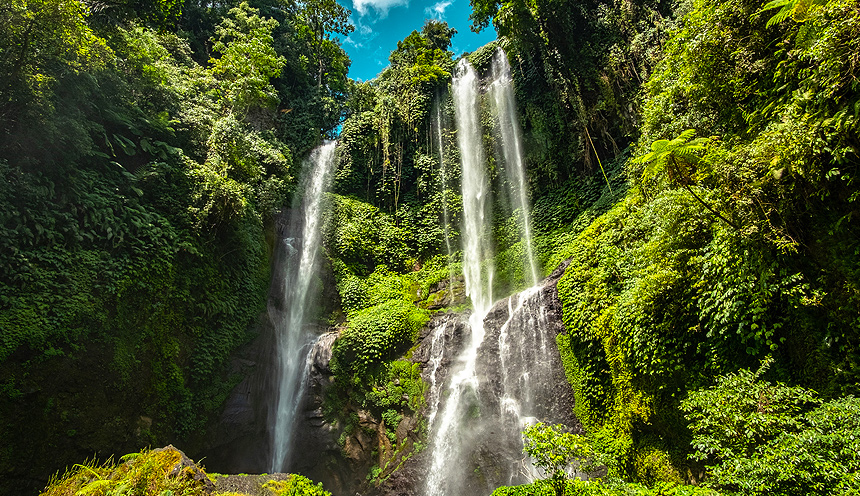
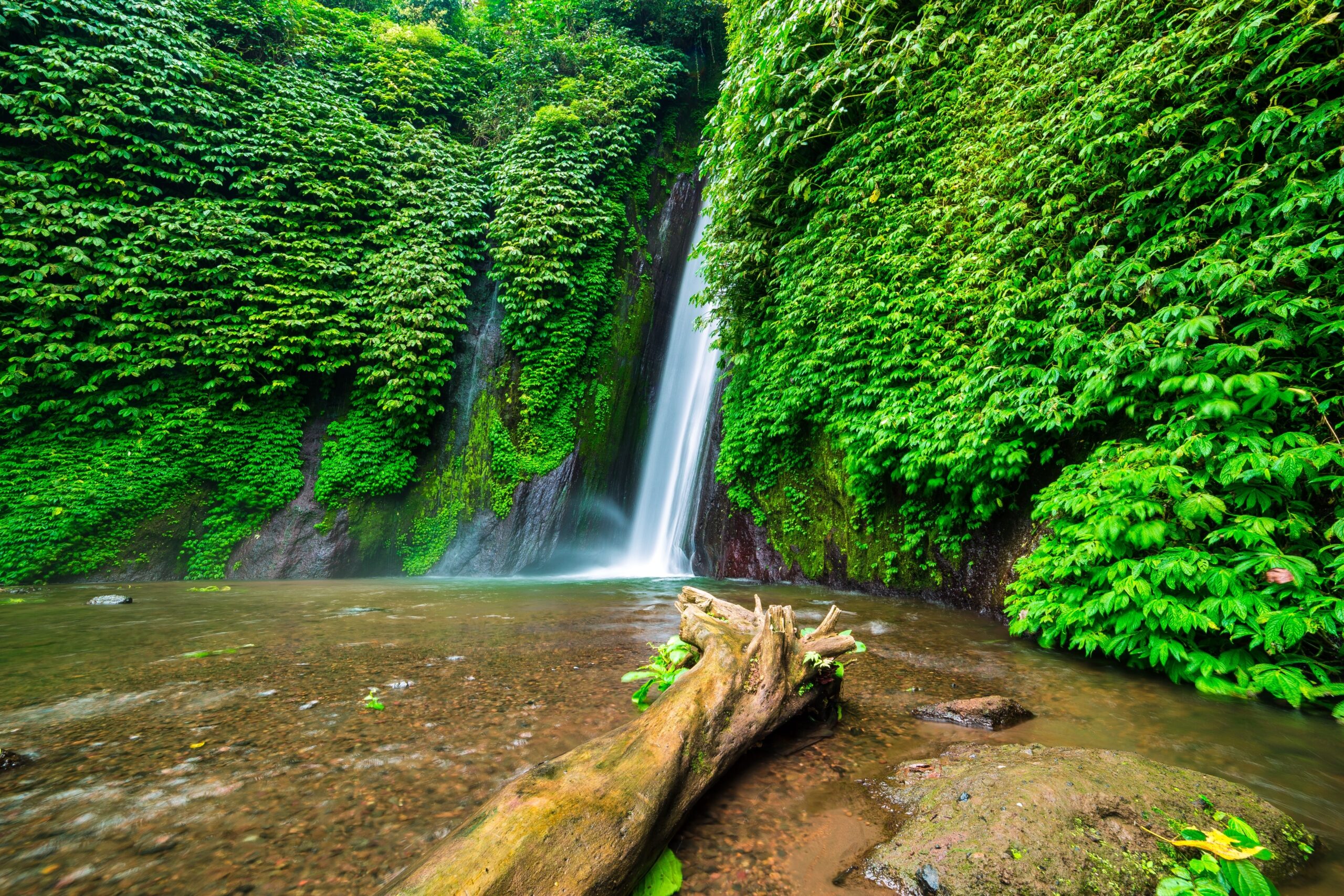
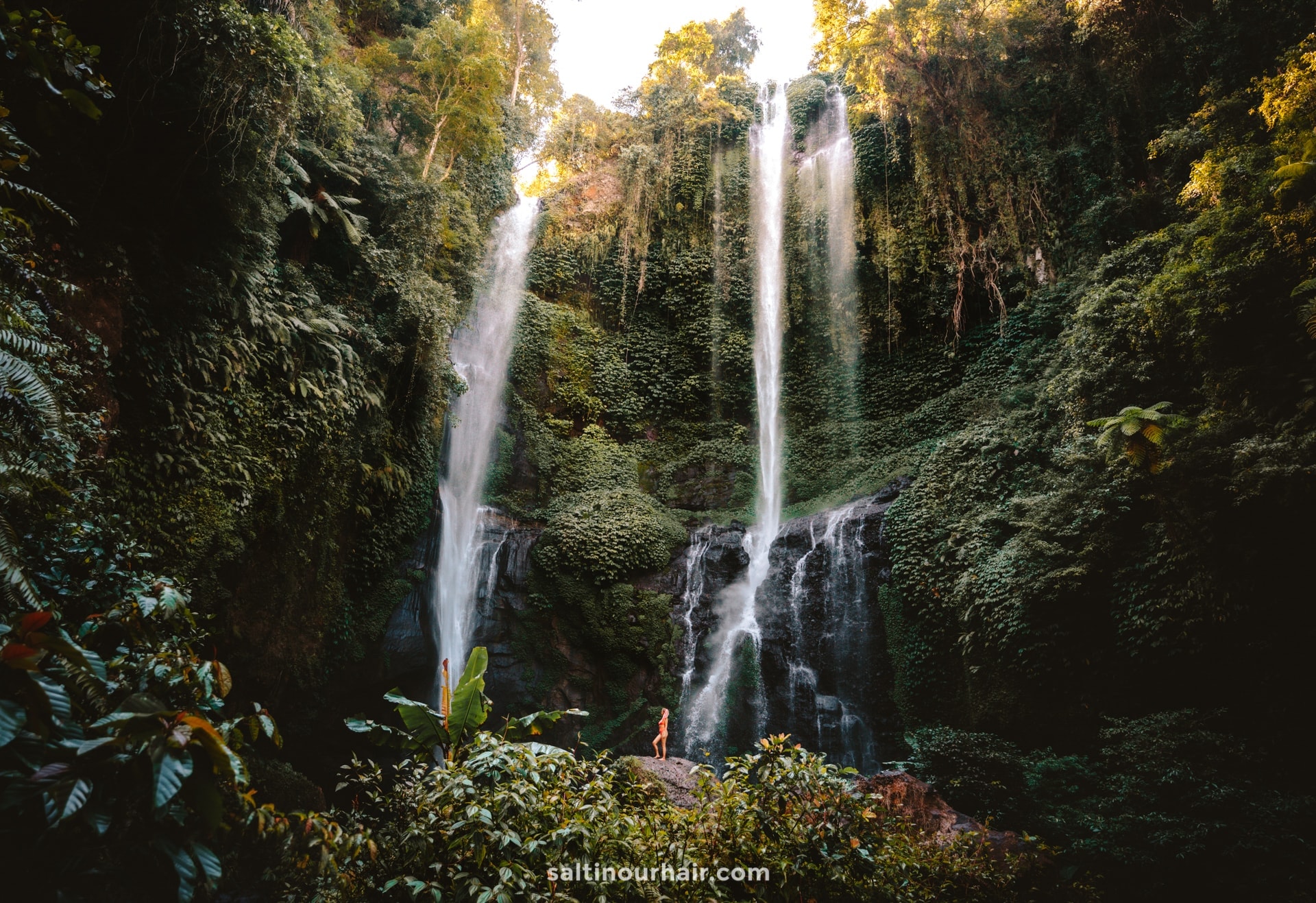
One of the most famous attractions of Munduk are the waterfalls, which you will find about 2km east of the village.
Entrance fee costs 10,000 rupees and if you have your own moped parking will cost 2,000 rupees.
From the parking area to the falls it is about a 10-minute walk.
Banijar
Banjar is a Buddhist village in the north of Bali, near Lovina.
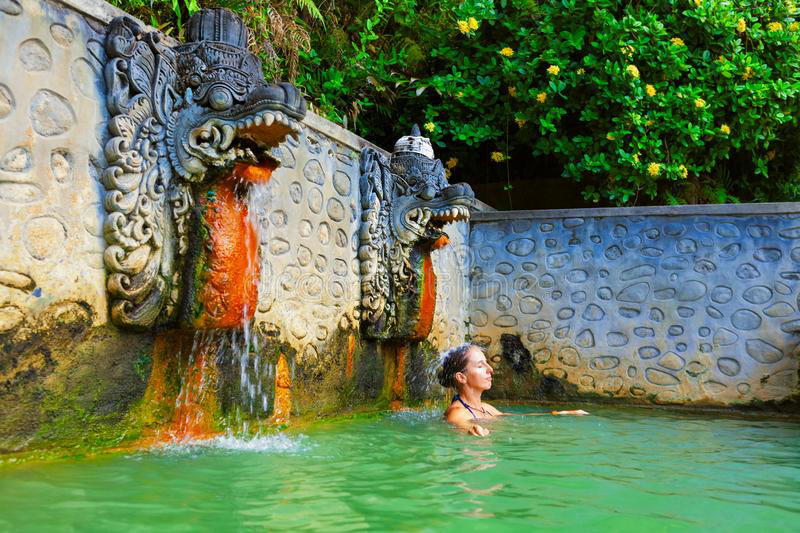
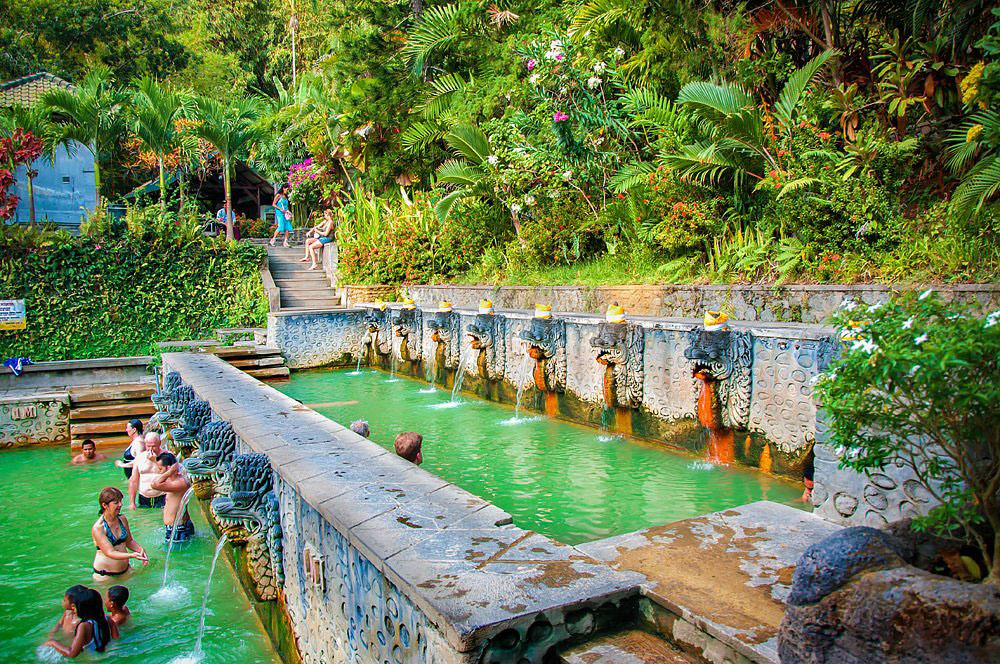
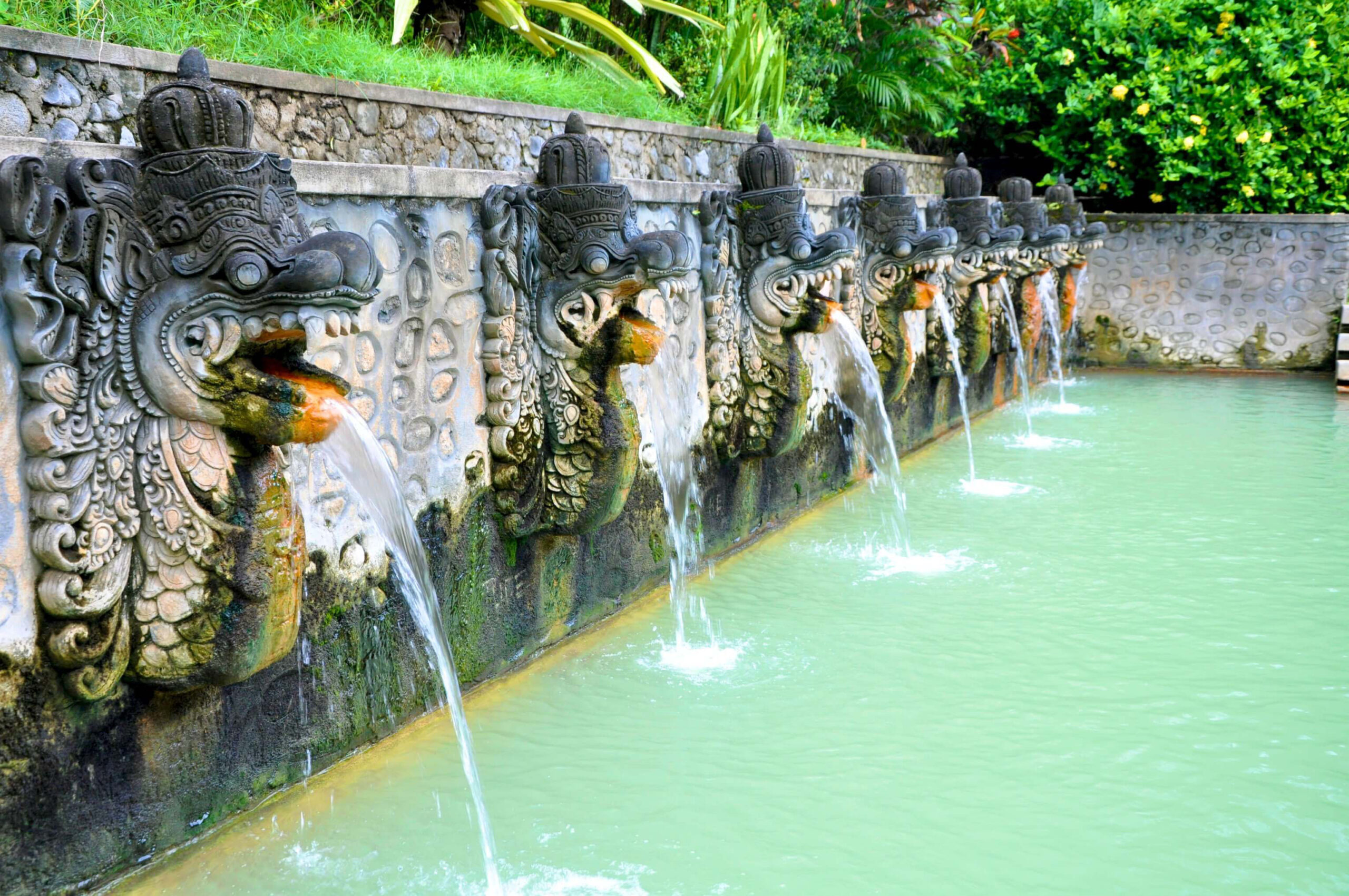
Tucked away in the hills, this tiny village offers treasures of natural beauty and experiences at the heart of local life, for a break off the beaten track. The “Air Panas” or hot springs are an experience not to be missed: in the heart of a lush jungle, immerse yourself in sacred and beneficial water.
The healing bath ritual is part of the life of the Balinese who frequent this place in large numbers: respect and modesty are therefore welcome.
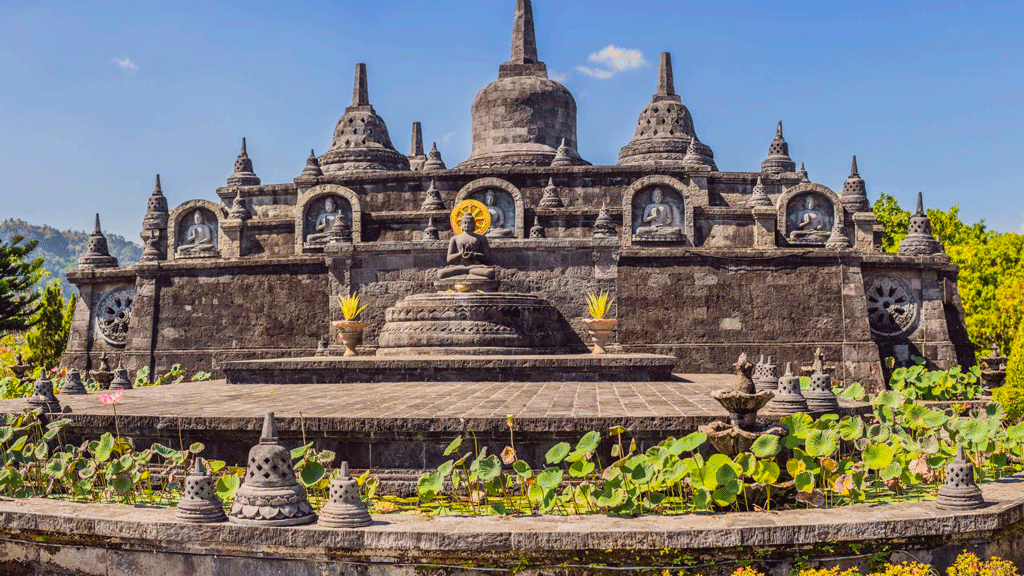
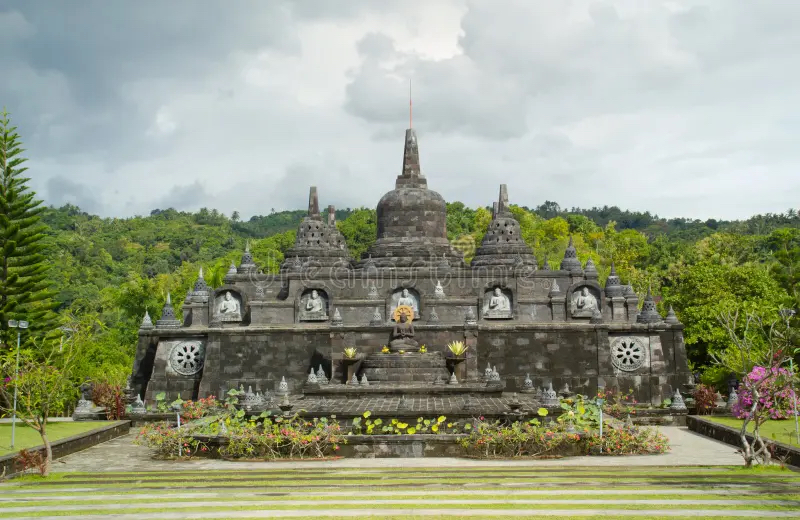
Brahmavihara – Arama
Vihara Buddha Banjar is one of the most fascinating places located in North Bali where time is suspended is the most authentic experience of Bali.Worth seeing in Banjar, the Brahma Asrama Vihara Buddhist monastery: it is a small treasure chest of spirituality where you can try meditation, transported by the scent of frangipani. Among the innumerable Hindu temples scattered on the island there is a single and majestic Buddhist monastery.
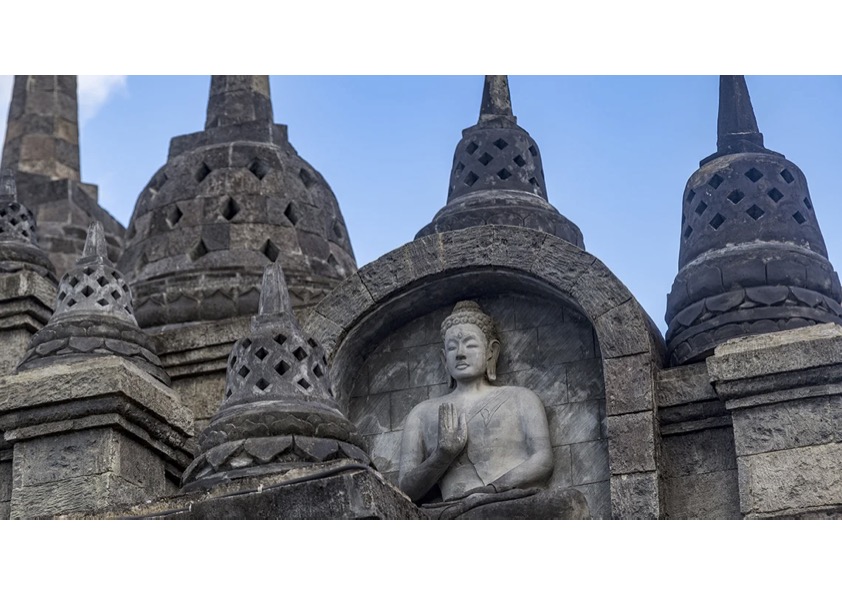
It will be pleasant and interesting to browse through the many “rooms” of the complex to discover this fascinating religion and observe the bhiku in the moment of prayer in the Dharmasala located in the eastern part.Brahma Vihara Arama Located in North Bali, on Banjar Hill, near Lovina and its main attraction is considered to be the incredible miniature replica of Borobudur, the largest Buddhist archaeological site in the world, a UNESCO World Heritage Site.
Since it opened in 1970 the monastery immediately became a place of sacred pilgrimage for thousands of visitors and faithful.In its magical blend of Thai and Balinese styles with colorful decorations, bright orange roof and Buddha statues, the temple welcomes its visitors with a flower pond surrounded by local statues and then ushers them up the steep steps to enjoy the sensational view of the Valley.
It is good to inquire about the calendar of events to plan a meditation lesson in the Uposatha Gara hall immersed in the almost surreal tranquility of this mystical temple or to attend a procession of Buddhist monks during a sacred day such as Asada or Vesak.
This tour will take you to the following places:
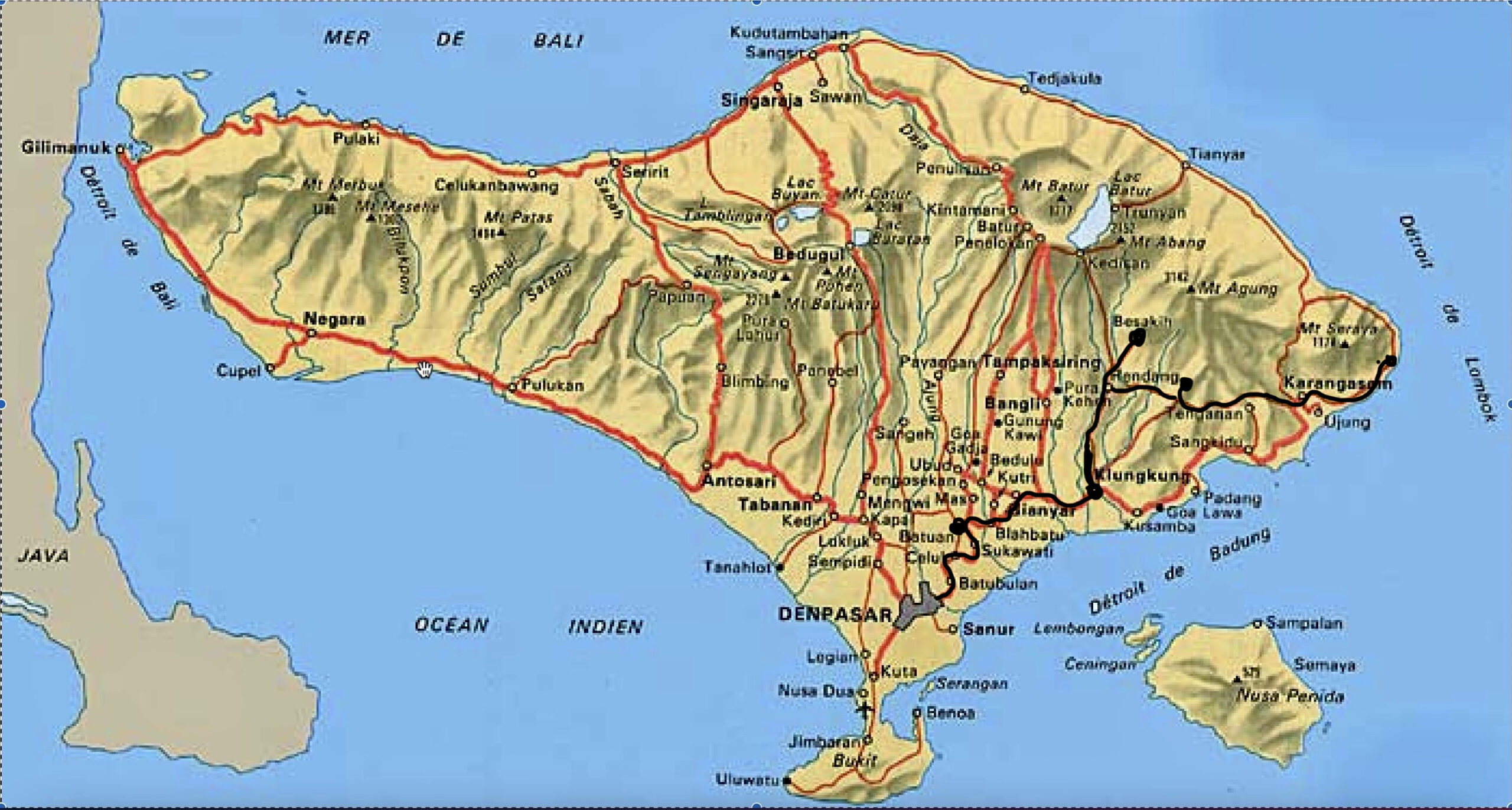
- REGGENZA KLUNGKUNG
- PURA PUSEH DESA BATUAN
- TEMPIO MADRE DI BASAKIH O PURA BESAKIH
- WATER PALACE DI TIRTA GANGGA
- TEMPIO PURA LEMPUYANG
THE KLUNGKUNG REGENCY
(in Indonesian Kabupaten Klungkung) is a regency (kabupaten) of Indonesia located in the province of Bali. It is the smallest regency in Bali, with an area of 315 km2 and a population of approximately 180,000 (2013). Its headquarters is Semarapura.
Capital of the ancient kingdom of Klungkung, the city of Klungkung can be easily reached from Gianyar via the highway.
The regency is known for its classical Balinese paintings, many of which tell the story of epics such as the Mahābhārata and the Rāmāyaṇa.
These classical-style paintings come from the frescoes of Balinese palaces, and can also be found at Klungkung Palace in the slums. The Semarajaya Museum is also located in the area.
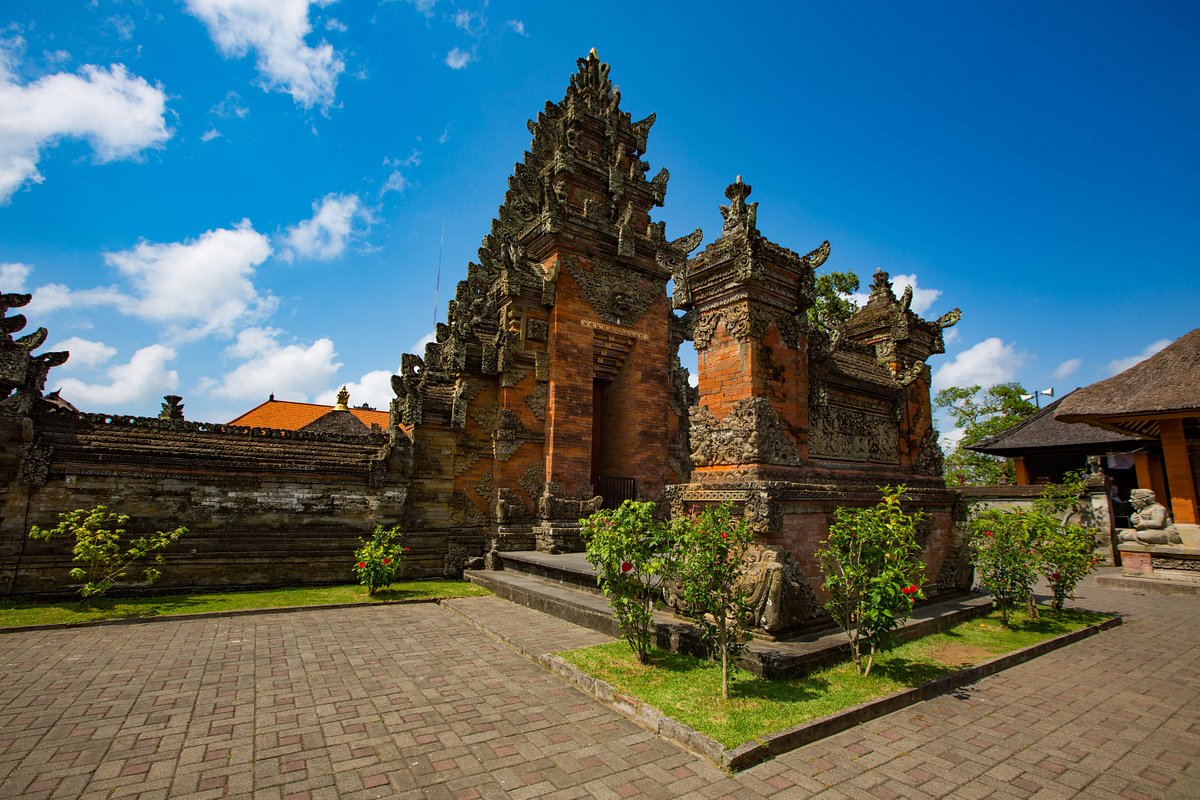
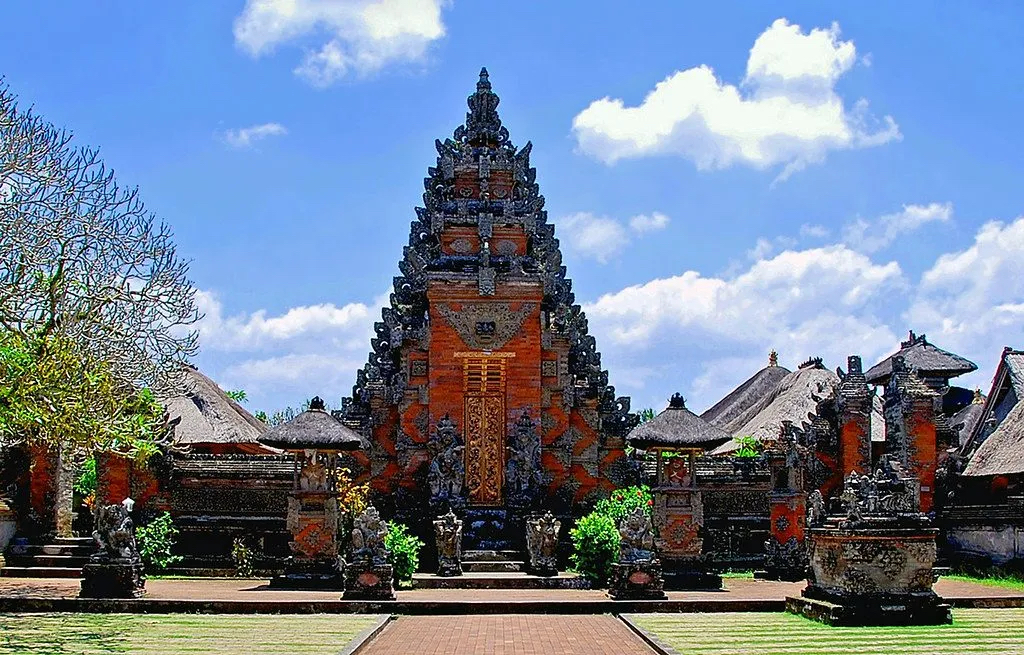
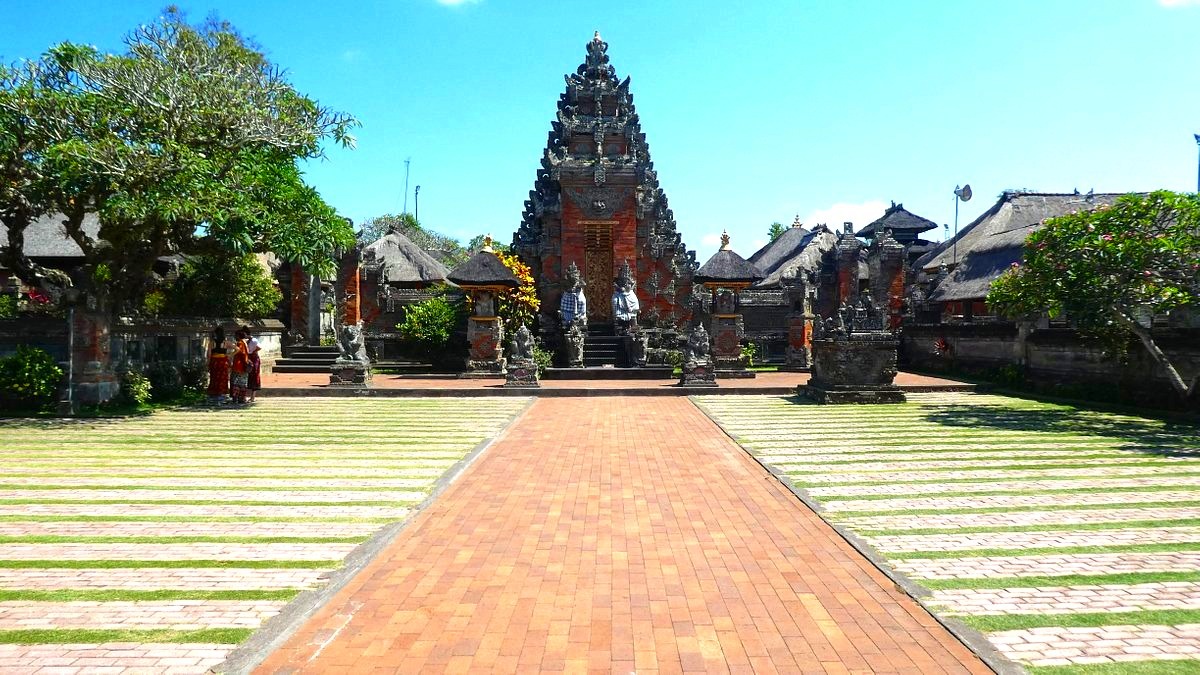
PURA PUSEH DESA BATUAN
It is one of the most important monuments in the area with intricate stone carvings. It is located in the northern part of Batuan village, 200 meters from the main road.
The temple also has an inscription testifying the founding date of Batuan as 1022 AD. The temple was restored in 1992. It is a five-level entrance tower, clearly influenced by Indian religious architecture.
Its icons and decorations, however, are typically Balinese in style.
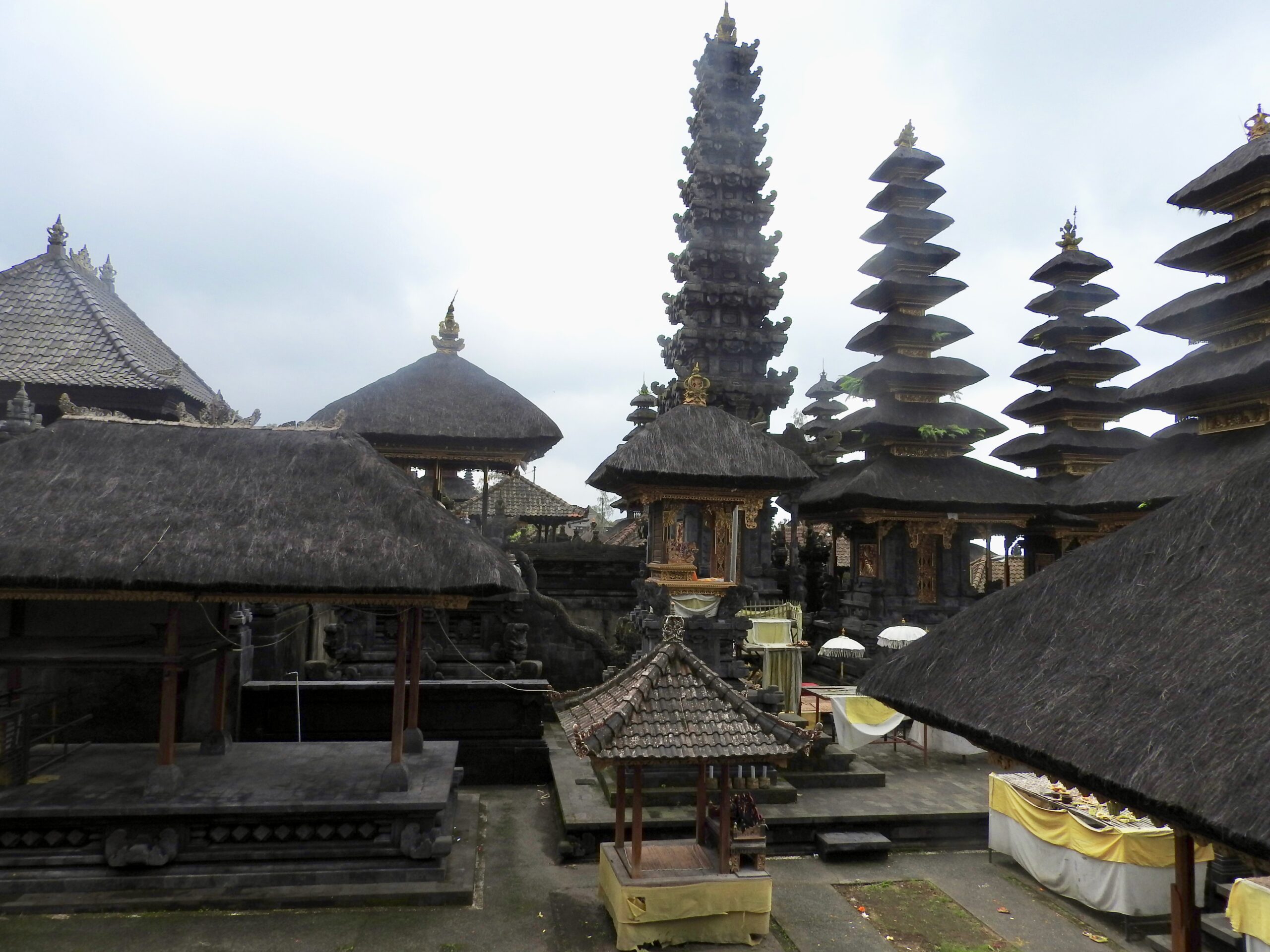
The roof of the temple is made of black chromatic palm fiber.The maintenance of the temple is entrusted to the village residents.
The temple is located on the main road from Denpasar to Ubud.
BESAKIH OR PURA BESAKIH
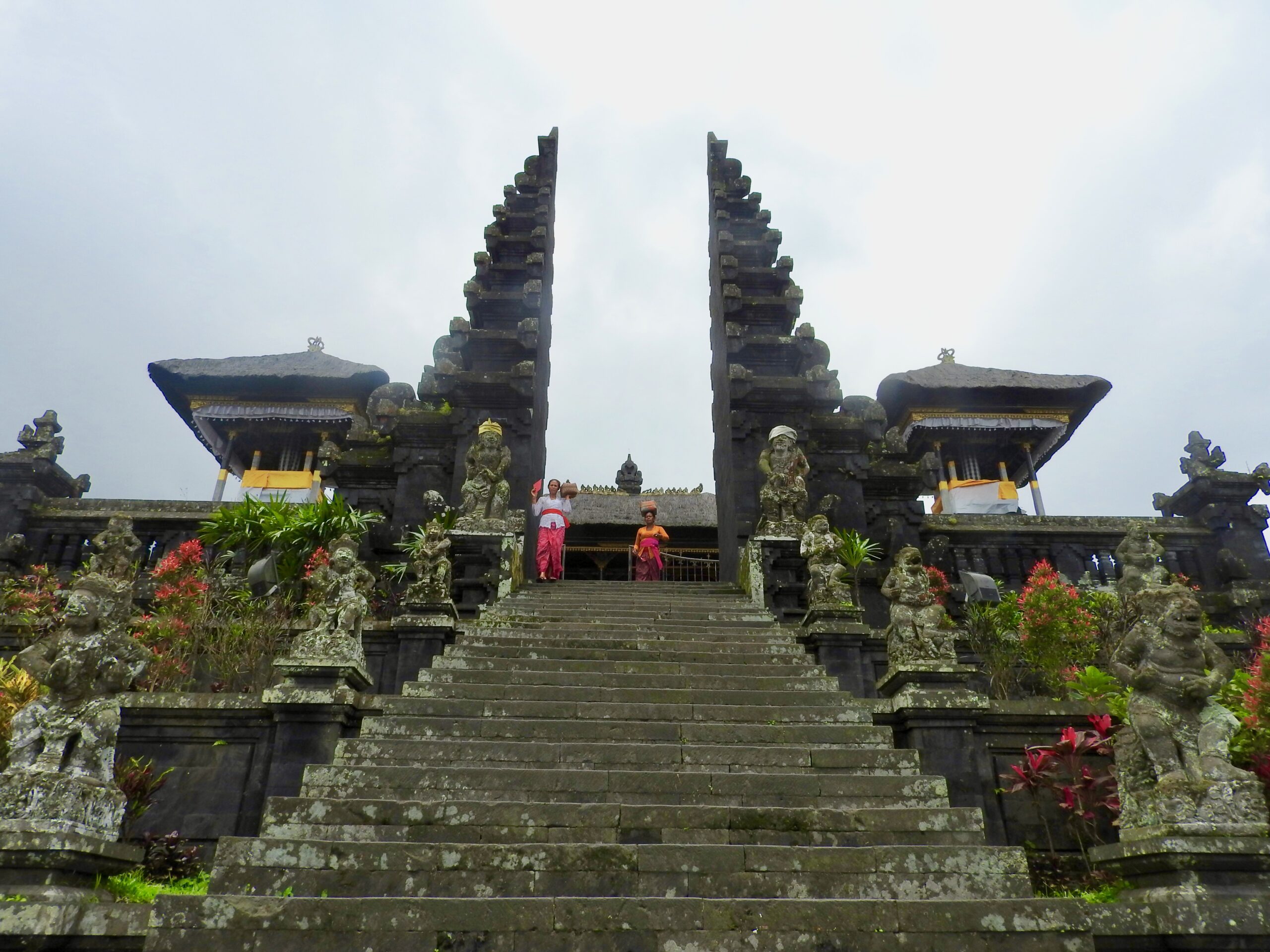
The mother temple of Besakih or Pura Besakih is the most important, largest and holiest temple of the Hindu religion in Bali. It is located in the village of Besakih, from which it takes its name, on the slopes of Mount Agung on the eastern part of the island.
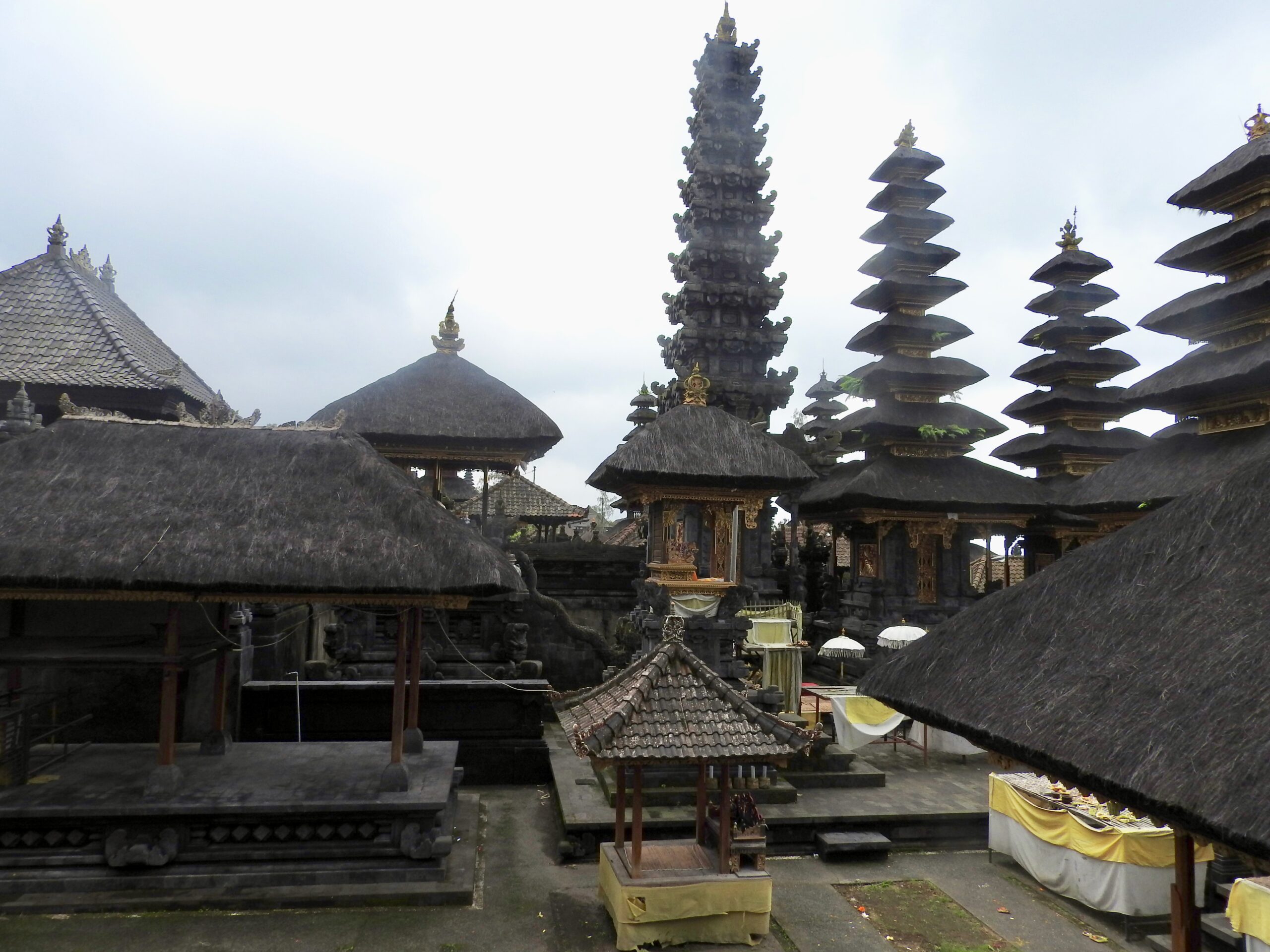
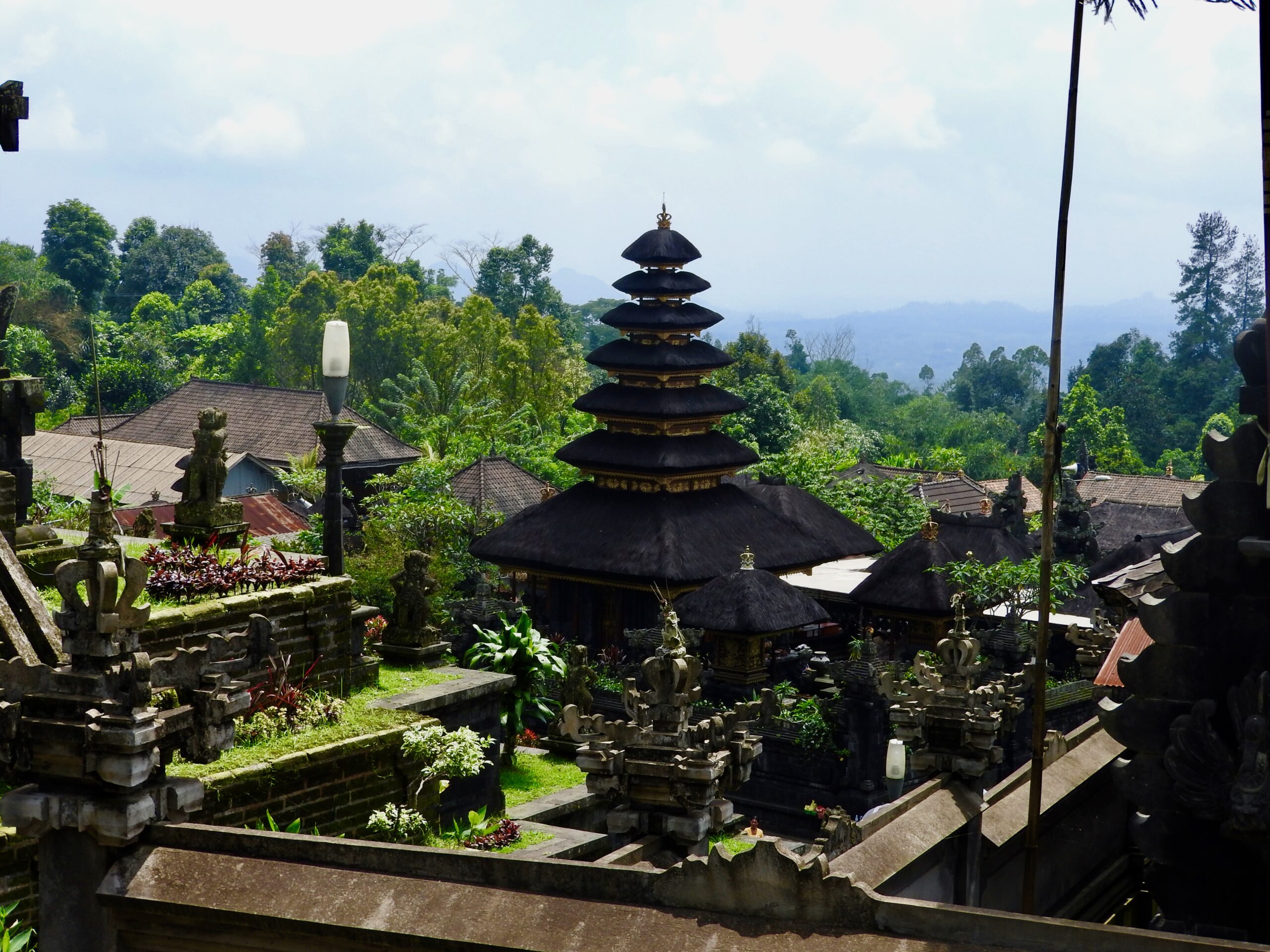
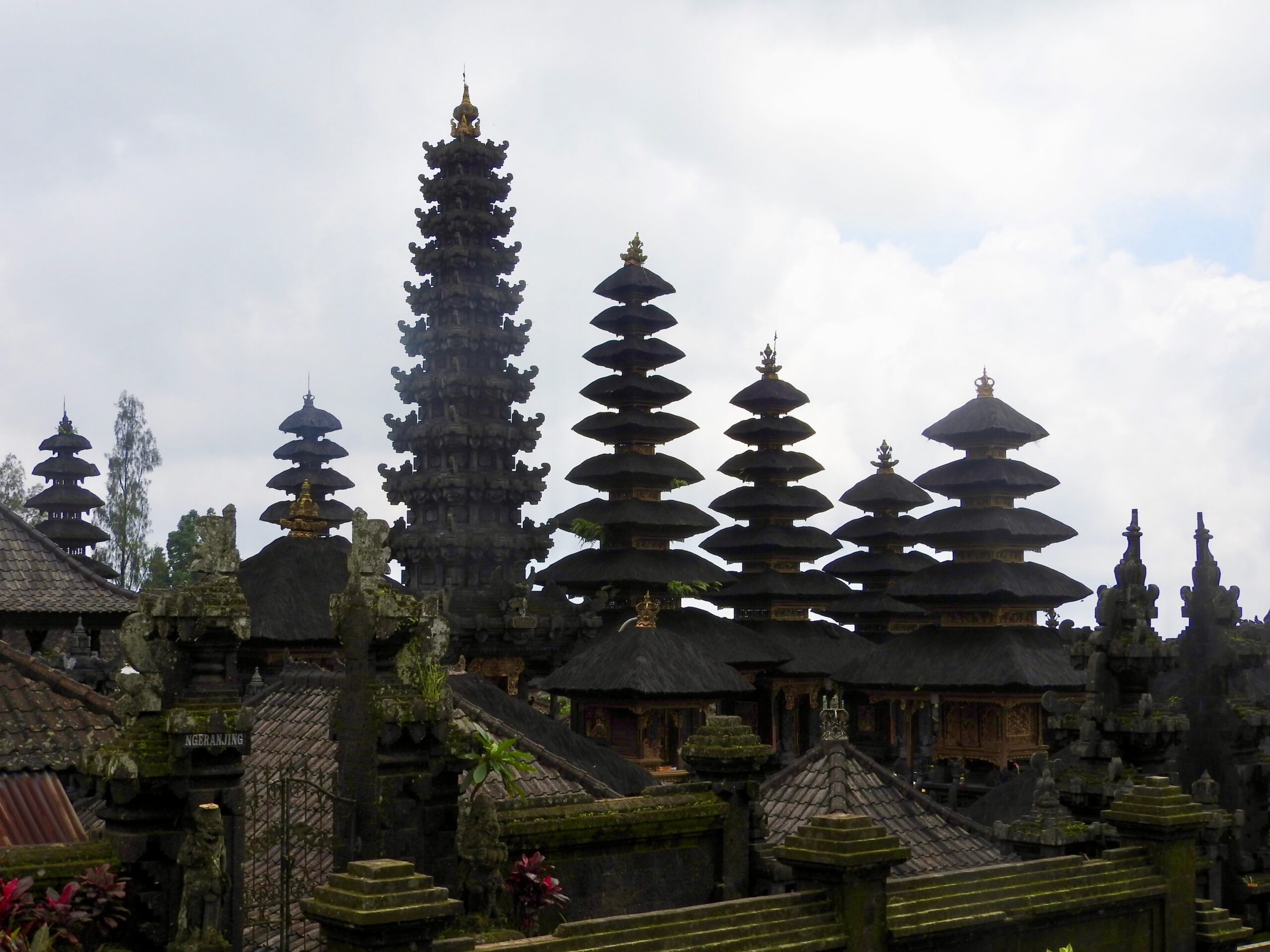
Perched at about 1000 meters, it is a vast complex of 23 temples; the largest and most important is called Pura Penataran Agung. The temple is built on six levels, terraced on the slope. The entrance is an imposing candi bentar, a double-leafed doorway, beyond which a kori agung leads to the second courtyard.
The cult of the Agung volcano is lost in the mists of time. The place has always been considered sacred, and the stone base on which Pura Penataran Agung is built (the most important temple in the complex) recalls the megalithic pyramids and dates back to at least 2000 years ago.During the eighth century, a Hindu monk decided to build houses for his acolytes on this sacred ground. The followers called this place Basuki referring to Naga Besukian, the sacred dragon that inhabited the slopes of the Agung. The name subsequently evolved into Besakih. The Hindu rites intensified with the arrival of the Javanese Majapahit conquerors in 1284.
The complex develops along a vertical axis which, through stairways and terraces, climbs the side of the volcano, spiritually guiding the person upwards, so as to be closer to the gods.
The mother temple of Besakih is made up of three sacred structures dedicated to the Hindu Trimurti: Penataran Agung, in the centre, decorated with white flags, is dedicated to Shiva the destroyer. Kiduling Kreteg , on the right side, decorated with red drapes, is dedicated to Brahma the creator. Batu Madeg, dressed in black, represents Vishnu the preserver.
The entrance is characterized by an imposing staircase embellished with flowers and surmounted by an imposing Candi Bentar, the double leaf portal typical of Balinese architecture. Through the door and the courtyard you enter the central part of the temple.
Here are the tallest and most important meru – towers with multiple roofs and the Padmasana Tiga – the altar dedicated to the three main divinities of Hinduism on the occasion of over 70 annual ceremonies.
TiIRTA GANGGA WATER PALACE
Tirta Gangga is a former royal palace in eastern Bali, Indonesia, about 5 kilometers from Karangasem, near Abang.
Named after the sacred Ganges River in Hinduism, it is known for the Karangasem royal water palace, le bathing pools and its Patirthan temple.
As soon as you pass the enclosure walls, you can admire an incredible panorama over the whole complex.
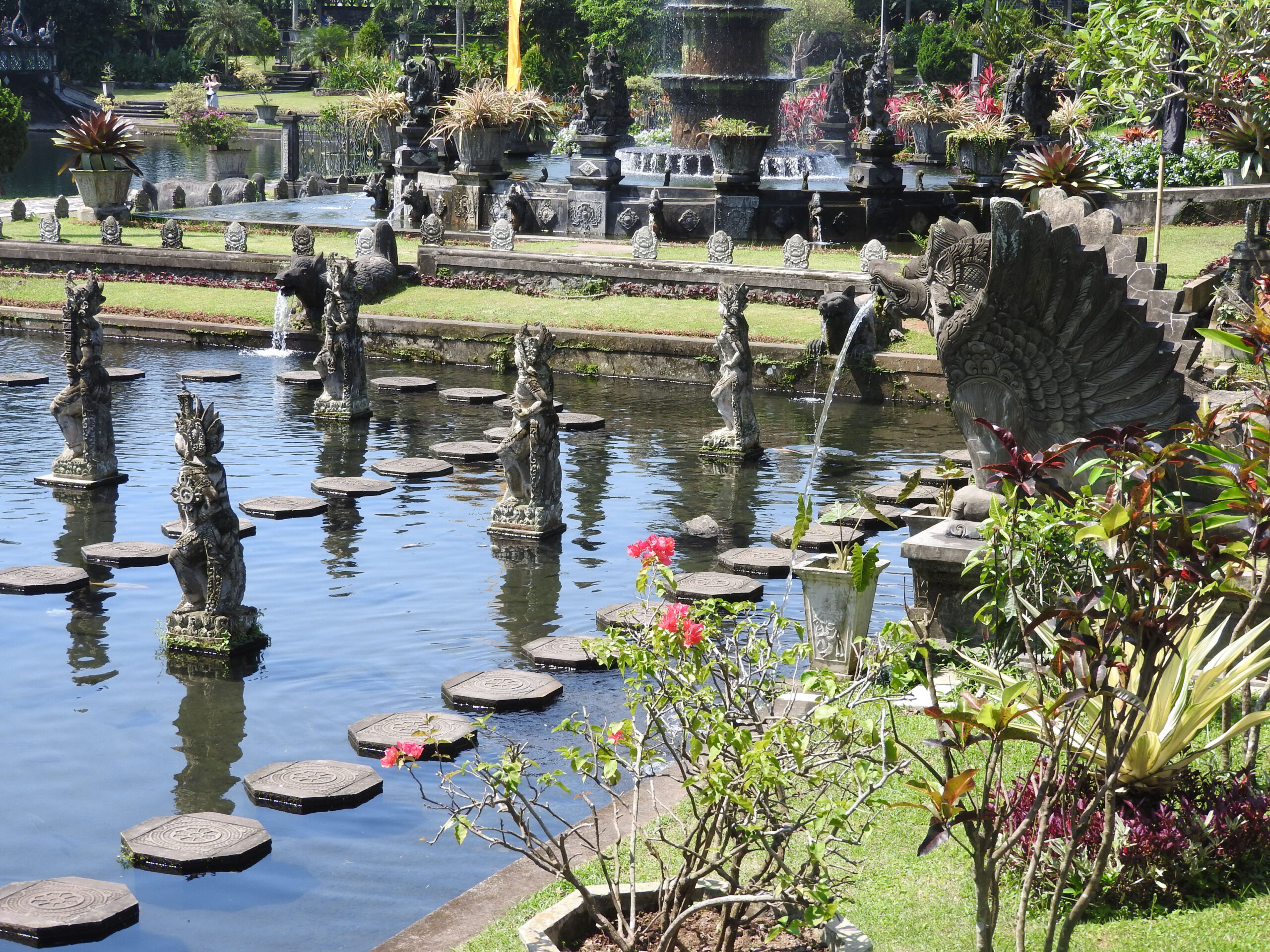
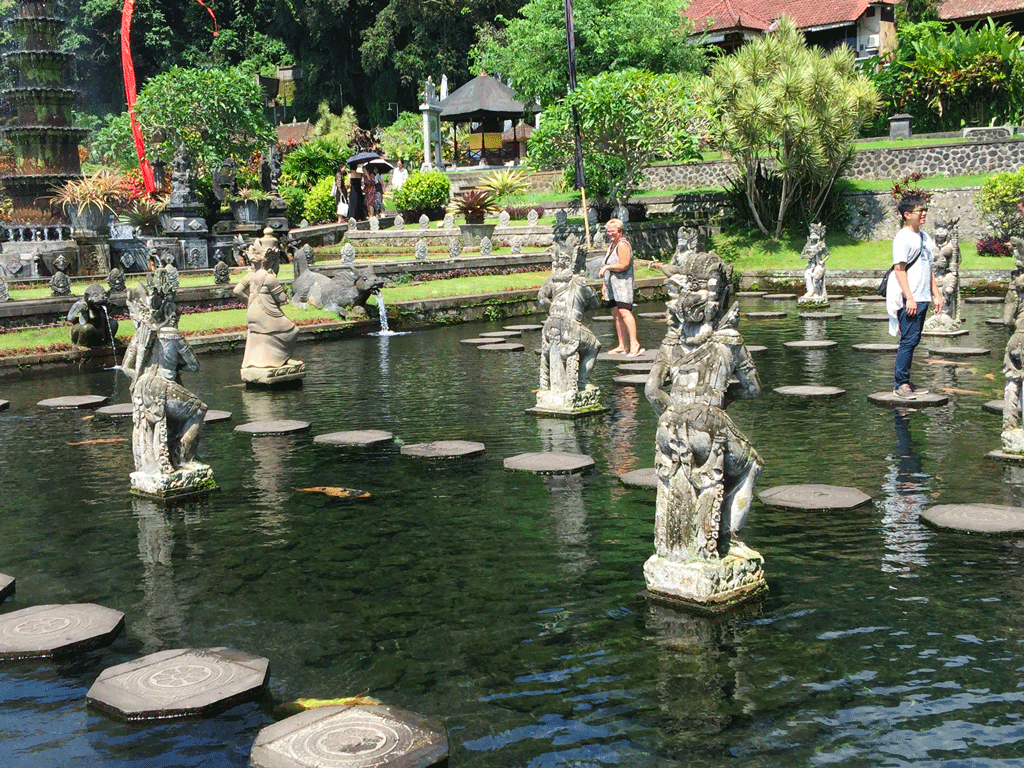
Two large artificial “lakes” dominate the centre. One of the two allows you to walk on stone stelae carved and placed in the water.
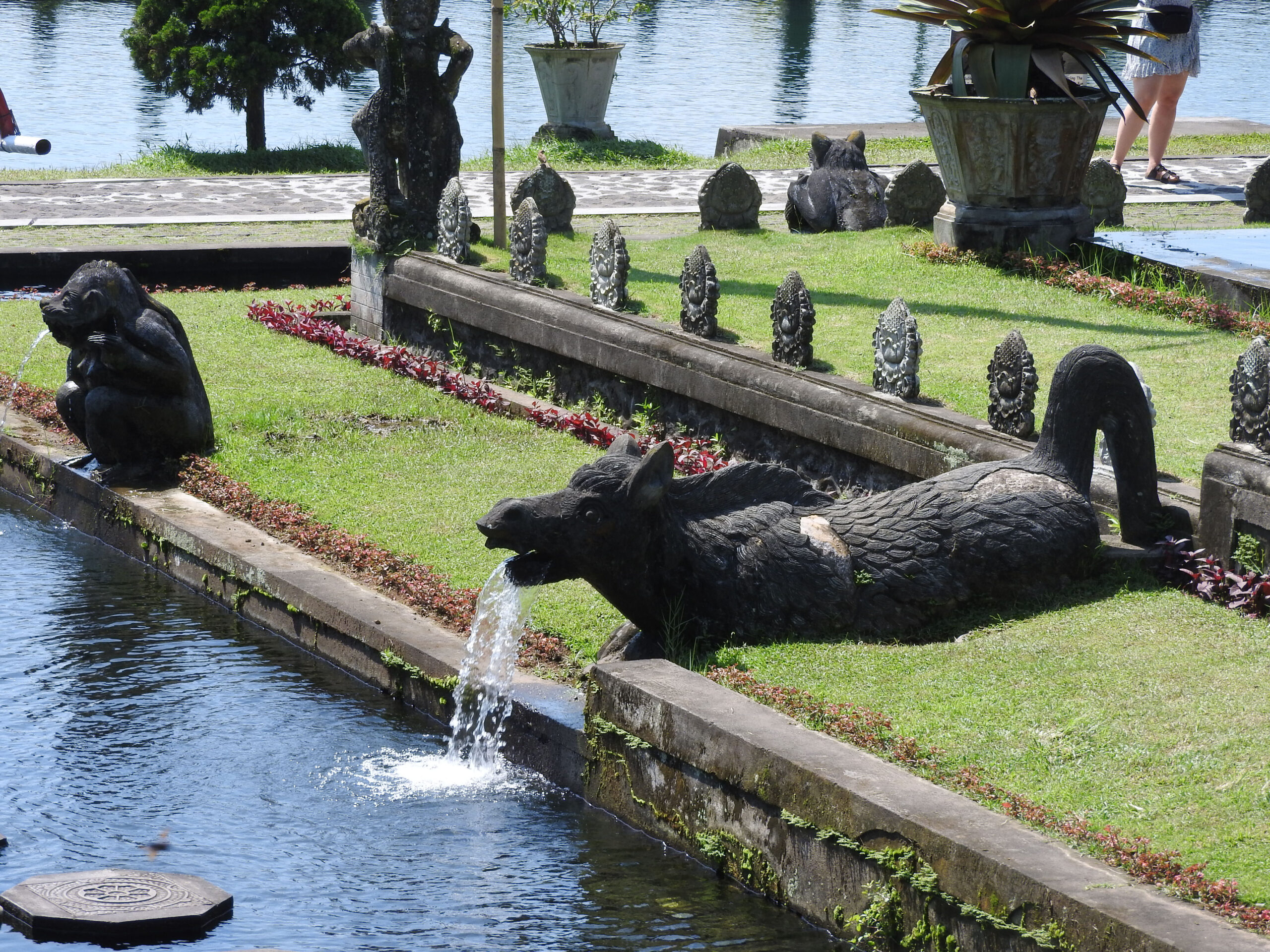
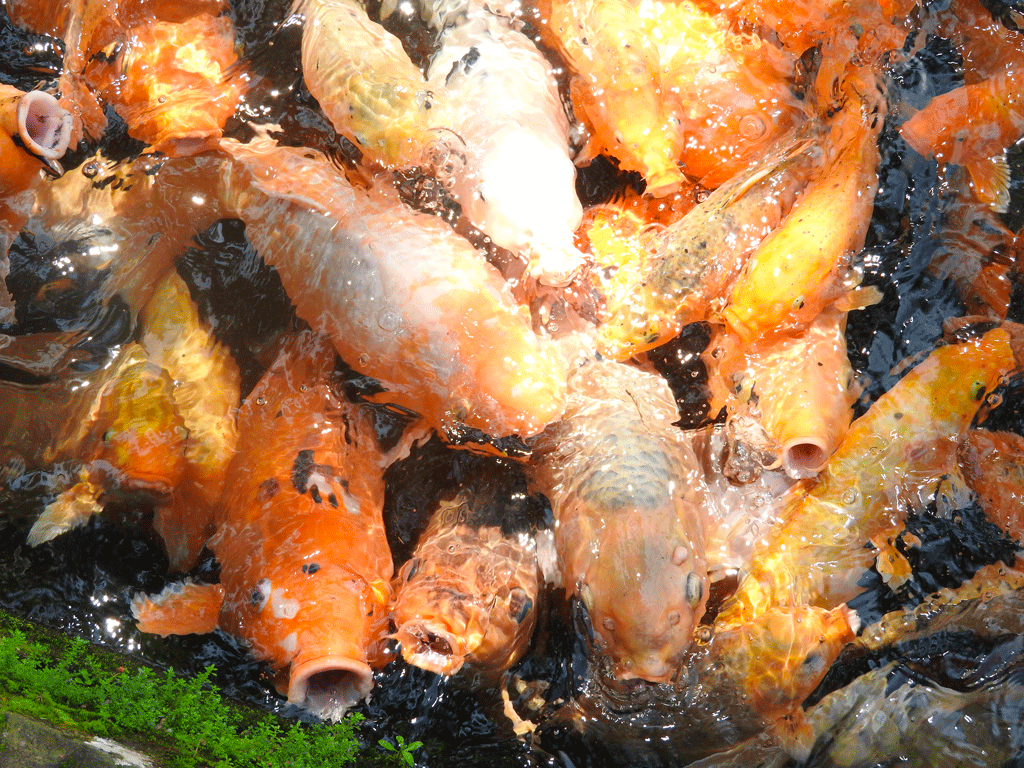
You quickly let yourself be taken by this labyrinth on the water where huge fish live and the stone fountains have the shape of buffaloes.
This all-water temple of Tirta Gangga is absolutely one of the best divinely inspired Hindu temples.
The luxuriant and very green garden where the white frangipani flowers release their unmistakable scent and frame these immense pools of running water, Hundreds of large colored fish find a home in their depths, which in addition to eating bread that tourists bring as an offer, would also have the task of absorbing the negativity left by the pilgrims who visit the temple.
What more can I say about this magical place, rich in history and beautiful statues, bridges and passages on the water’s surface, walking on the floating stones you can find peace and inspiration.
THE PURA LEMPUYANG TEMPLE
The name Bali’s Gate of Paradise is not accidental: Lempuyang is without one of the most symbolic and sacred places on the island. It rises along the sides of the mountain of the same name, at about 1,100 m, in the easternmost part of the island between Amlapura.
It is one of the oldest and most revered temples in Bali, so much so that it has earned the nickname Luhur which means “noble, glorious”: only a few temples have this title. It is one of the 9 executive temples built to protect the island from evil spirits . It is also identified as the temple of Ishvara: this Sanskrit term is the name by which the Shaivists call Shiva in his manifestation of “Supreme Lord”, from which all the other divinities descend.
For the Balinese, Ishvara coincides with Sang Hyang Widi Wasa. For the Balinese, Ishvara coincides with Sang Hyang Widi Wasa. There are no historical documents showing the exact date of foundation, but the temple certainly exists since at least the tenth century AD.
Pura Lempuyang it represents a complex of temples built along the side of the mountain. The whole of Mount Lempuyang is considered sacred and, following the Balinese philosophy of the Tri Mandala, is virtually divided into three parts:
- Sang Ananta Bhoga: at the base of the mountain, dedicated to the god Brahma, the red creator where the Pura Dalem Dasar Lempuyang temple is built;
- Sang Naga Basukih: the central part of the mountain, dedicated to Visnu, the black conservator where the Pura Penataran Agung is located
- Sang Naga Taksaka: the top of the mountain, dedicated to Shiva, the white destroyer on which the Pura Luhur Lempuyang is built
In the central courtyard you will find: the altars dedicated to the founder of the temple Hyang Gnijaya and his children; the pavilion used for the positioning of the offerings and the priest’s ceremonies (piyasan); a palace dedicated to the conservation of tools for the ceremonies (gedong).
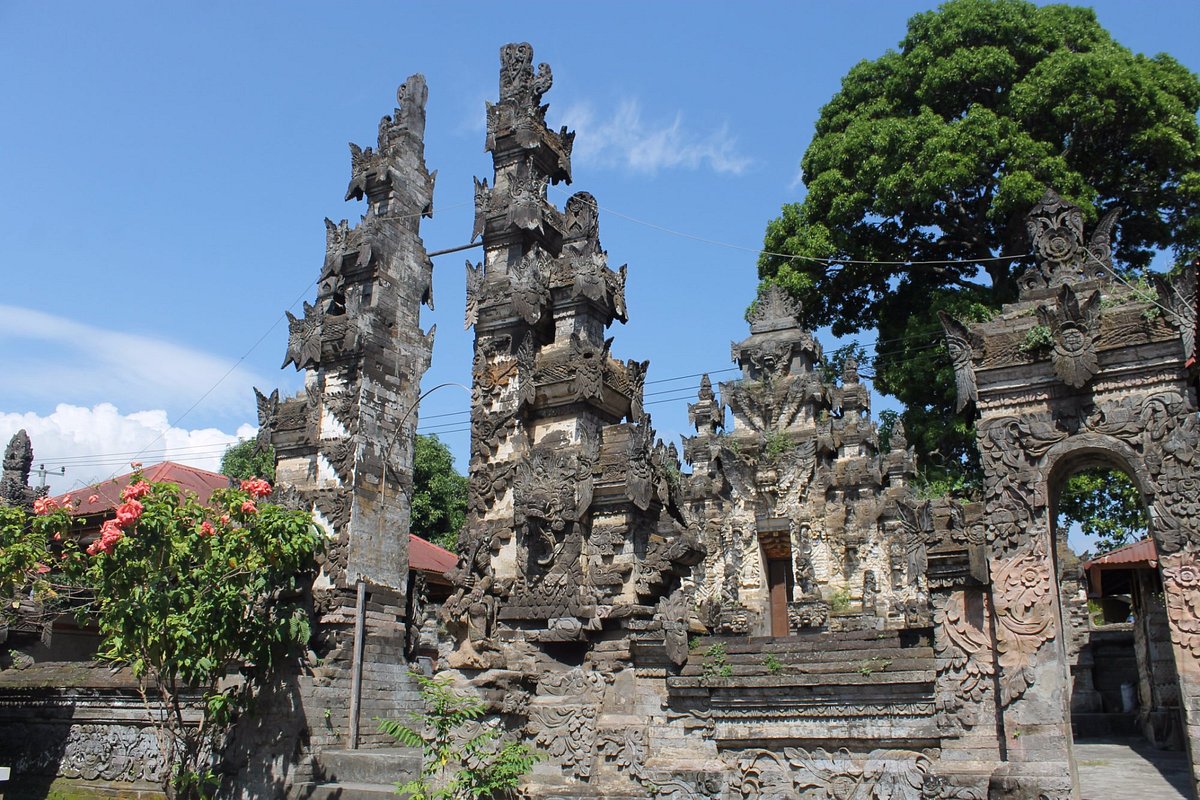
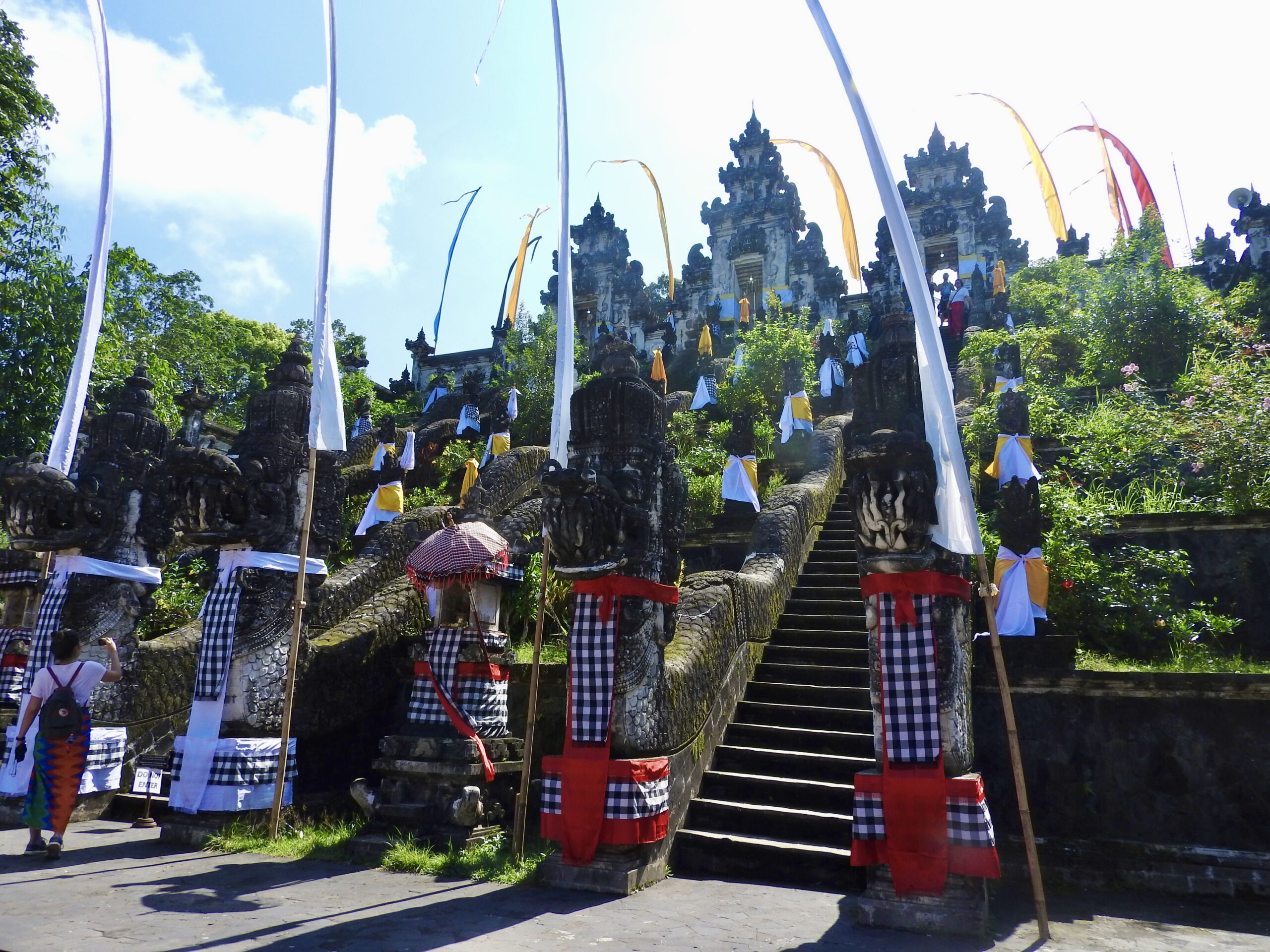
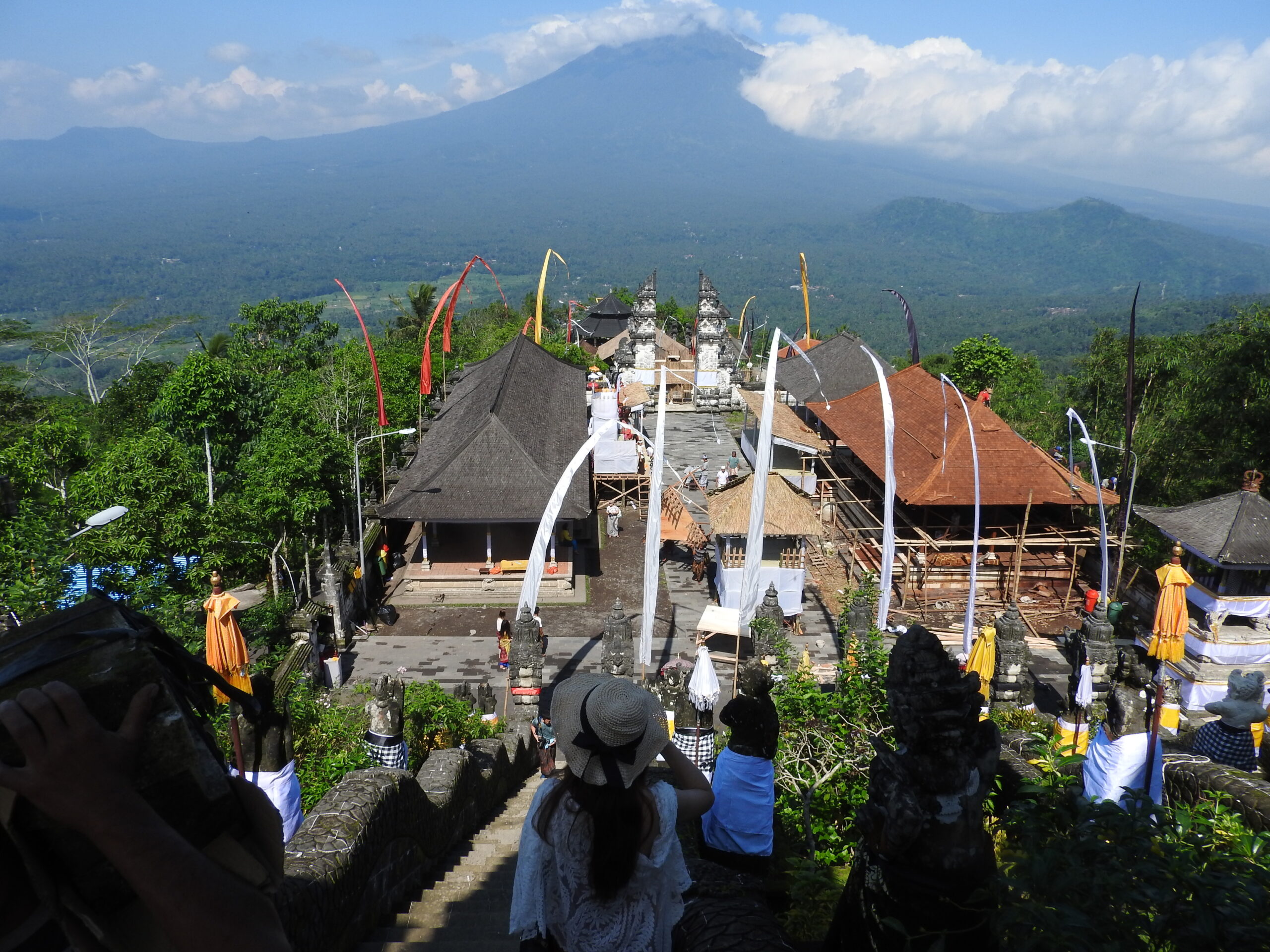
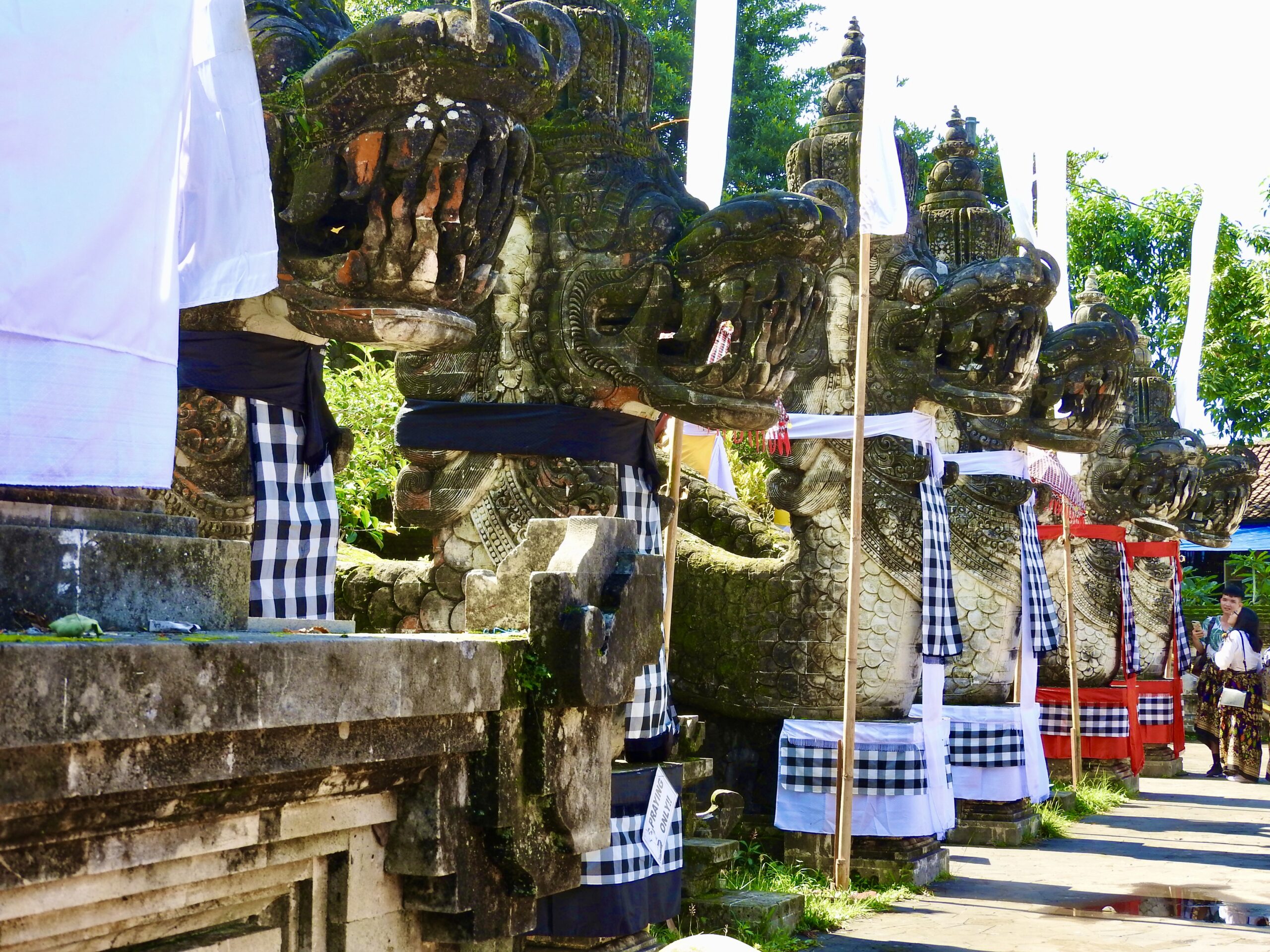
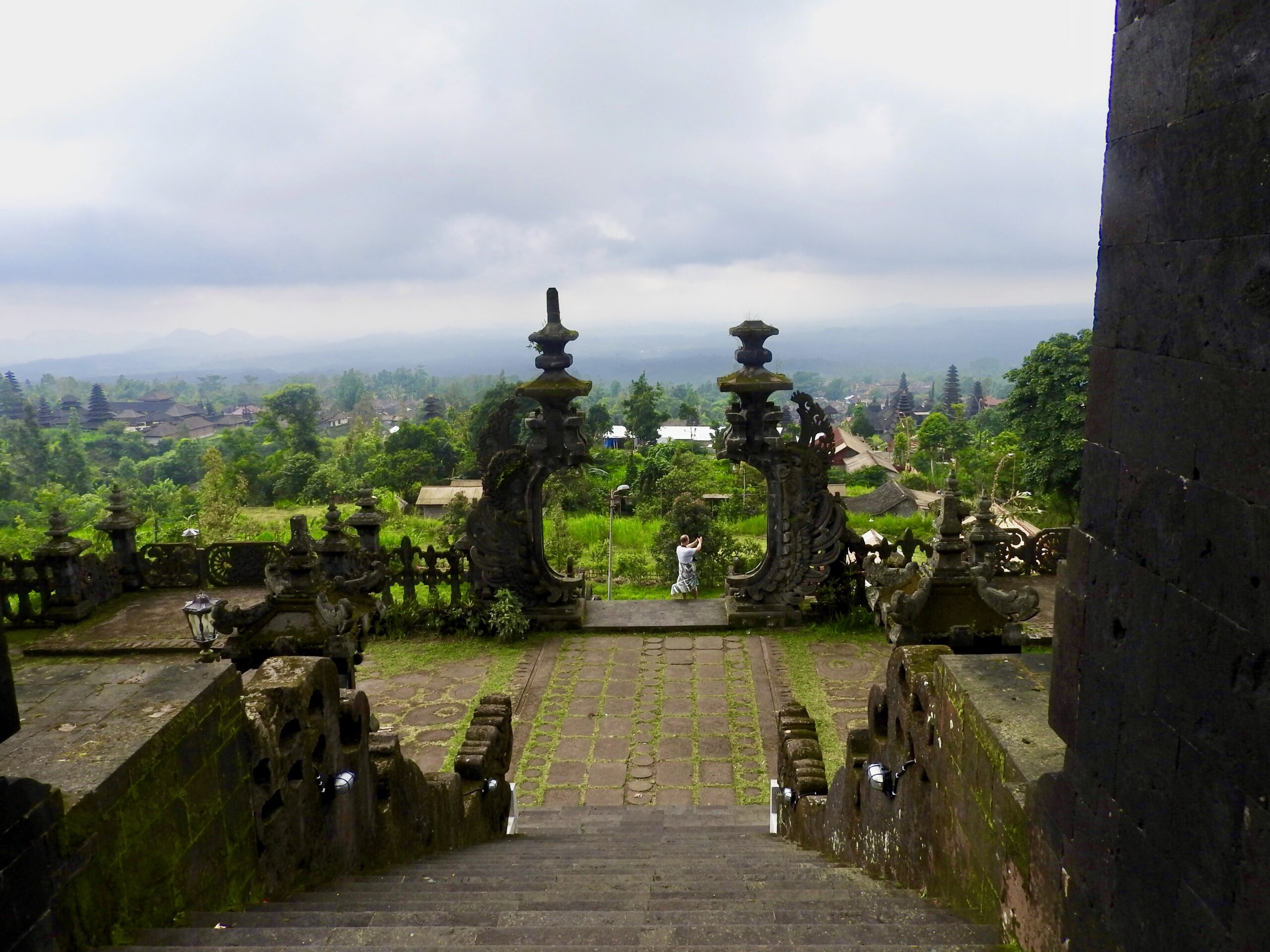
A triple staircase adorned with naga (sacred snakes) leads to three finely decorated doors. Furthermore, from the candi bentar it is possible to enjoy a spectacular view of the Agung volcano and the surrounding countryside. The double-leaf entrance portal frames the enchanting panorama below so well that it is now nicknamed the Gate of Paradise in Bali by the Balinese and visitors.
Reaching the temple at the top of the mountain can be very tiring: you will have to climb about 1700 steps and , during the rainy season, everything is even more challenging because there is a risk of slipping. Large gray macaque families live in the surrounding forest, which can annoy visitors along the way.
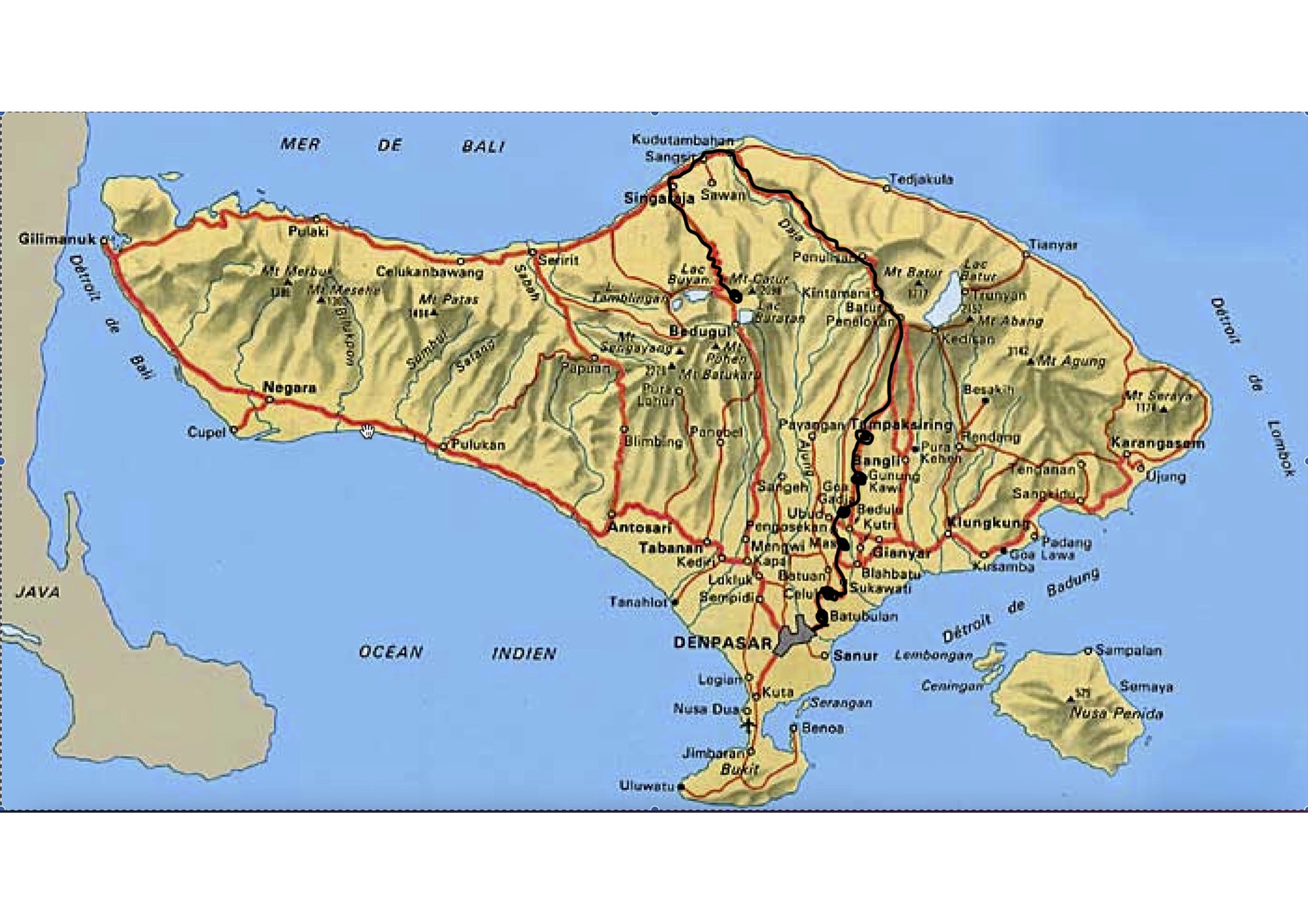
This tour will take you to the following places:
- BUTUBULAN
- CELUK
- MAS
- PURA GOA GAJAH
- GUNUNG KAWI
- PURA TIRTA TAMPAKSIRING
- ULUN DANU BRATAN
BATUBULAN
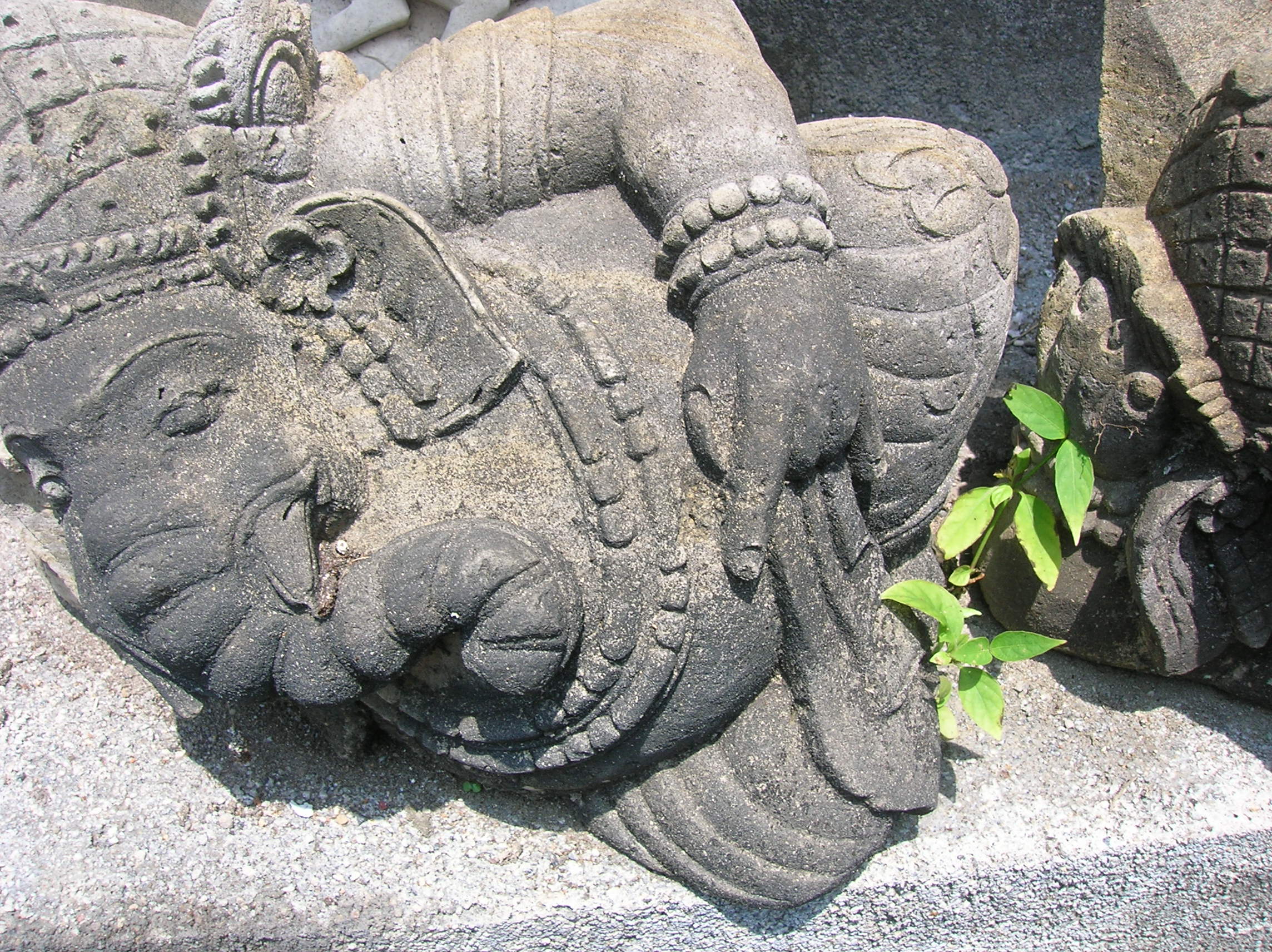
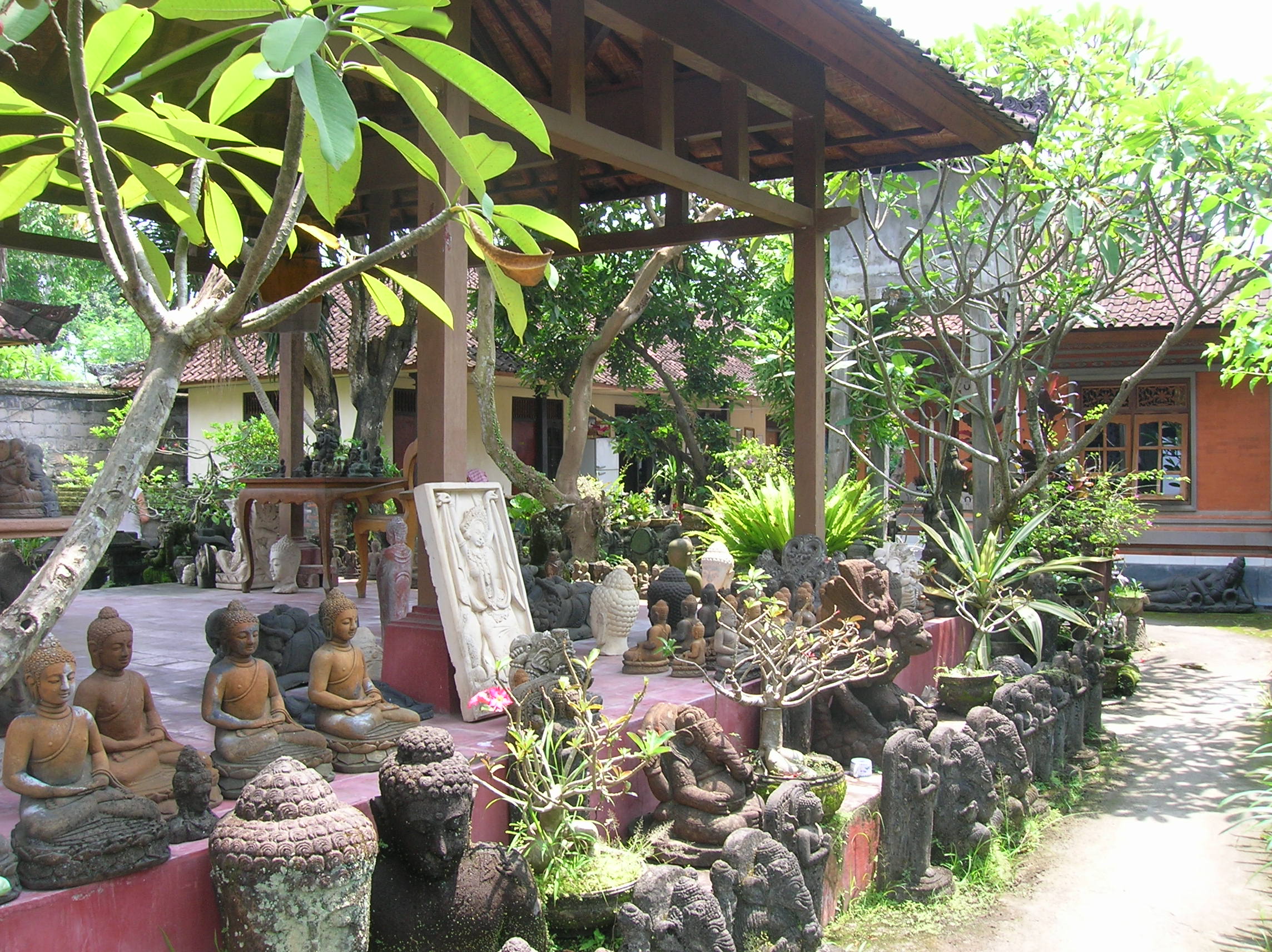
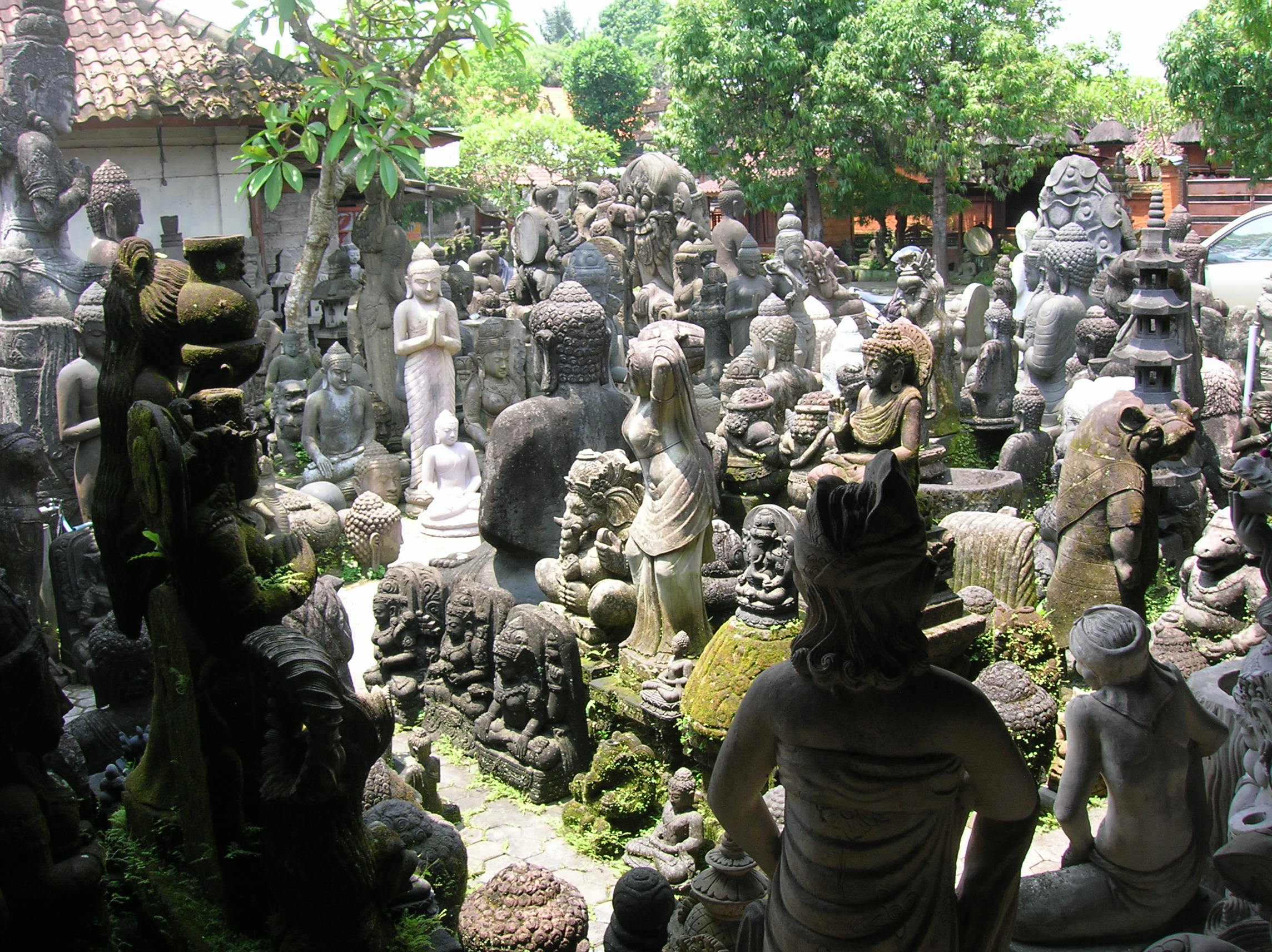
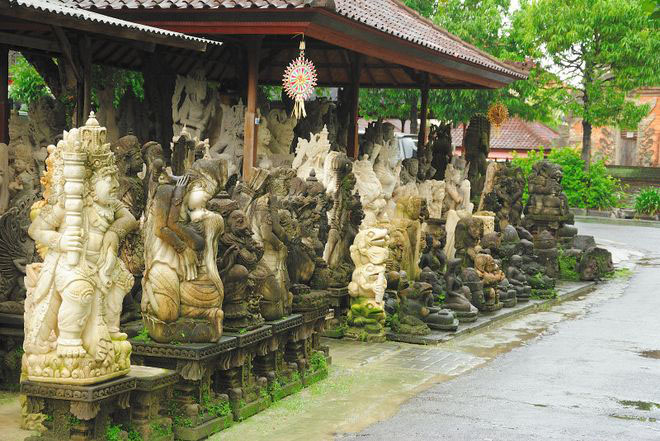
It is famous for the numerous sculptors and stone carvers who live there. In fact, the village hosts a large number of workshops in which the inhabitants practice their art and sell their products, which are destined both for the local market (temples or houses) , both to the tourist (souvenir).
The stone used for the sculptures is a gray and porous volcanic rock called PARAS which resembles pumice stone and is light and soft it also ages rapidly giving a patina of antiquity.
The work of the Batubulan sculptors is of an excellent quality
CELUK
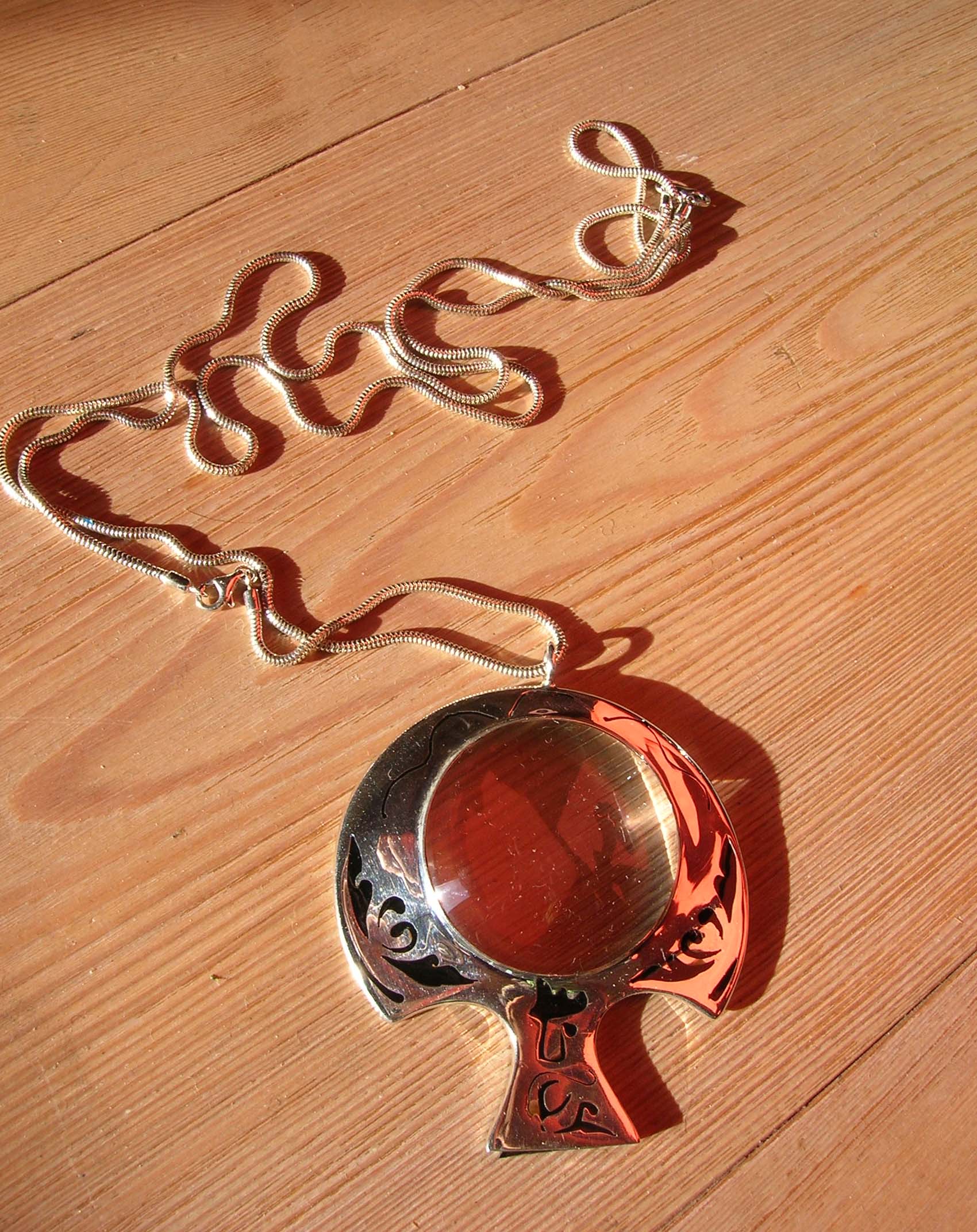
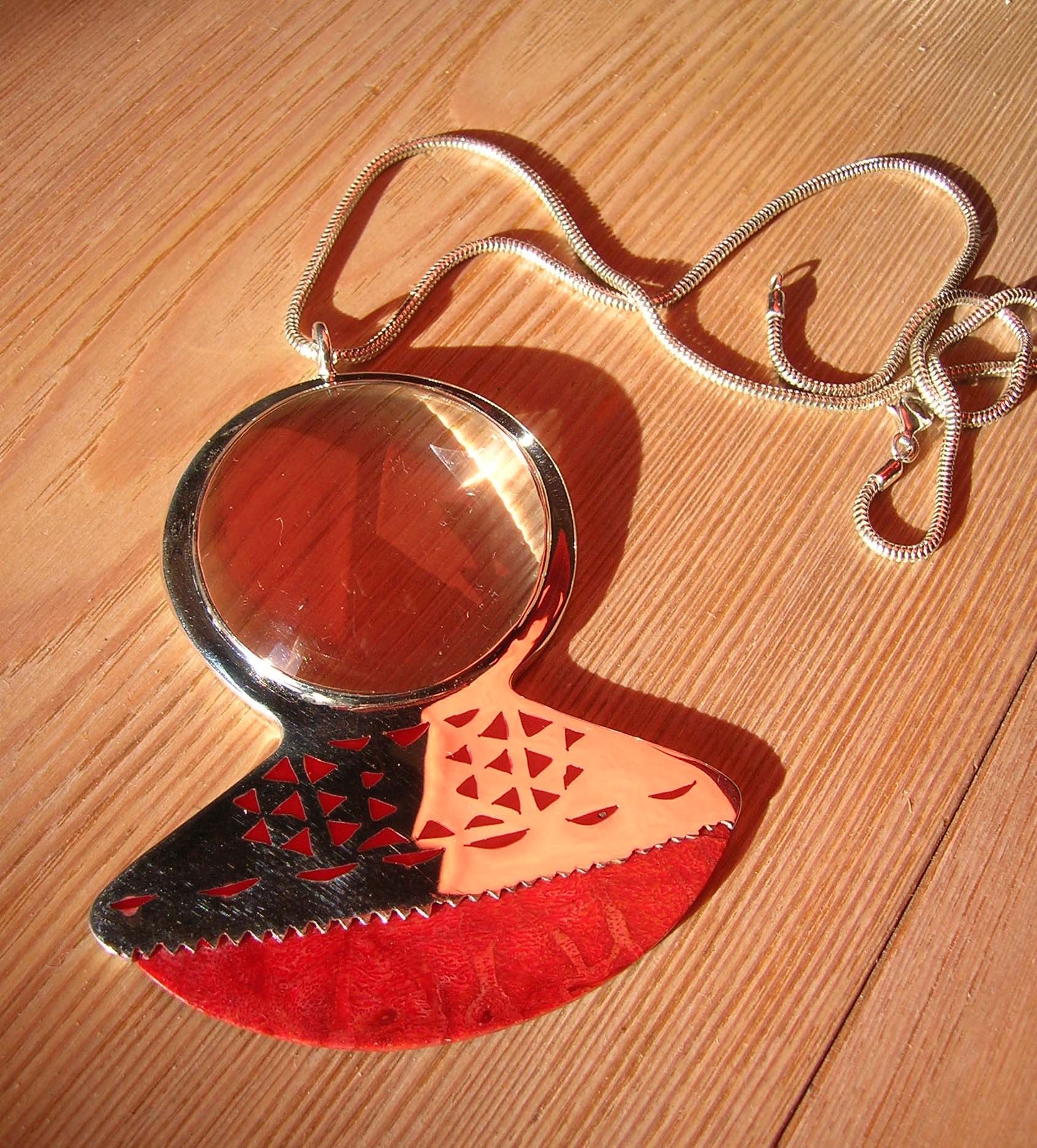
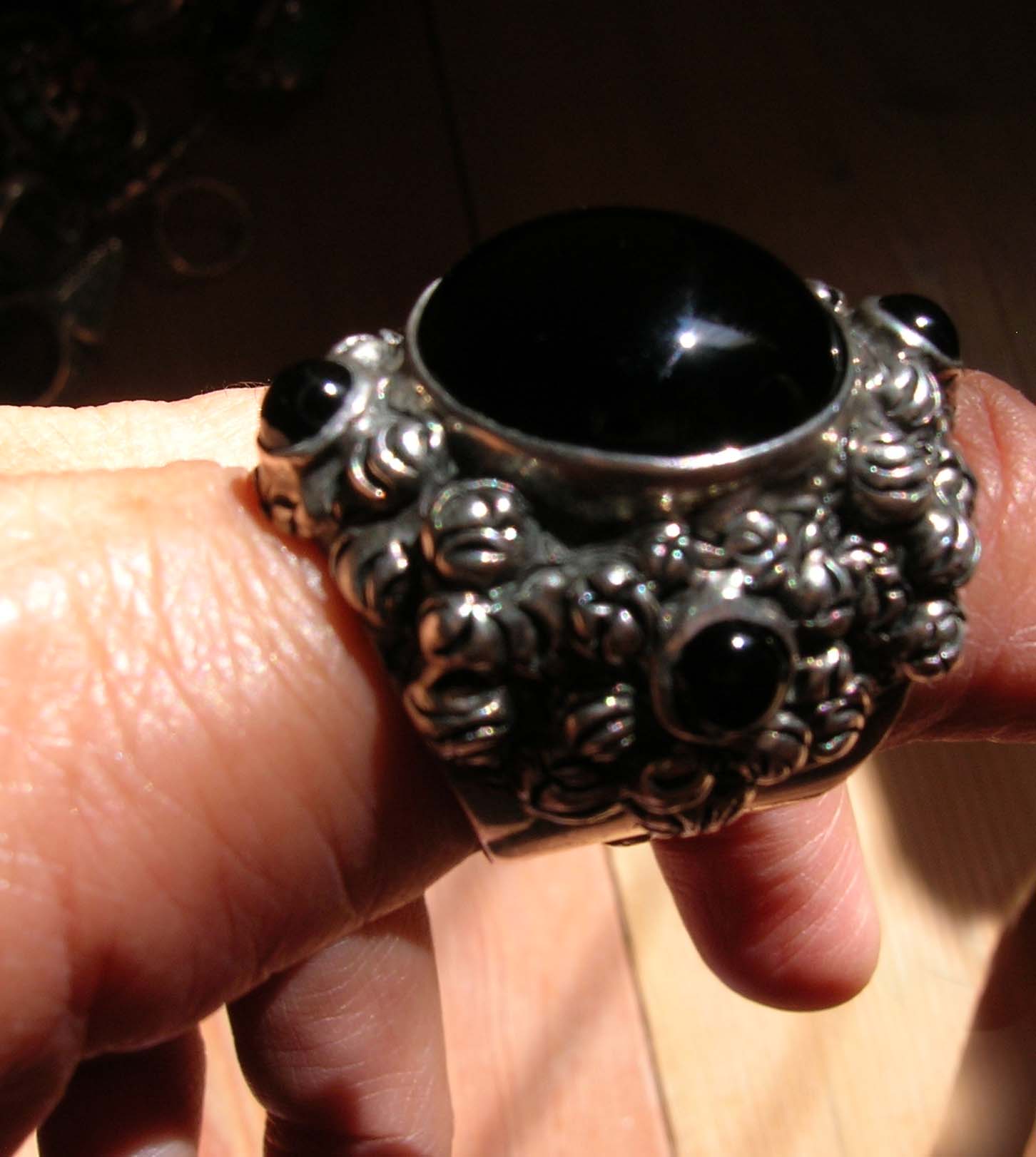
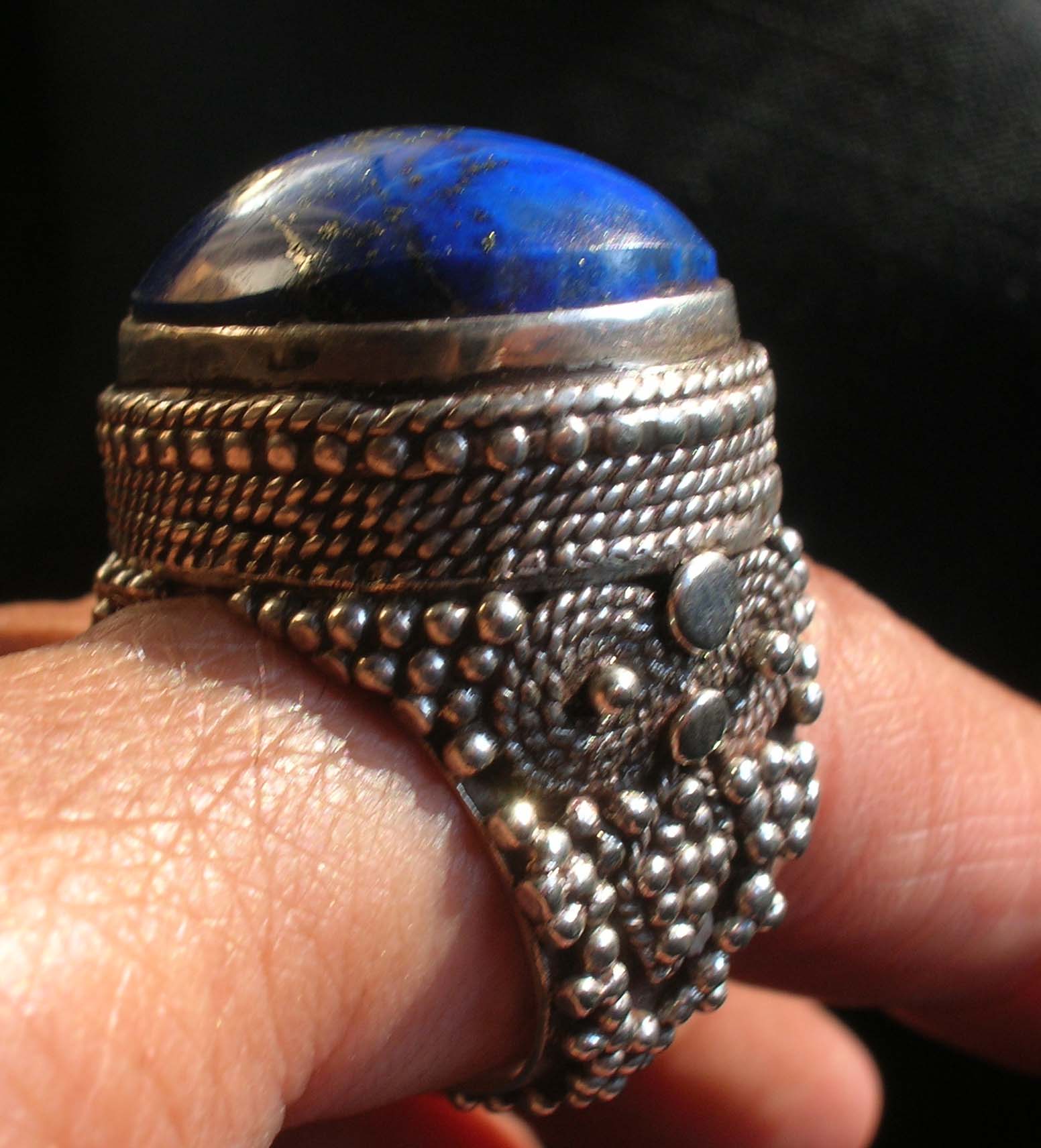
Village, located about 4km southwest of Sukawati district, is also Bali’s main center for goldsmiths and silversmiths.
The gold and silver items made here are of high quality and feature unique and elaborate designs, as the craftsmen are known for their skills and industriousness.
Shops and shops are located along the main road.
Most of the craftsmen come from Pande families, a subject of blacksmiths who excluded them from the circle of caste.
MAS
Means gold in Bahasa Indonesia, but wood carving is the main craft activity of the village.
Carving was a traditional art of the Brahmin priestly caste and their skill is said to be a gift from the gods.
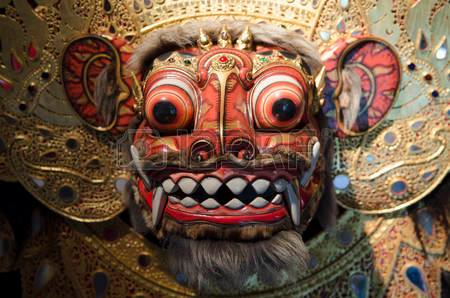
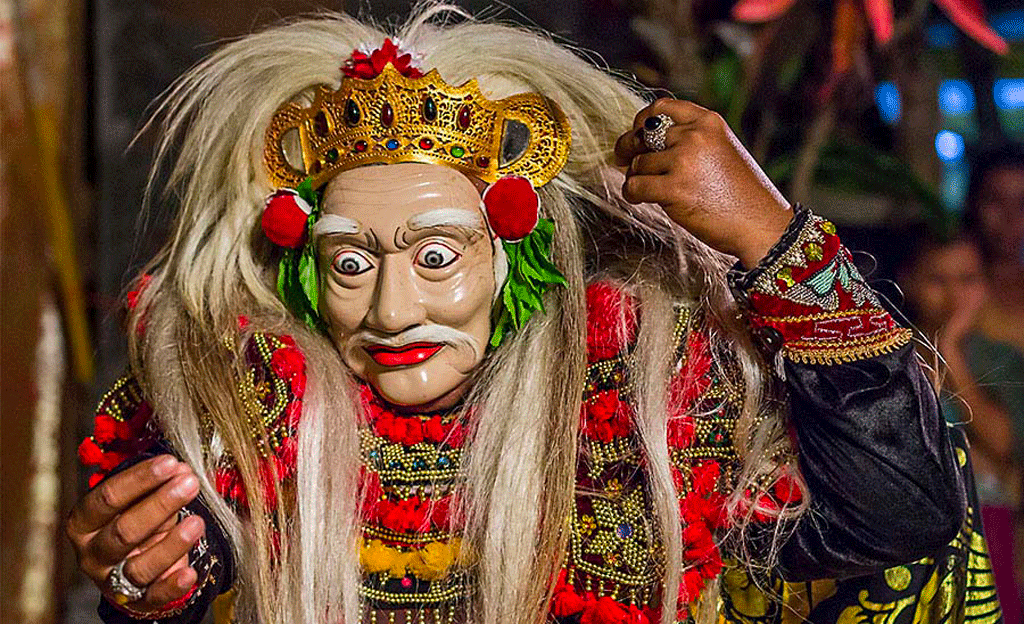
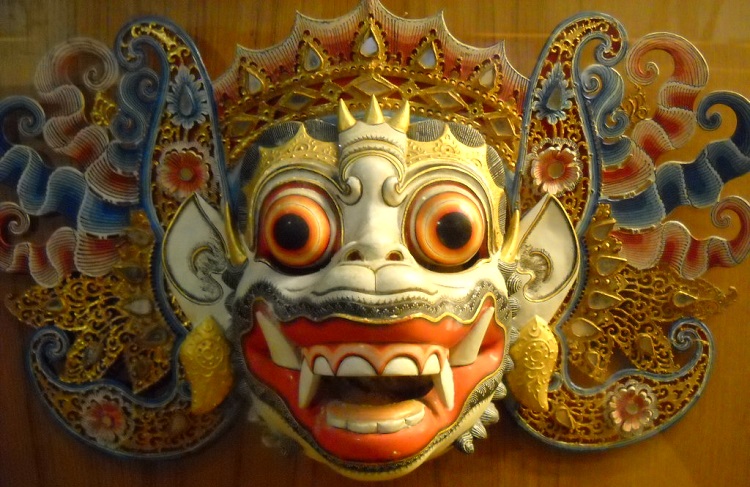
In ancient times this activity was limited to decorating temples and making masks for dance and musical instruments.
Craftsmen in the 1930s began to portray people and animals in a naturalistic way.
PURE GOA GAJAH
Also known as Elephant Cave, it is located on the island of Bali about 2 kilometers southeast of the Ubud town hall built around the 9th century and used as a sanctuary.
It was rediscovered in 1923 by Dutch archaeologists but the pools for the sacred baths were discovered only in 1950.
The origins of the cave are uncertain, a legend of local folklore has it that it was created with his claws by the mythological giant named Kebo Iwa, one of the eleven ministers of the king Beda- Hulu, legendary ruler of the kingdom of Bali.
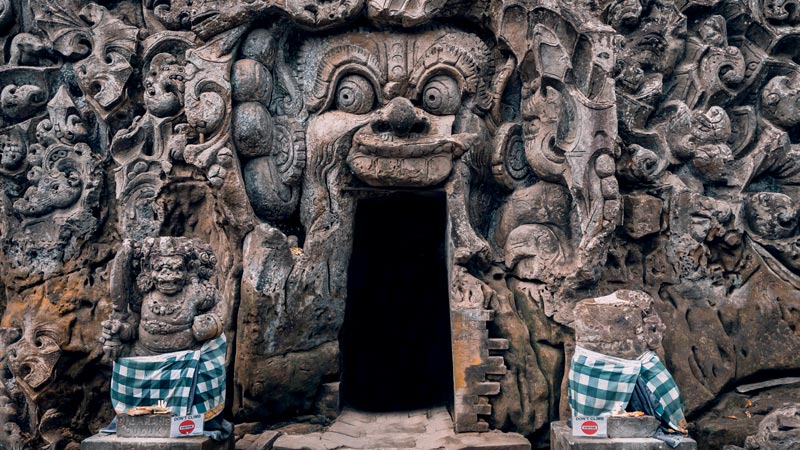
The name probably comes from the nearby Petanu River which was called the Elephant River at the time or it is speculated that the name may derive from the image of the statue which forms the main entrance to the site, a demon which may have been mistaken for an elephant which, however, it does not represent a typical animal of the place.
It is hypothesized that this gigantic head could represent the effigy of the chthonic god Bhoma or the witch-queen Rangda.
Examining the architectural style of the site which shows the coexistence of elements of Buddhism and Hinduism, it would date back to the 11th century and can be attributed to the kingdom of Bali, at a time when Hinduism had recently penetrated the island.
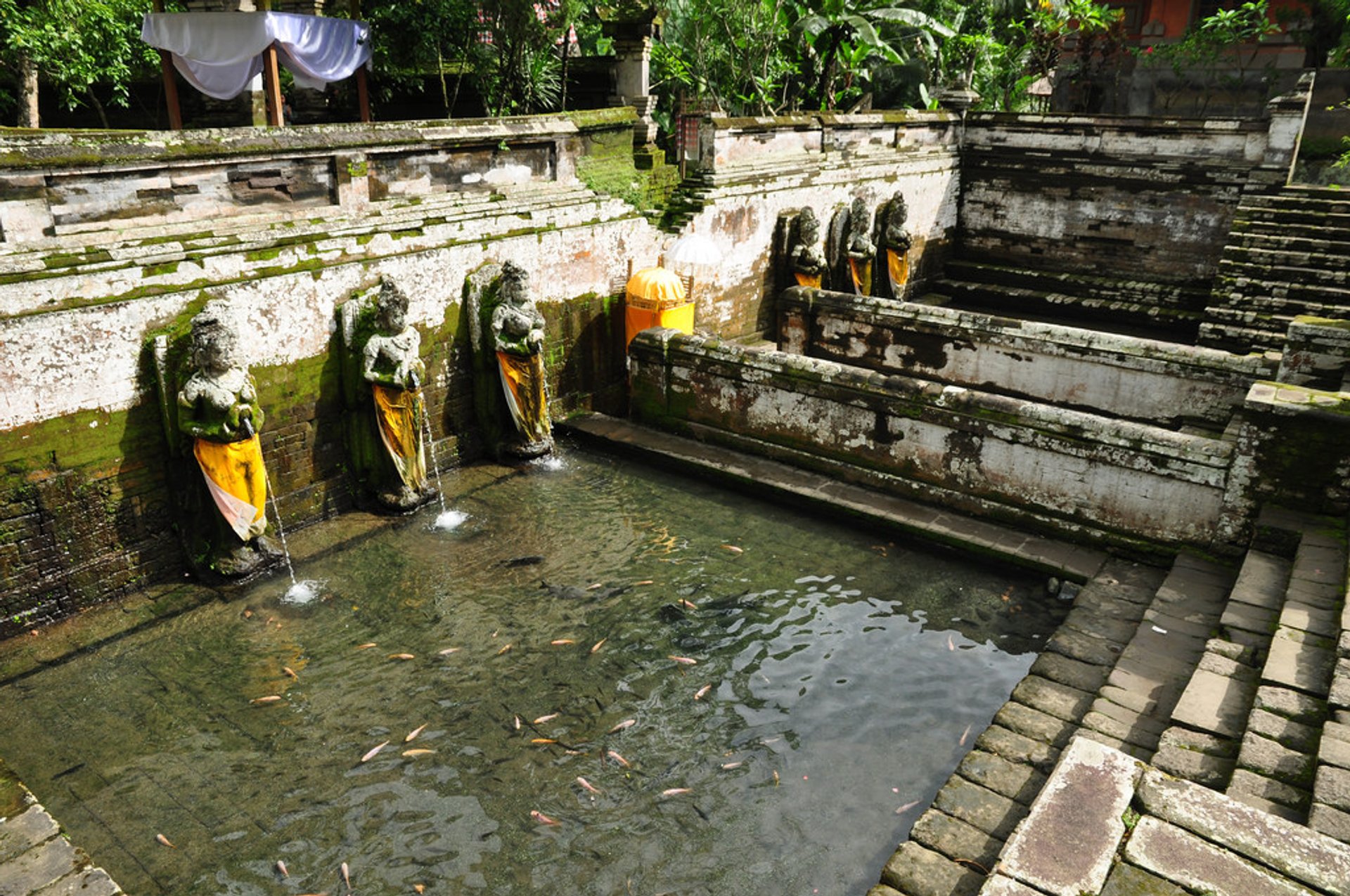
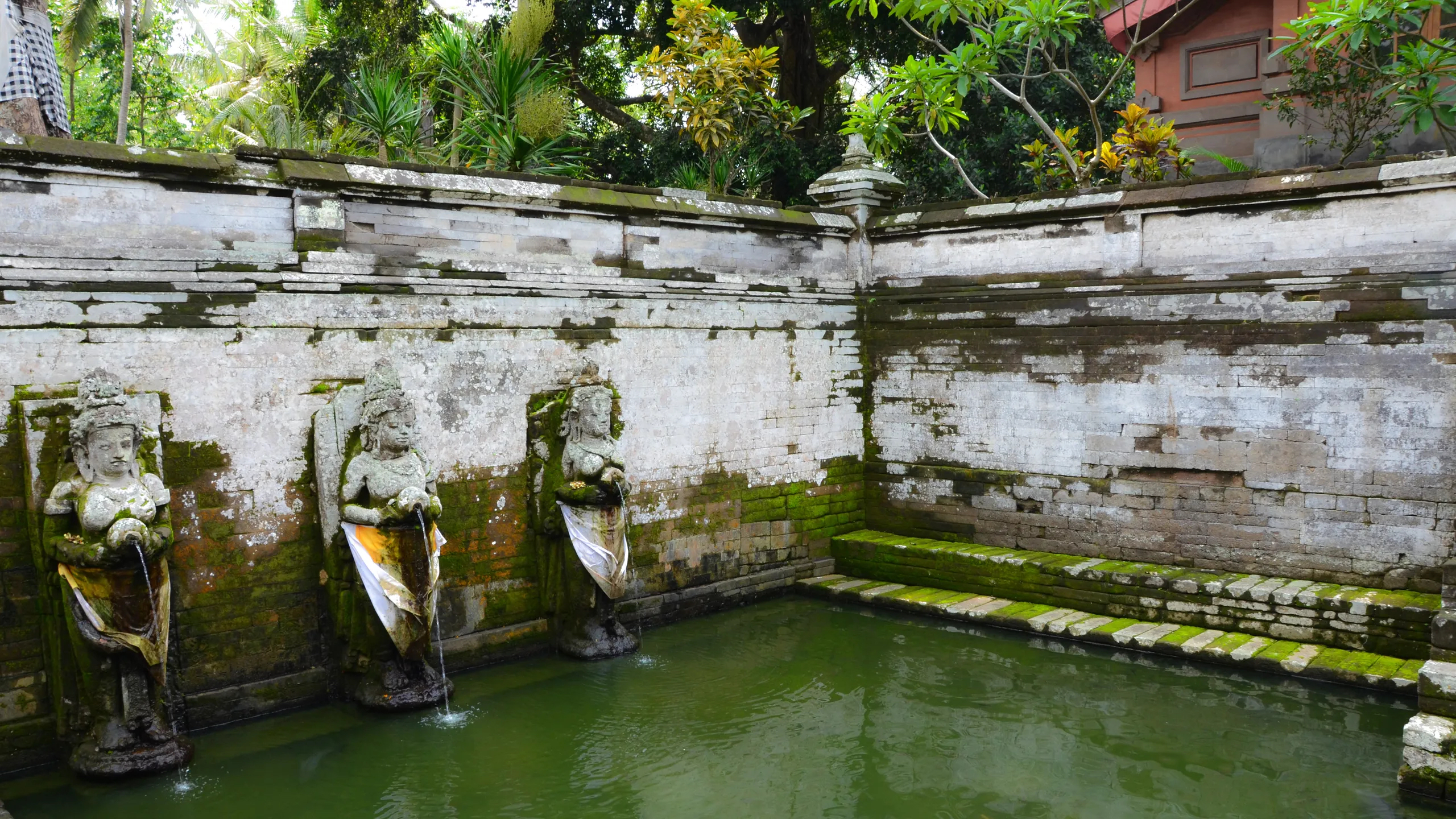
Photo of the statue-fountains depicting bidadari in front of the basins for the sacred baths within the complex. The entrance leads to a T-shaped room which branches off towards the cheeks of the demon’s face which contain each of the niches, in one of them contains effigies of lingam and yoni, male and female symbols of Shiva; while in the other there is a small statue of Ganesh.
A long corridor, adorned with reliefs representing demons of Hindu origin, leads to the rectangular ritual baths decorated with statue-fountains representing bidadari, or female spirits of water and clouds belonging to Hindu mythology.
These type of tanks were usually built in sacred places so that pilgrims and devotees could purify themselves before proceeding with their offerings or prayers. In the Old Javanese poem Nagarakretagama dating back to 1365, it is described as one of the ten main places of Buddhist worship in Bali.
GUNUNG KAWI
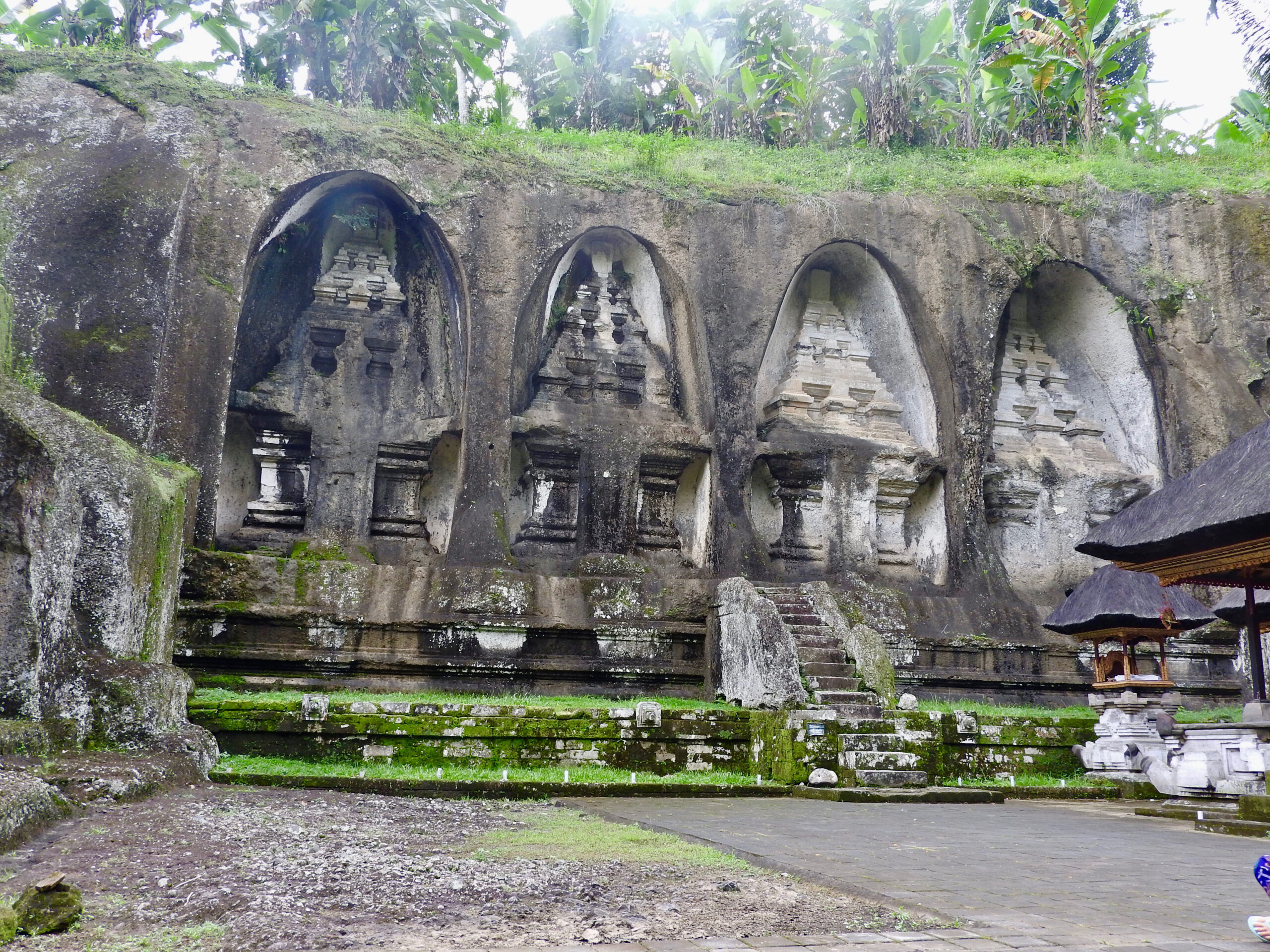
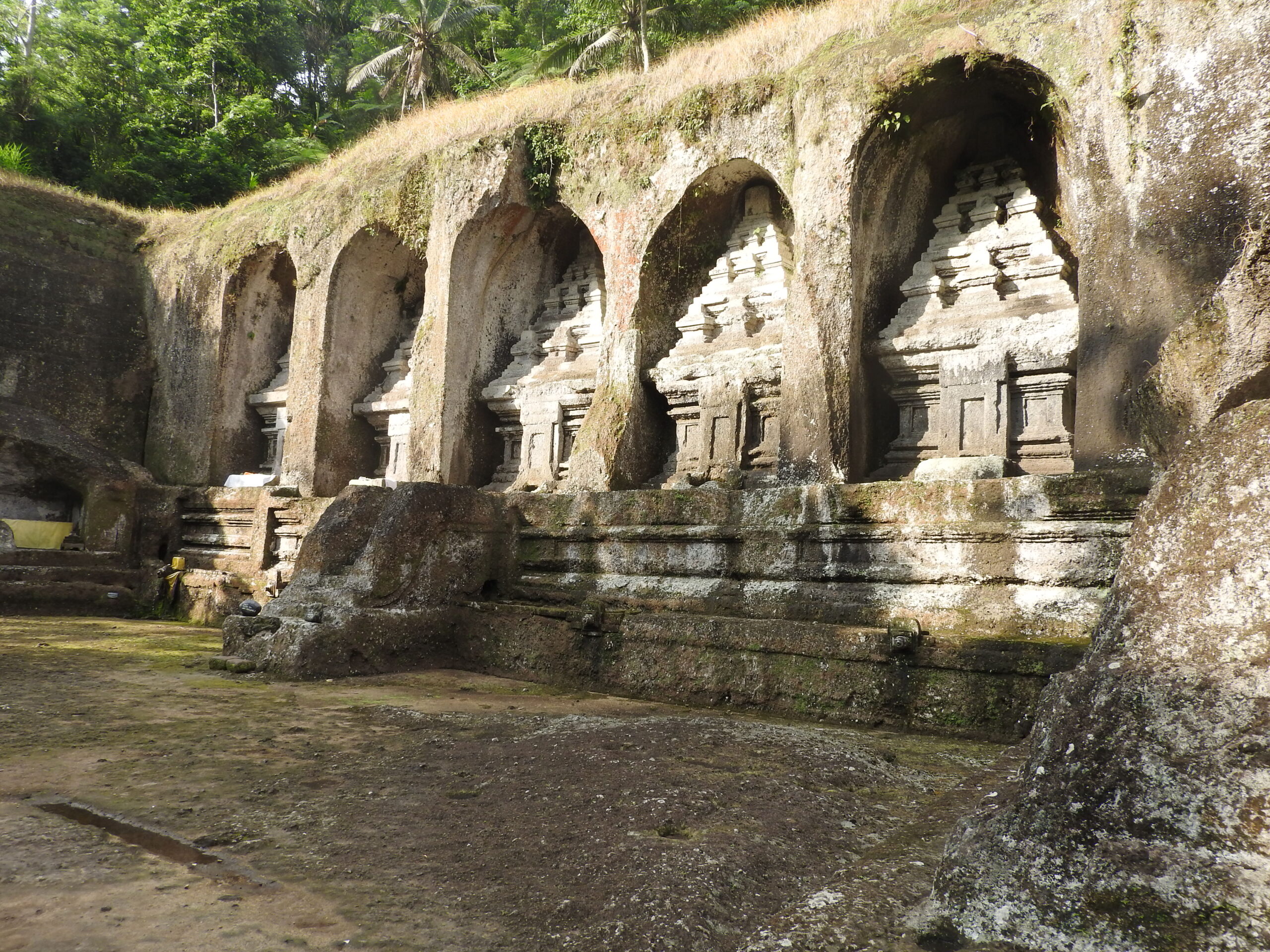
It is a public temple in Bali dedicated to the god of water, where members of the royal family are buried.
located between rice fields and palm groves, the temple is surrounded by a beautiful green landscape.
After a descent down the steep stairs filled with typical souvenir shops, you arrive at the river canal, where the temple is located.
In the outer part you can see the tombs of members of the royal family, although they are not buried here, but inside one of the temple caves.
Gunung Kawi Temple is an 11th-century burial complex in Tampaksiring. It is located northeast of Ubud in Bali, Indonesia. 30 minutes from Ubud.
The temple is spread on both sides of the Pakerisan River and comprises 10 candi (shrines). Carved into the rock are burial monuments, each niche is 7 meters high. These burial monuments are believed to be dedicated to King Anak Wungsu and his consorts of the Udayana dynasty.
On the east side are five temples dedicated, according to one theory, to King Udayana, his queen Mahendradatta and their sons Airlanga, Anak Wungsu and Marakata. The temples on the west side are dedicated, according to the same theory, to the minor queens or concubines of the king.
PURA TIRTA EMPUL (Tampaksiring)
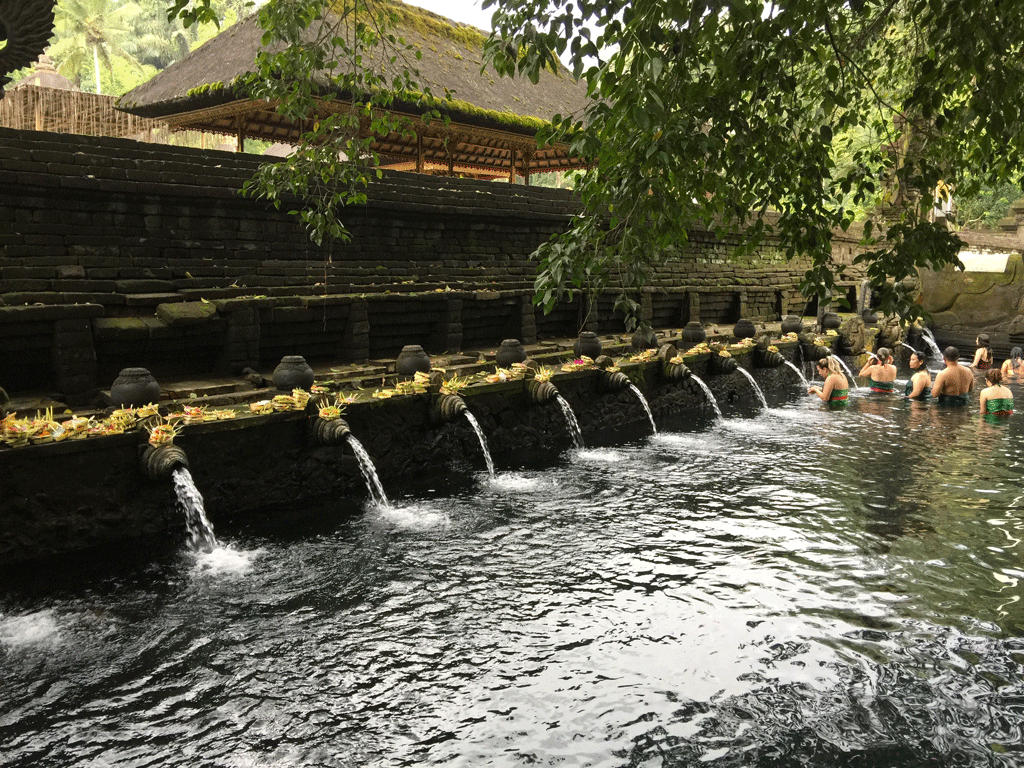
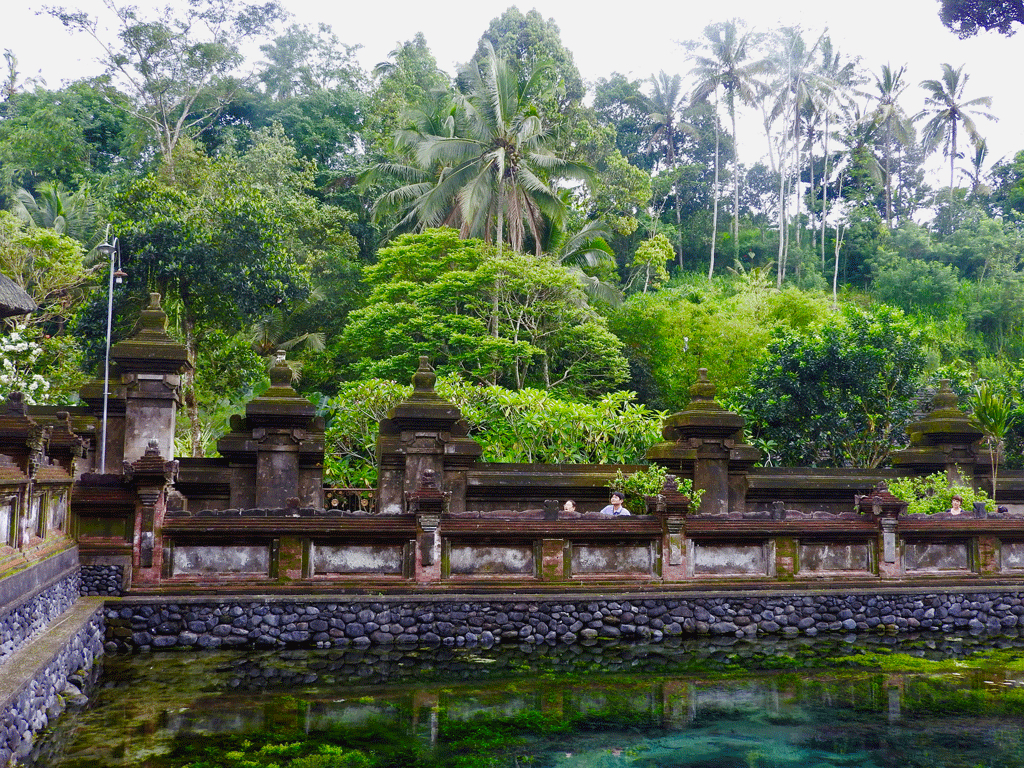
It is located around a source of the Pakerisan River near the city of Tampaksiring .The temple is central to the Balinese irrigation system the temple was built in 962 AD.
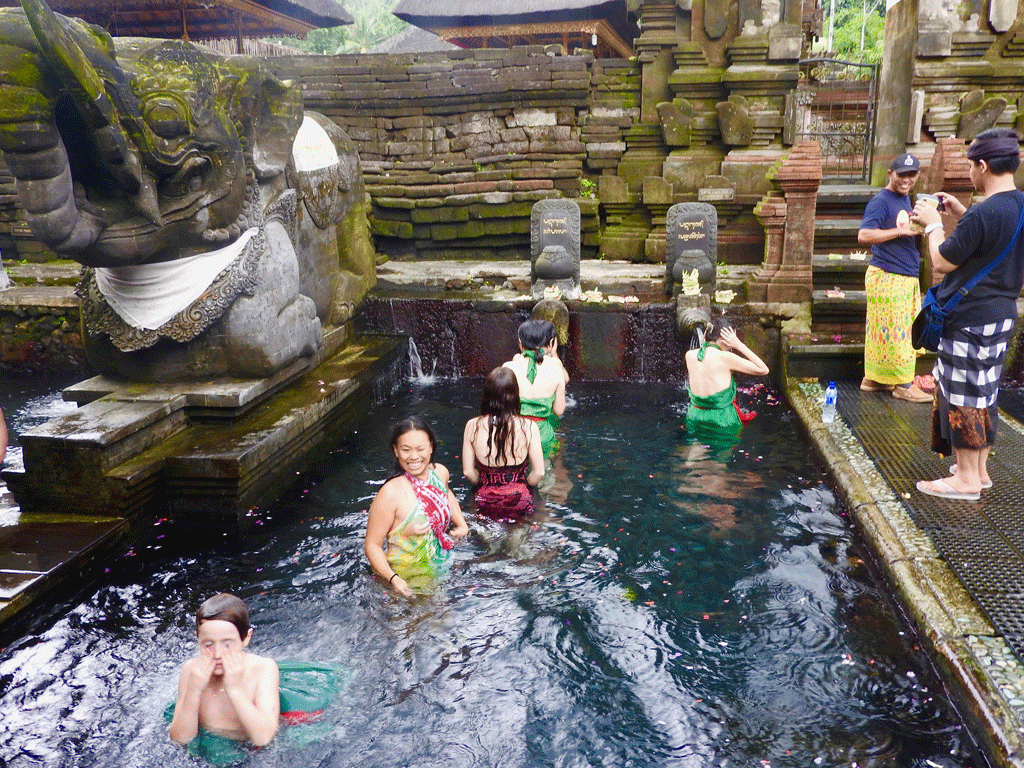
After a huge entrance garden, the Tirta Empul unfolds in the classic three-level Hindu subdivision Jaba Pura a first courtyard which is accessed by a stone portal (candi bengar) and incorporates a large koi tank and various tourist shops. Jaba Tengah a second central courtyard formed by 2 bathing pools (petirtaan) and 30 fountains where Balinese Hindus go for their purifying ritual bath. Jeroan inner courtyard, the holiest place in the temple, full of altars of different sizes, a honor of the Vishnu-Brahmā-Shiva triad, statues of other deities, some votive pavilions (bale) and very intricate decorations everywhere. The name of “Tirta Empul” means torrent of crystalline water which is used as if it were “blessed water” to purify oneself in various ceremonies. Legend has it that it was Indra, the Hindu god, who made these waters acquire miraculous properties, since he used them to achieve immortality.
This spring is located inside the Tirta Empul Temple, and has been known and used since the 10th century, more than a thousand years, when the people of Bali have a tradition to come here. In the ponds, the water comes through twelve water springs santa and the ceremony to continue.
Or we can say that the ritual is to make the offerings first, and then enter the ponds and immerse yourself.
As in many of the temples in Bali, it is imperative that you enter with your legs covered, even the boys, who will have to wear a sarong that they give you there.
Pura Tirta Empul, near Ubud.
Near this pond stands the temple dating from the tenth century, but the walls that enclose the site, which is not allowed to enter, are more recent. Overlooking the temple is a strikingly modern building: the Government House built in 1954. Originally a residence for Dutch officials, later to be used by former President Sukarno during his frequent trips to Bali.
ULUN DANU BRATAN
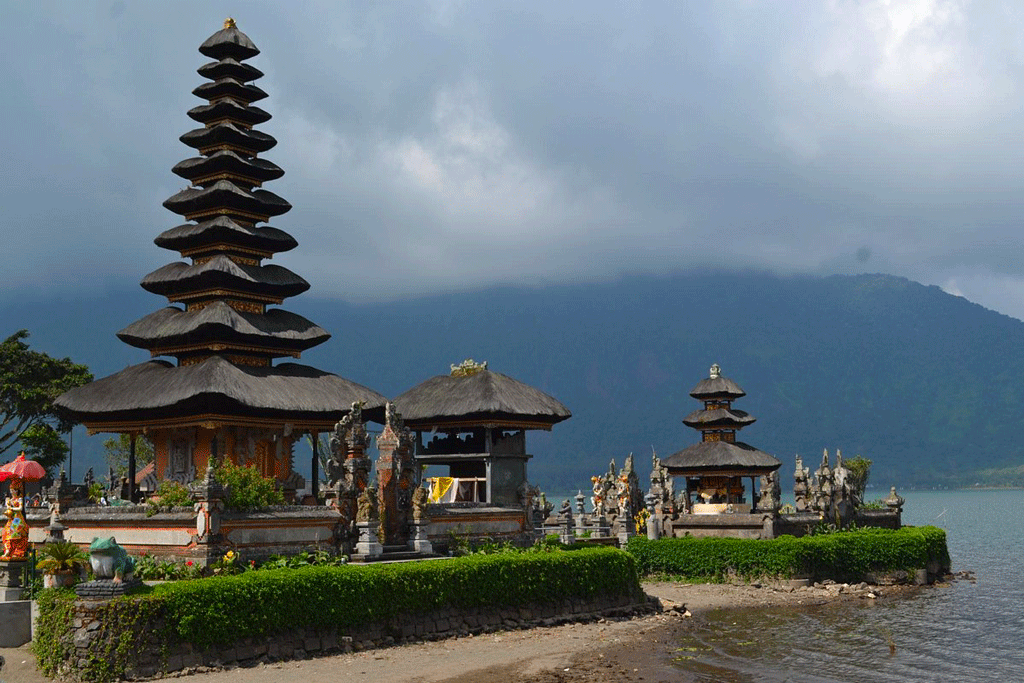
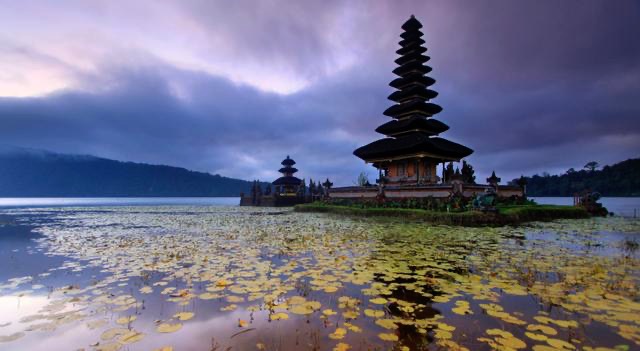
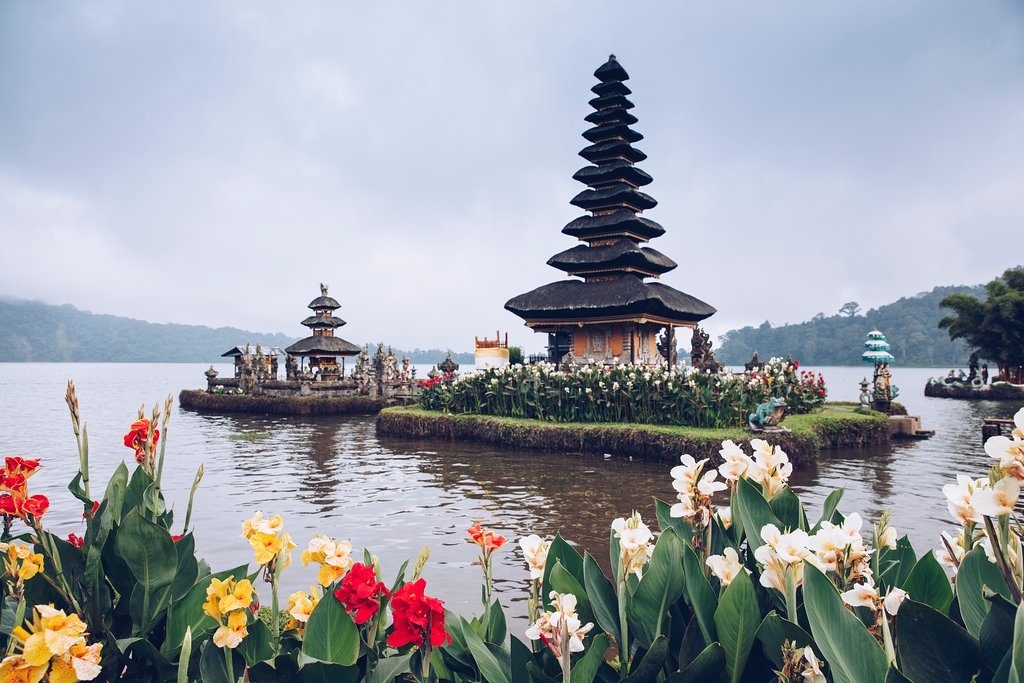
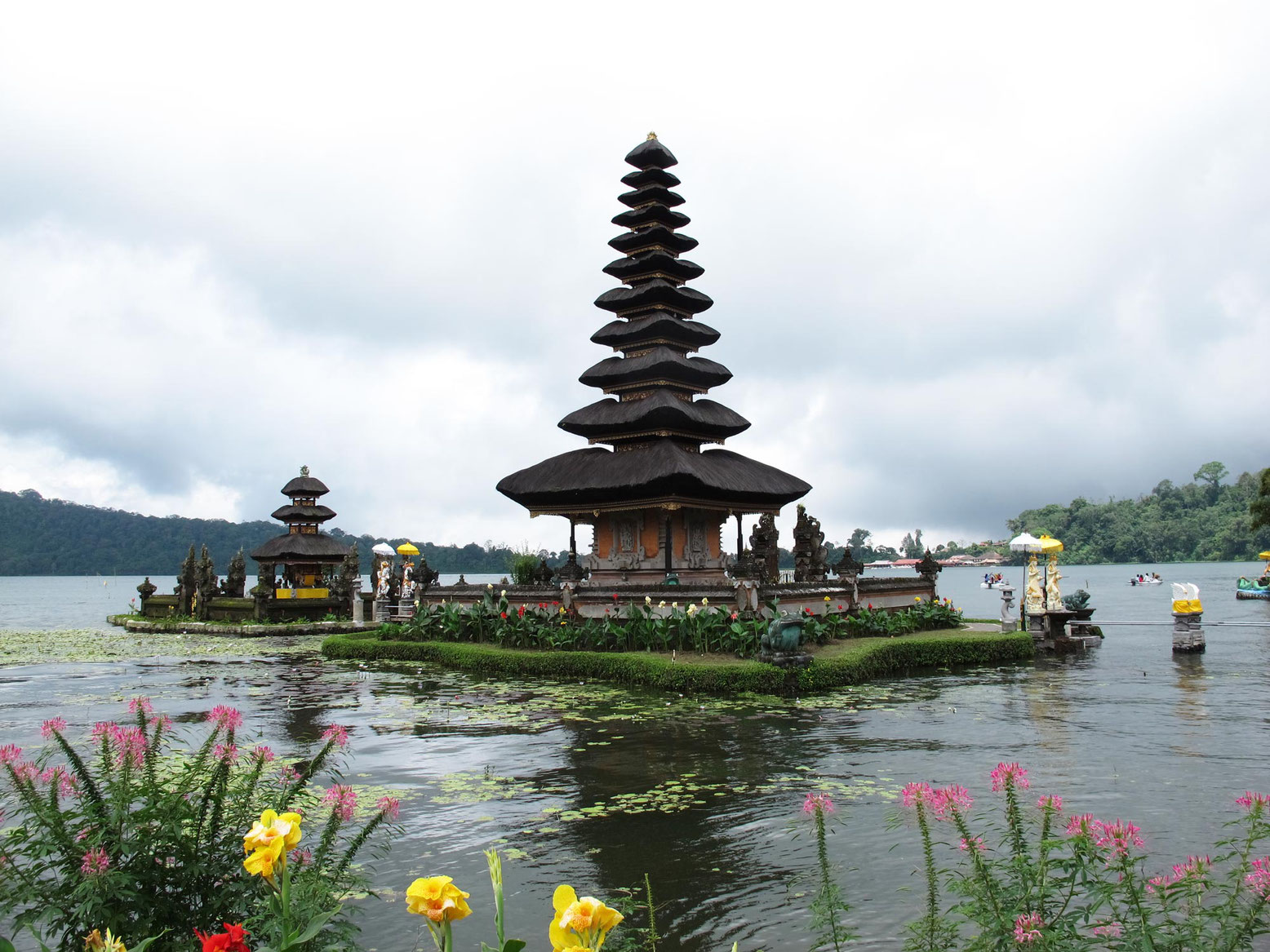
Is the most important Shivaist temple in Bali. It is located in the village of Bedugul on Lake Bratan, inside the caldera of an extinct volcano and about 1,200 meters above sea level. The temple is dedicated to the goddess of water Dewi Danu and, for this reason, it is positioned on the most important water reserve in the whole area. Dewi Danu is the supreme goddess of the Agama Tirta hierarchy (water system), Balinese beliefs on the religiosity of water.
She is also the most important female figure of the Balinese Olympus, the vast majority of rites and local tradition revolving around her cult. Lake Bratan is the water reserve at the origin of the complex irrigation system of all area rice fields; this system is called subak and, since 2012, it has become part of the UNESCO world heritage HISTORY.
The Ulun Danu Bratan temple was founded in 1633 during the Mengwi reign period. However, an old stone sarcophagus found inside the temple complex has led historians to assume that the site was a place of worship well before the construction of Hindu altars.
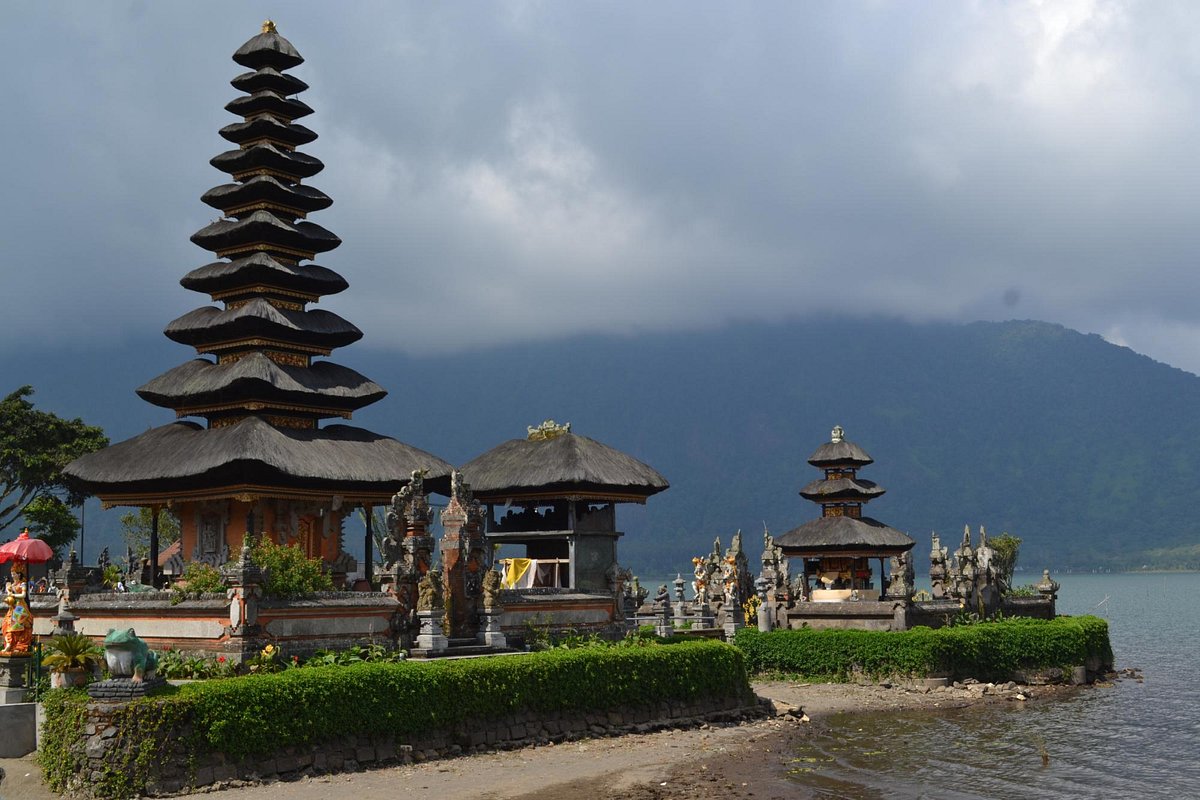
The temple complex is located on the western side of the lake and consists of two parts: one lying on the shore and one “floating”.The main eleven-level meru, located on an islet in the waters of the lake, is called Lingga Petak and is dedicated to Shiva. On the bank facing the Lingga Petak there is space for the remaining part of the temple which pays homage to the Pura Puncak Mangu, a small temple located northeast of the lake, dedicated to soil fertility. This part of the temple is characterized by several bales, the padmasana and a seven-level high meru dedicated to Brahma and is usually off limits to non-believers.
Along the shore of the lake there is a beautiful flower garden in which there is also a large Buddhist stupa adorned with statues. The presence of this stupa confirms, as in the case of the Goa Gajah temple, the correlation between Buddhist and Hindu religious sites.
The image of the Ulun Danu Bratan temple which is reflected in the waters of the lake, surrounded by mountains, is one of the most iconic of the whole island: the 50,000 Indonesian rupee banknote, for example, bears its representation on the reverse. The piodalan (anniversary) of the temple is celebrated twice a year during each Kliwon Julungwangi of the Balinese Pawukon calendar.
On this occasion the temple is festively decorated, and the inhabitants of all the nearby villages go to the lake to celebrate the temple’s anniversary. It is about 45Km from Ubud and about 70K from the airport from which it can be reached, respectively, in about 1 hour and 30 and about 3 hours.

This tour will take you to the following places:
- AGUNG
- KINTAMANI
- BATUR
- PURA DALEM JAGARAGA
- BUYAN BRATAN
- BOTANIC GARDEN
- PURA TAMAN AYUN
AGUNG
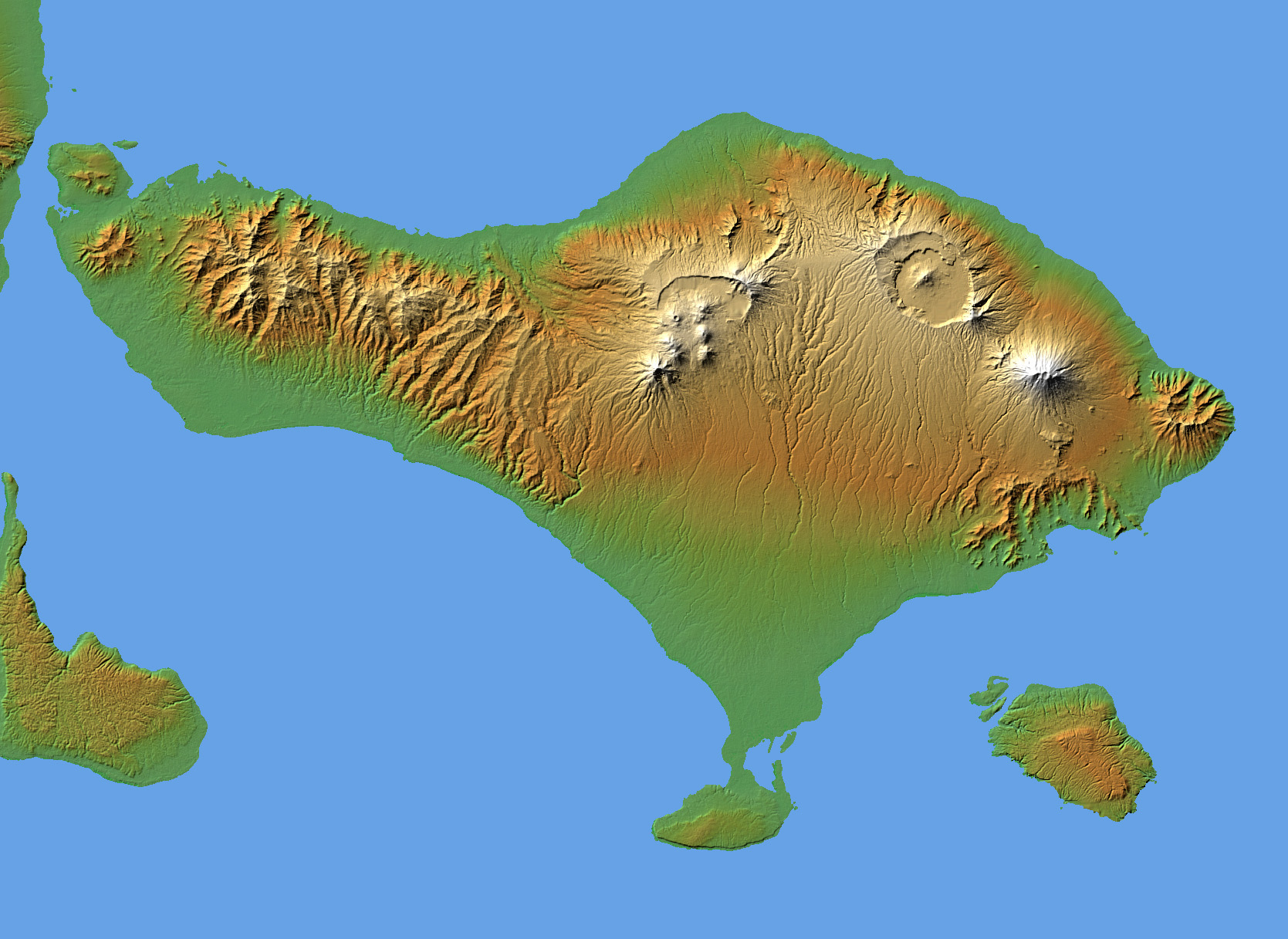
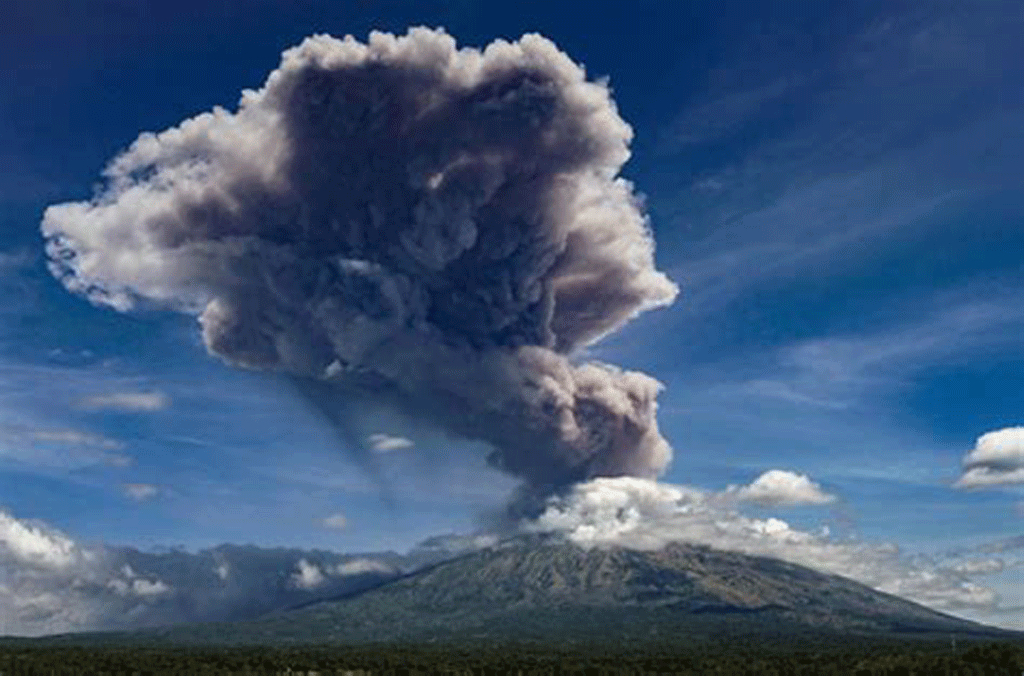
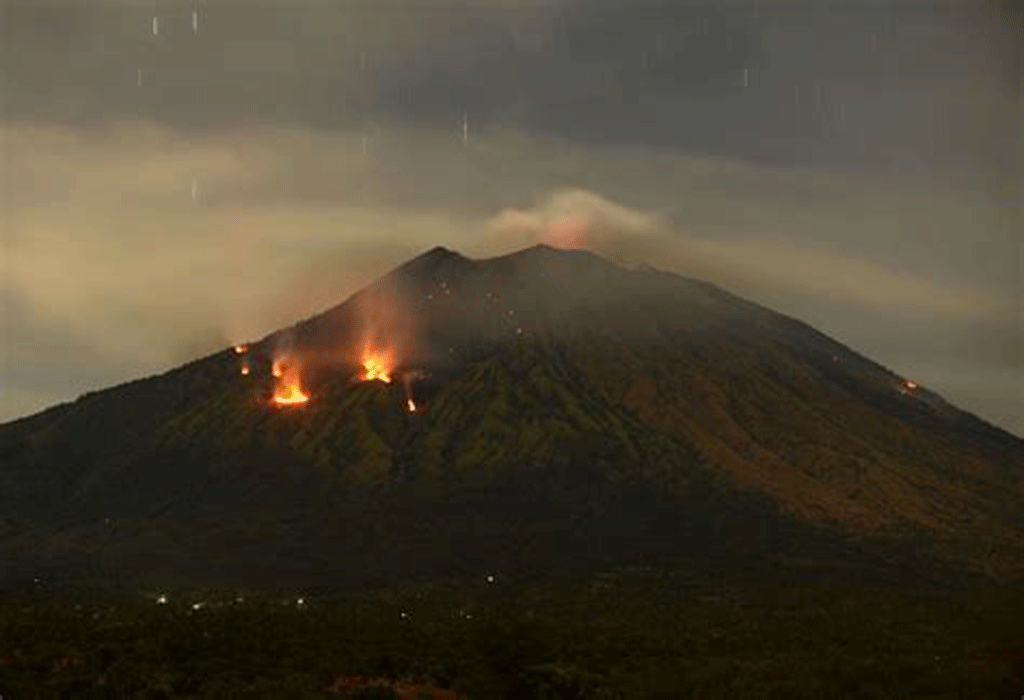
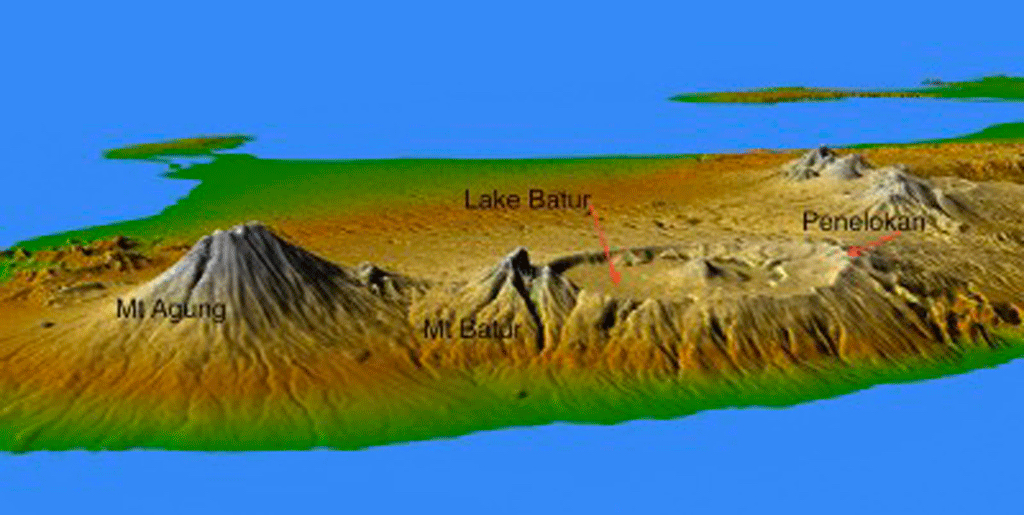
Agung with its 3000 meters high is the highest volcano in Bali and is located in the east of the island, next to the other imposing volcano, Mount Batur. The mountain has a very regular and symmetrical conical shape, a common feature of volcanic layers.
The lower slopes of the volcano are home to densely populated and cultivated areas, thanks to the natural fertility of the volcanic soils, with one million people living within a radius of 30 kilometers from the volcano.
Along its slopes, at an altitude of about 1000 meters stands one of the main temples of the island of Bali, the mother temple of Besakih, and the Gunung Agung is considered a replica of the mythical Mount Meru, the central axis of the universe in cosmology Hindu and Buddhist.
Agung is an explosive volcano due to the type of magma that characterizes it. In fact, the magmatic material is formed following the subduction, i.e. the sinking of the Australian plate below the Pacific plate. Subduction, in addition to creating friction, and therefore the accumulation of energy that causes very violent earthquakes, brings the rocks of the subducting plate to such temperatures that they melt.
KINTAMANI
Is a district and a village within that district, on the western edge of the larger caldera wall of the Mount Batur caldera in Bali, Indonesia.
It is located on the same north-south road as Penelokan and has been used as a stopping point for viewing the Mount Batur region.
It is a picturesque destination, known for its mountain views, the characteristic lagoon landscape.
BATUR MOUNT
is an active volcano located at the center of two concentric calderas northwest of Mount Agung on the island of Bali, Indonesia.
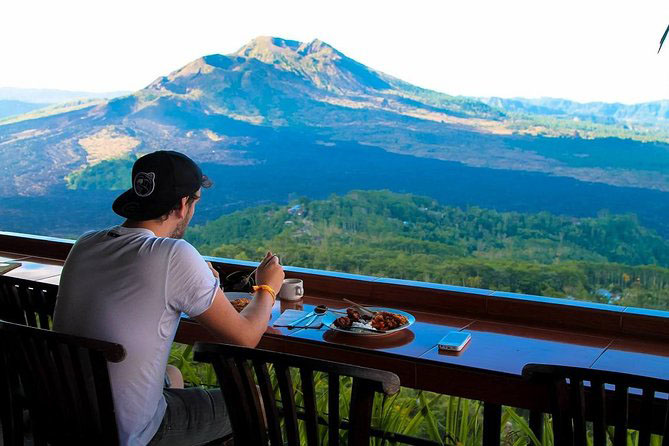
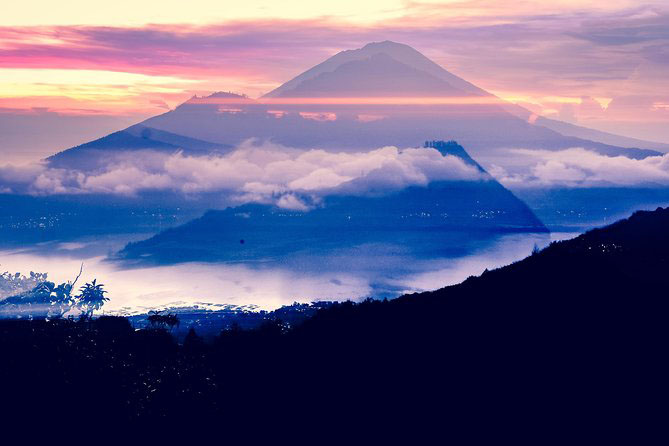
The southeast side of the larger 10×13 km caldera contains a caldera lake A trekking excursion to Mount Batur is the perfect experience to admire, from the summit of one of Bali’s most famous volcanoes, the magic of the moment where the sun rises above the clouds.
Batur is a majestic active volcano that is part of the UNESCO Global Geopark network.
At dawn, the sky turns from black to inky blue, and then from pink to orange, revealing the whole expanse of the volcanic valley below.
The sunrise trekking on the Batur volcano is considered one of the adventures not to be missed during a holiday in Bali: if you love nature and long walks, this is the right experience.
At high altitudes there is often wind and temperatures are much lower than on the beaches of the coast and at dawn they can be between 8-15° on Mount Batur and 5-10° on the summit of Agung.
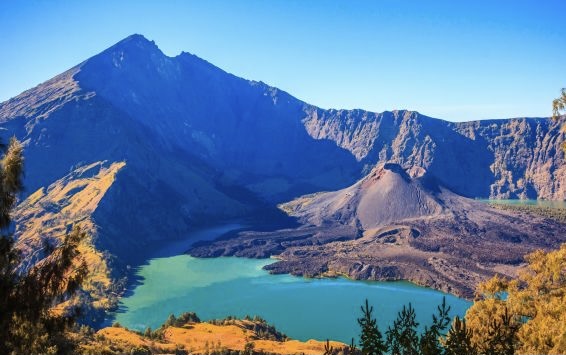
The Batur Volcano is 1,717 meters above sea level, it is one of the sacred mountains of Bali and one of the two active volcanoes on the island, the easiest and least tiring to reach.
Access is possible if there are no volcanic phenomena in progress.
PURA DALEM JAGARANGA
Pura Dalem Segara Madhu also known as Pura Dalem Jagaraga is a northern Balinese Hindu temple located in Jagaraga village, Buleleng in northern Bali.
It is located about 11 km east of Singaraja.
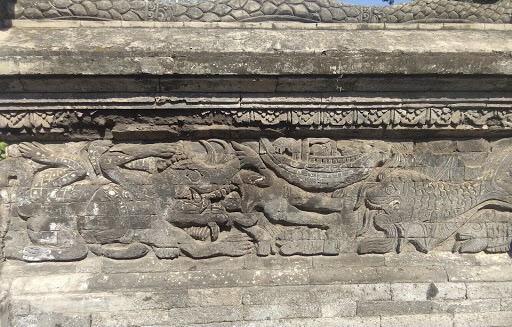
Little tourist whose main feature are the engravings depicting scenes of daily life pre and post Dutch domination.
The very interesting visit on Balinese Hinduism (gods, demons, offerings, meaning of the directional temples, symbolic colors, meaning of the swastika.
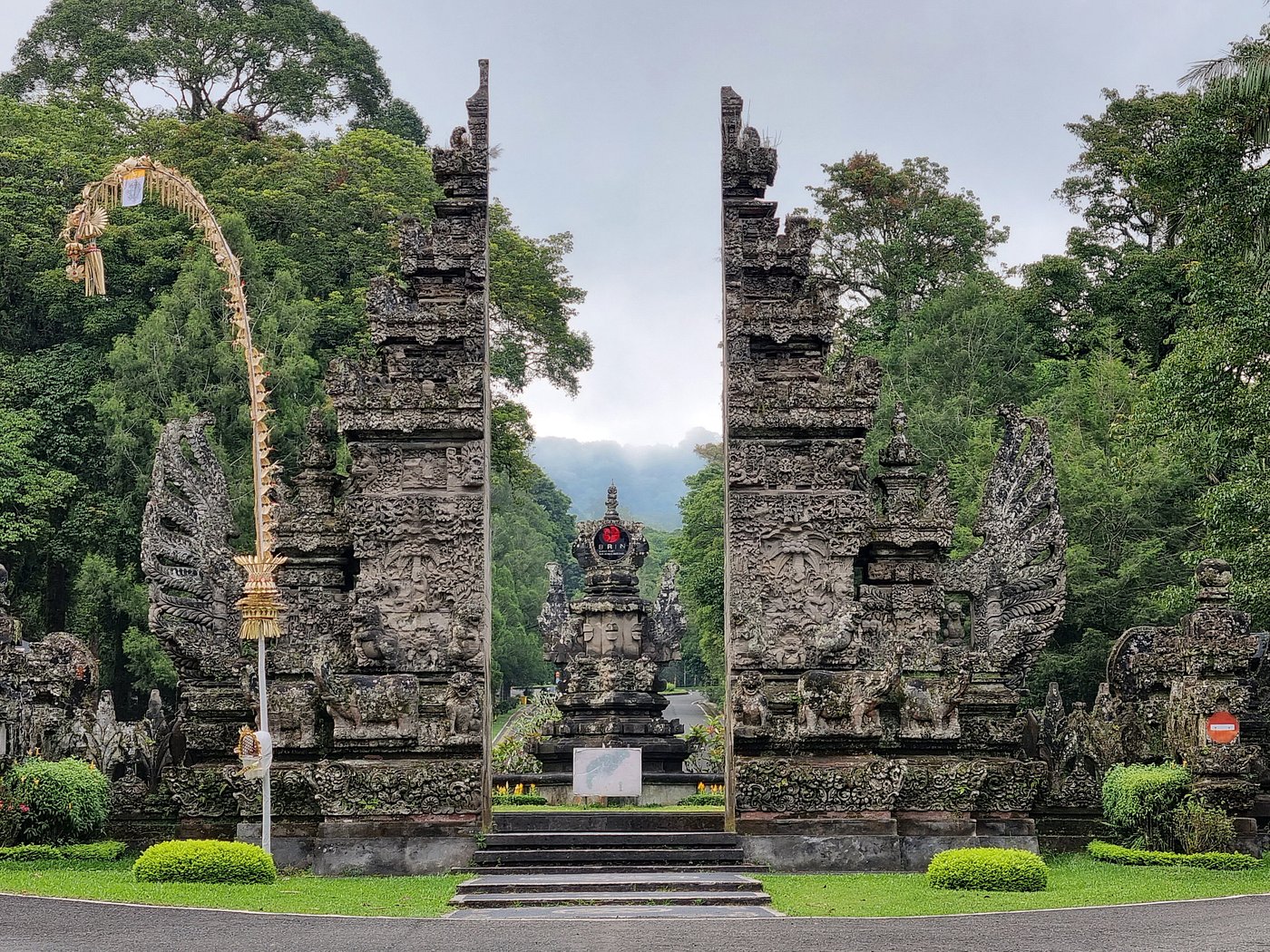
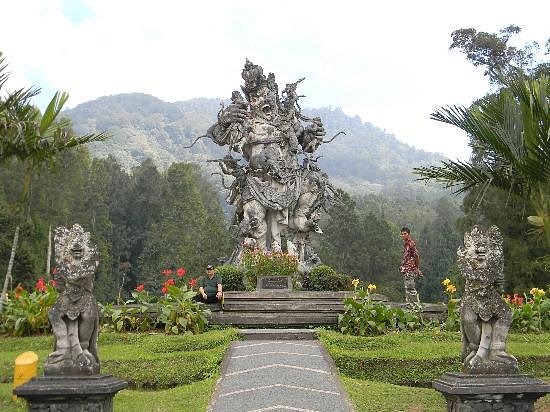
BALI BOTANICAL GARDEN (Kebun Raya Bali)
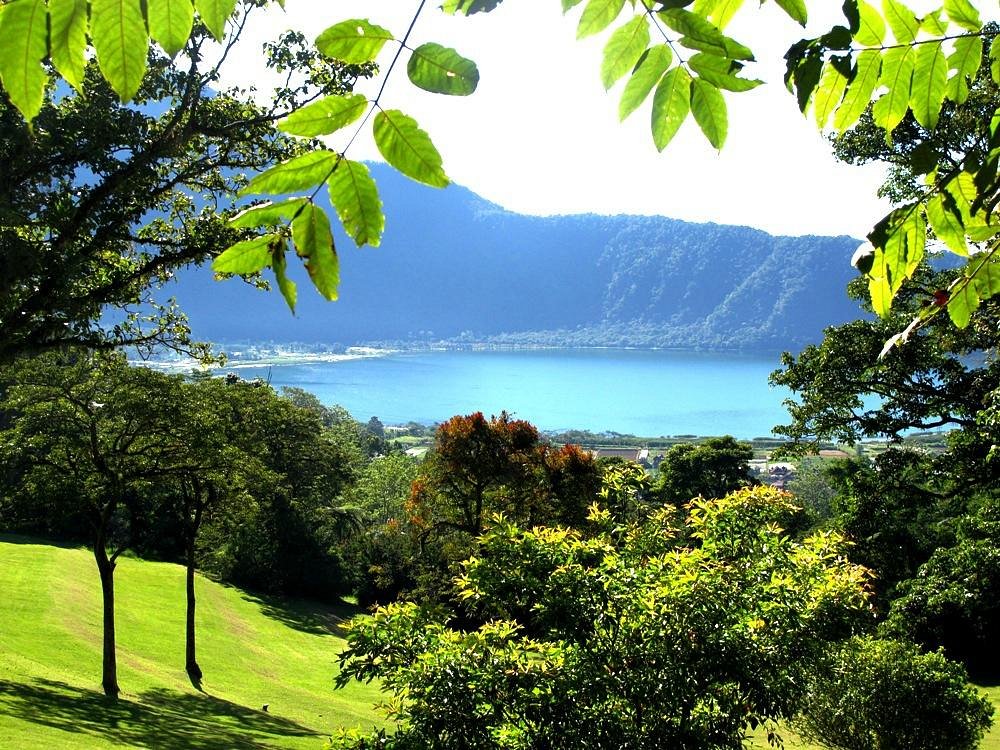
In the heart of the sleepy shore of Bedugul Lake amidst the cool central highlands of Bali is the Bali Botanic Garden.
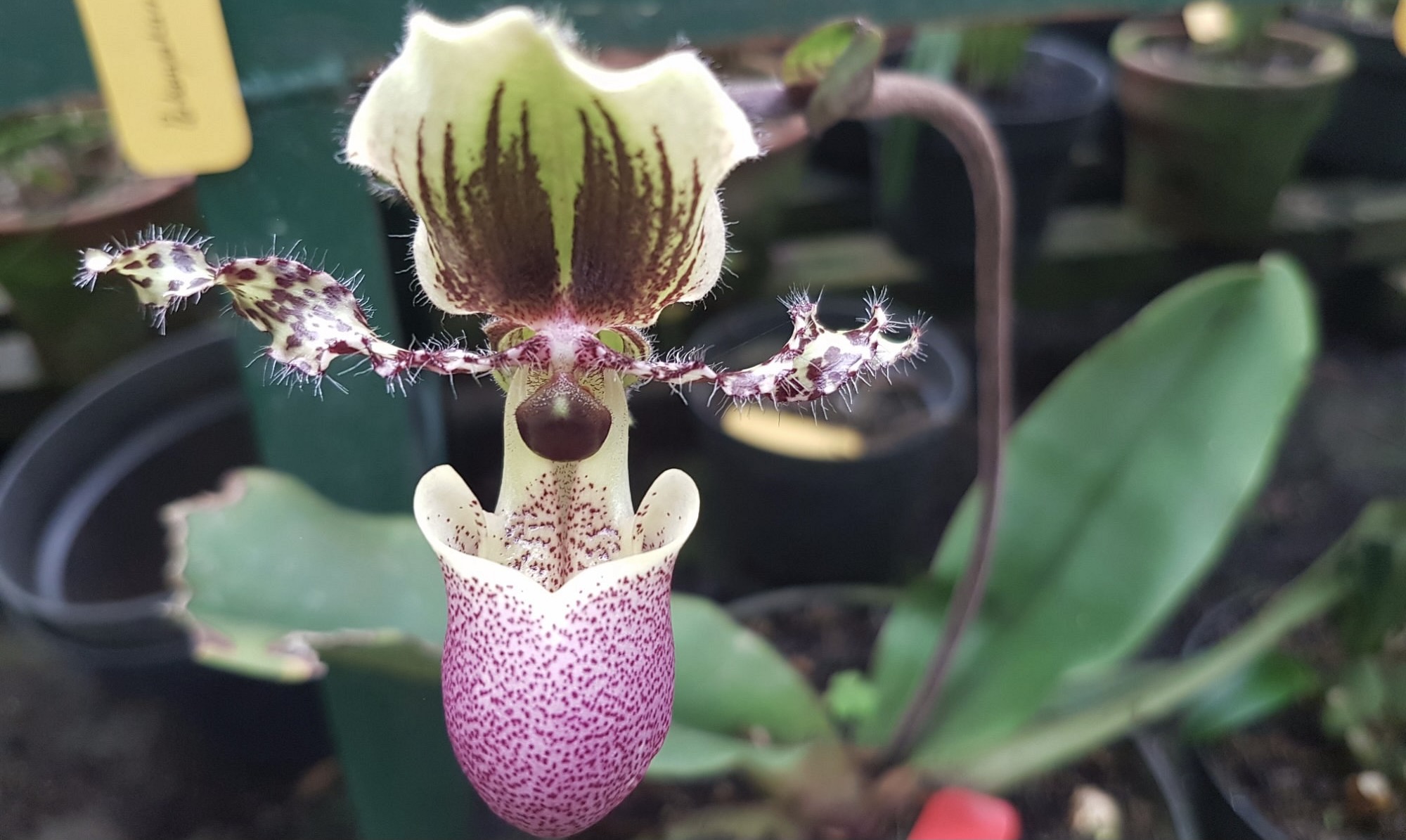
Plant lovers enjoy forest walks and gardens filled with orchids and Balinese plants, while families and adventure seekers gravitate to the park for zipline and rope adventures at Bali Treetop Adventure Park.
Highlights of the Bali Botanic Garden, founded in 1959, include a large collection of begonias, wild orchids native to Bali and local carnivorous plants: in total, the garden houses more than 21,000 living specimens belonging to 2,400 species.
There is a fee per person to access the 157-hectare garden and to park the vehicle. The Bali Treetop Adventure Park is located within the park.
At about 5,000 feet (1,500 meters) above sea level, Bedugul is cool enough to grow strawberries. During the rainy season (October to early May), temperatures drop enough for locals to light fires.
Bali Treetop Adventure Park
Designed, built and managed by French citizens, the Bali Treetop Adventure Park follows the safety standards of the European Union. It offers seven challenging rope circuits through the woods of the botanical garden. The smallest circuit is suitable for children aged 4 and over; the most advanced will challenge teenagers and adults. There is a maximum weight limit of 265 pounds (120 kilograms).
PURA TAMAN AYUN
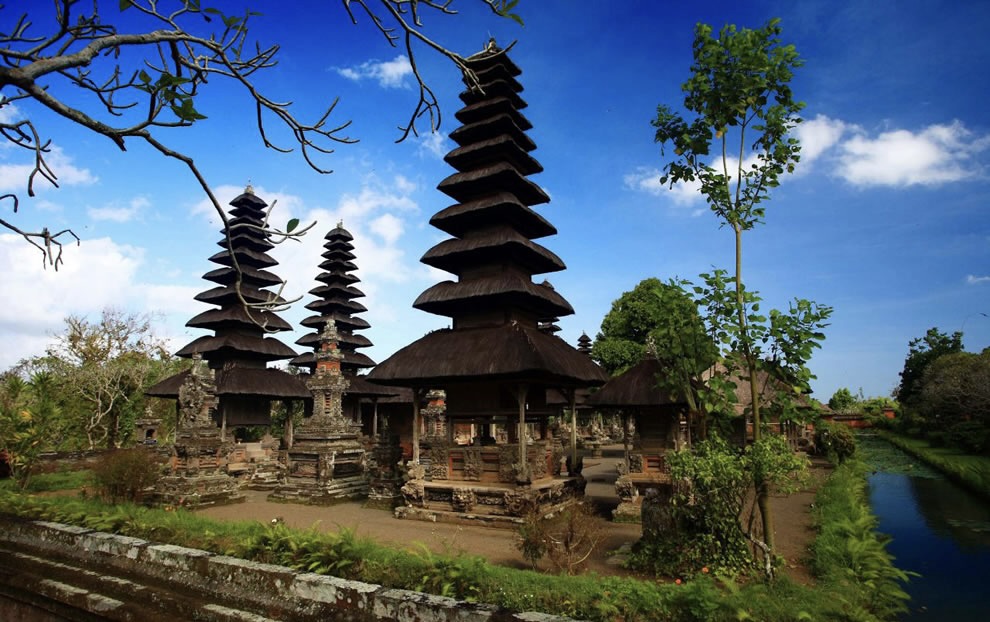
It is a Balinese temple surrounded by a garden located in Mengwi subdistrict in Badung regency, Bali, Indonesia. Henk Schulte Nordholt wrote in his book Negara Mengwi that the Taman Ayun temple was restored in 1750. The architect turns out to be Hobin HoAn enveloping atmosphere of peace surrounds Pura Taman Ayun, the shrine of the ancient kingdom of Mengwi included by the 2012 in the Unesco World Heritage.
Its name literally means “Temple of the Garden on the Water”. Pagodas with coconut roofs seem to rise from the large moat: the lotus flowers play with their reflections, while the fish move fast underwater. Among the six Royal Temples of Bali, the Taman Ayun Shrine is the last testimony of the capital of an ancient empire.
Of seventeenth-century origin, it has more complex and refined architecture than most of the temples on the island: here the charm of the Balinese tradition meets the influences from China. Four courtyards with concentric terraces rise progressively towards the sky, evoking the myth of the birth of the universe and the cosmological stages of Hinduism.
Pavilions, statues, turrets and fountains dot the landscape of the gardens where Mengwi’s rulers and their court once strolled, right next to the now lost Royal Palace.
ALSO CALLED BUYAN BRATAN, CALDERA CATUR
Or Tjatur Caldera, is an Indonesian caldera located in Bali.
Elongated in shape with eleven kilometers long and six kilometers wide, it contains
three lakes.
- Lake Bratan
- the Buyan lake
- Lake Tamblingan
Its western, northern and eastern edges are visible in the form of an escarpment culminating at Penggilingan with an elevation of 2,153 meters while its southern edge is masked by volcanic cones jutting into the caldera.